
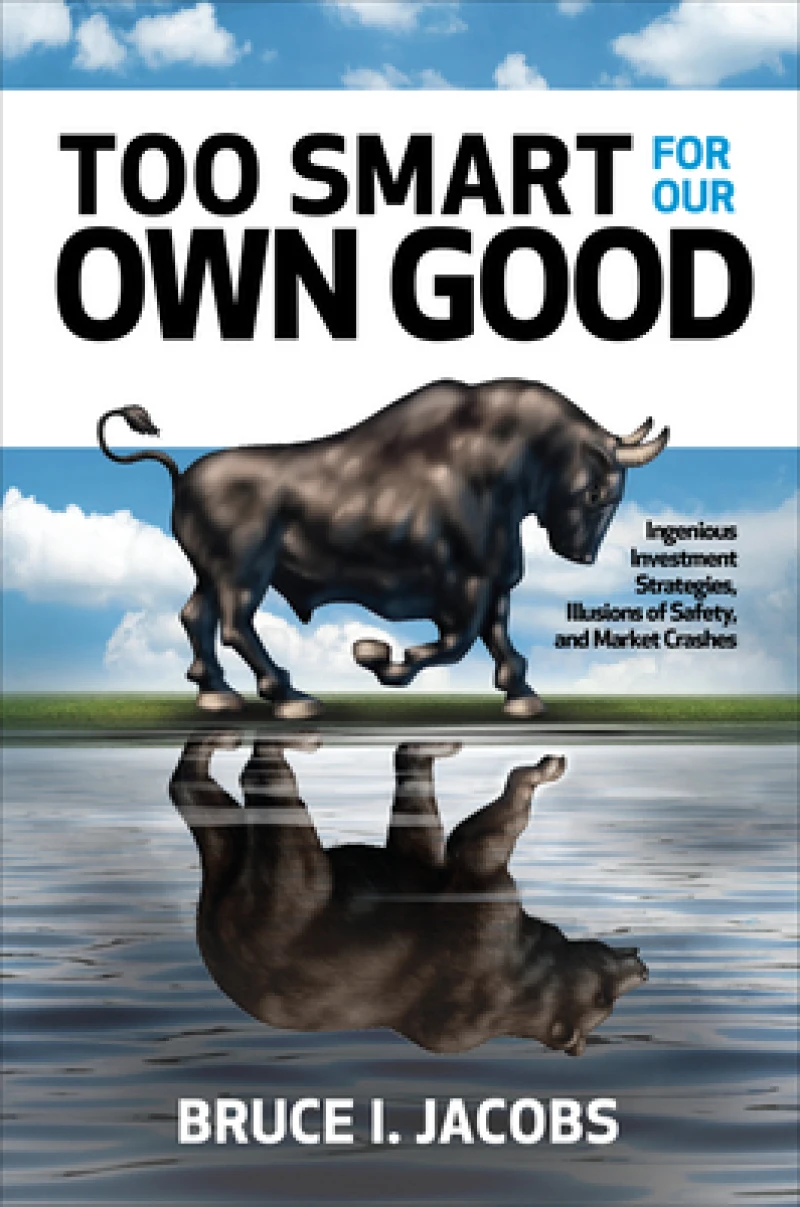
Too Smart for Our Own Good: Ingenious Investment Strategies, Illusions of Safety, and Market Crashes
by
Bruce Jacobs
Book Details
Format
Hardback or Cased Book
ISBN-10
1260440540
ISBN-13
9781260440546
Publisher
McGraw-Hill Education
Imprint
McGraw-Hill Education
Country of Manufacture
US
Country of Publication
GB
Publication Date
Dec 20th, 2018
Print length
464 Pages
Weight
718 grams
Dimensions
16.40 x 23.70 x 4.10 cms
Product Classification:
Business studies: general
Ksh 7,900.00
Werezi Extended Catalogue
0 in stock
Delivery Location
Delivery fee: Select location
Secure
Quality
Fast
How investment strategies designed to reduce risk can increase risk for everyone—and can crash markets and economies Financial crises are often blamed on unforeseeable events, the unforgiving nature of capital markets, or just plain bad luck. Too Smart for Our Own Good argues that these crises are caused by certain alluring investment strategies that promise both high returns and safety of capital. In other words, the severe and widespread crises we have suffered in recent decades were not perfect storms. Instead, they were made by us. By understanding how and why this is so, we may be able to avoid or ameliorate future crises—and maybe even anticipate them. One of today’s leading financial thinkers, Bruce I. Jacobs, examines recent financial crises—including the 1987 stock market crash, the 1998 collapse of the hedge fund Long-Term Capital Management, the 2007–2008 credit crisis, and the European debt crisis—and reveals the common threads that explain these market disruptions. In each case, investors in search of safety were drawn to novel strategies that were intended to reduce risk but actually magnified it—and blew up markets. Too Smart for Our Own Good takes a behind-the-curtain look at: • The inseparable nature of investment risk and reward and the often counterproductive effects of some popular approaches for reducing risk• A trading strategy known as portfolio insurance and the key role it played in the 1987 stock market crash• How option-related trading disrupted markets in the decade following the 1987 crash• Why the demise of Long-Term Capital Management in 1998 wreaked havoc on US stock and bond markets • How mortgage-backed financial products, by shifting risk from one party to another, created the credit crisis of 2007–2008 and contributed to the subsequent European debt crisisThis broad, detailed investigation of financial crises is the most penetrating and objective look at the subject to date. In addition, Jacobs, an industry insider, offers invaluable insights into the nature of investment risk and reward, and how to manage risk. Risk is unavoidable—especially in investing—and financial markets connect us all. Until we accept these facts and manage risk in responsible ways, major crises will always be just around the bend. Too Smart for Our Own Good is a big step toward smarter investing—and a better financial future for everyone.
How investment strategies designed to reduce risk can increase risk for everyone—and can crash markets and economies
Financial crises are often blamed on unforeseeable events, the unforgiving nature of capital markets, or just plain bad luck. Too Smart for Our Own Good argues that these crises are caused by certain alluring investment strategies that promise both high returns and safety of capital. In other words, the severe and widespread crises we have suffered in recent decades were not perfect storms. Instead, they were made by us. By understanding how and why this is so, we may be able to avoid or ameliorate future crises—and maybe even anticipate them.
One of today’s leading financial thinkers, Bruce I. Jacobs, examines recent financial crises—including the 1987 stock market crash, the 1998 collapse of the hedge fund Long-Term Capital Management, the 2007–2008 credit crisis, and the European debt crisis—and reveals the common threads that explain these market disruptions. In each case, investors in search of safety were drawn to novel strategies that were intended to reduce risk but actually magnified it—and blew up markets. Too Smart for Our Own Good takes a behind-the-curtain look at:
• The inseparable nature of investment risk and reward and the often counterproductive effects of some popular approaches for reducing risk
• A trading strategy known as portfolio insurance and the key role it played in the 1987 stock market crash
• How option-related trading disrupted markets in the decade following the 1987 crash
• Why the demise of Long-Term Capital Management in 1998 wreaked havoc on US stock and bond markets
• How mortgage-backed financial products, by shifting risk from one party to another, created the credit crisis of 2007–2008 and contributed to the subsequent European debt crisis
This broad, detailed investigation of financial crises is the most penetrating and objective look at the subject to date. In addition, Jacobs, an industry insider, offers invaluable insights into the nature of investment risk and reward, and how to manage risk.
Risk is unavoidable—especially in investing—and financial markets connect us all. Until we accept these facts and manage risk in responsible ways, major crises will always be just around the bend. Too Smart for Our Own Good is a big step toward smarter investing—and a better financial future for everyone.
Financial crises are often blamed on unforeseeable events, the unforgiving nature of capital markets, or just plain bad luck. Too Smart for Our Own Good argues that these crises are caused by certain alluring investment strategies that promise both high returns and safety of capital. In other words, the severe and widespread crises we have suffered in recent decades were not perfect storms. Instead, they were made by us. By understanding how and why this is so, we may be able to avoid or ameliorate future crises—and maybe even anticipate them.
One of today’s leading financial thinkers, Bruce I. Jacobs, examines recent financial crises—including the 1987 stock market crash, the 1998 collapse of the hedge fund Long-Term Capital Management, the 2007–2008 credit crisis, and the European debt crisis—and reveals the common threads that explain these market disruptions. In each case, investors in search of safety were drawn to novel strategies that were intended to reduce risk but actually magnified it—and blew up markets. Too Smart for Our Own Good takes a behind-the-curtain look at:
• The inseparable nature of investment risk and reward and the often counterproductive effects of some popular approaches for reducing risk
• A trading strategy known as portfolio insurance and the key role it played in the 1987 stock market crash
• How option-related trading disrupted markets in the decade following the 1987 crash
• Why the demise of Long-Term Capital Management in 1998 wreaked havoc on US stock and bond markets
• How mortgage-backed financial products, by shifting risk from one party to another, created the credit crisis of 2007–2008 and contributed to the subsequent European debt crisis
This broad, detailed investigation of financial crises is the most penetrating and objective look at the subject to date. In addition, Jacobs, an industry insider, offers invaluable insights into the nature of investment risk and reward, and how to manage risk.
Risk is unavoidable—especially in investing—and financial markets connect us all. Until we accept these facts and manage risk in responsible ways, major crises will always be just around the bend. Too Smart for Our Own Good is a big step toward smarter investing—and a better financial future for everyone.
Get Too Smart for Our Own Good: Ingenious Investment Strategies, Illusions of Safety, and Market Crashes by at the best price and quality guaranteed only at Werezi Africa's largest book ecommerce store. The book was published by McGraw-Hill Education and it has pages.

