
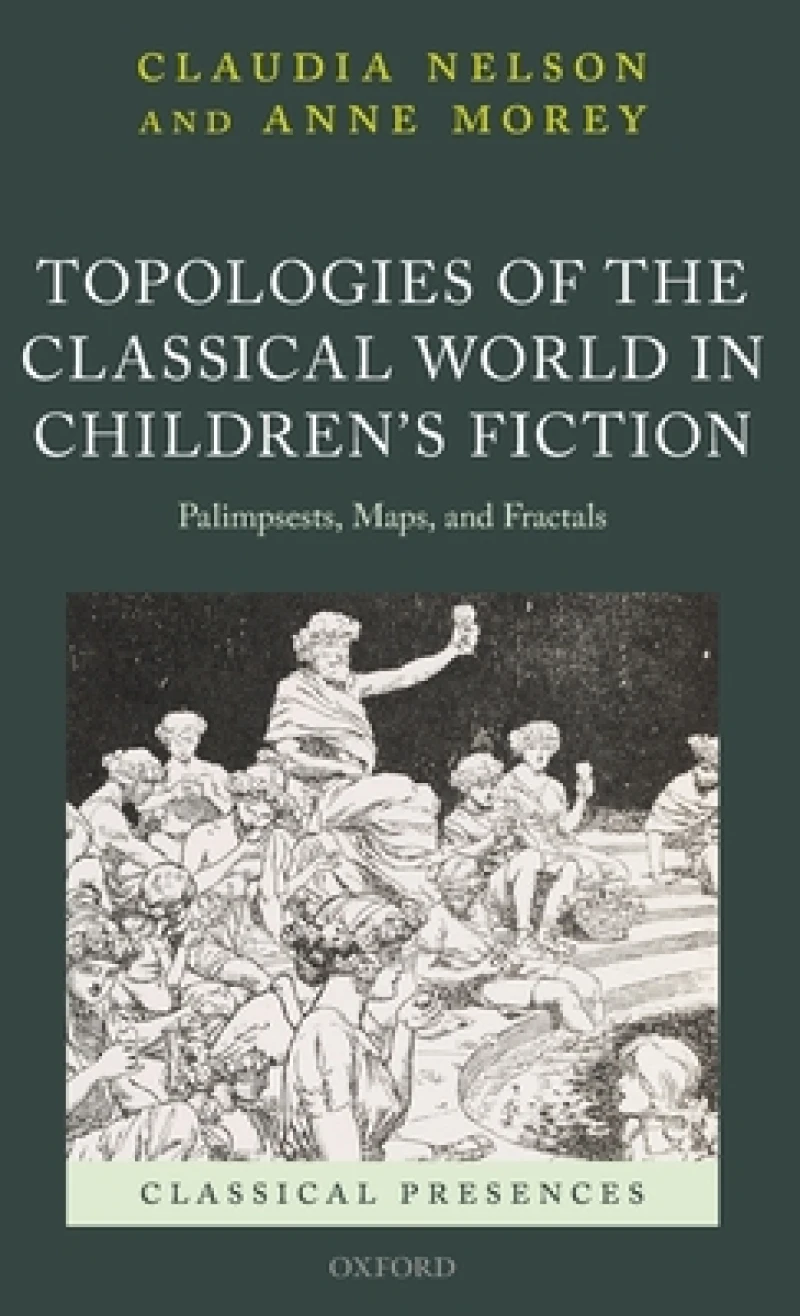
Topologies of the Classical World in Children's Fiction : Palimpsests, Maps, and Fractals
Book Details
Format
Hardback or Cased Book
Book Series
Classical Presences
ISBN-10
0198846037
ISBN-13
9780198846031
Publisher
Oxford University Press
Imprint
Oxford University Press
Country of Manufacture
GB
Country of Publication
GB
Publication Date
Oct 30th, 2019
Print length
288 Pages
Weight
474 grams
Dimensions
22.30 x 14.70 x 2.50 cms
Ksh 19,800.00
Werezi Extended Catalogue
0 in stock
Delivery Location
Delivery fee: Select location
Secure
Quality
Fast
Drawing on a cognitive poetics approach to reception studies, this volume examines the use of spatial metaphors - palimpsest, map, and fractal - to organize the classical past for preteen and adolescent readers, arguing that these reflect different modes in children's literature and encourage different cognitive effects in readers.
Beginning with Rudyard Kipling and Edith Nesbit and concluding with best-selling series still ongoing at the time of writing, this volume examines works of twentieth- and twenty-first-century children''s literature that incorporate character types, settings, and narratives derived from the Greco-Roman past. Drawing on a cognitive poetics approach to reception studies, it argues that authors typically employ a limited and powerful set of spatial metaphors - palimpsest, map, and fractal - to organize the classical past for preteen and adolescent readers. Palimpsest texts see the past as a collection of strata in which each new era forms a layer superimposed upon a foundation laid earlier; map texts use the metaphor of the mappable journey to represent a protagonist''s process of maturing while gaining knowledge of the self and/or the world; fractal texts, in which small parts of the narrative are thematically identical to the whole, present the past in a way that implies that history is infinitely repeatable. While a given text may embrace multiple metaphors in presenting the past, associations between dominant metaphors, genre, and outlook emerge from the case studies examined in each chapter, revealing remarkable thematic continuities in how the past is represented and how agency is attributed to protagonists: each model, it is suggested, uses the classical past to urge and thus perhaps to develop a particular approach to life.
Get Topologies of the Classical World in Children's Fiction by at the best price and quality guaranteed only at Werezi Africa's largest book ecommerce store. The book was published by Oxford University Press and it has pages.

