
Touch Screen Theory : Digital Devices and Feelings
Book Details
Format
Paperback / softback
ISBN-10
0262544687
ISBN-13
9780262544689
Publisher
MIT Press Ltd
Imprint
MIT Press
Country of Manufacture
GB
Country of Publication
GB
Publication Date
Oct 25th, 2022
Print length
256 Pages
Weight
470 grams
Dimensions
15.10 x 22.90 x 2.50 cms
Product Classification:
Technology: general issues
KSh 5,950.00
Werezi Extended Catalogue
Delivery in 4 days
1 copies in stock
Delivery Location
Delivery fee: Select location
Delivery in 4 days
Secure
Quality
Fast
Technology companies claim to connect people through touchscreens, but by conflating physical contact with emotional sentiments, they displace the constructed aspects of devices and women and other oppressed individuals’ critiques of how such technologies function.
Technology companies and device designers correlate touchscreens and online sites with physical contact and emotional sentiments, promising unmediated experiences in which the screen falls away in favor of visceral materiality and connections. While touchscreens are key elements of most people’s everyday lives, critical frameworks for understanding the embodied experiences of using them are wanting. In Touch Screen Theory, Michele White focuses on the relation between physically touching and emotionally feeling to recenter the bodies and identities that are empowered, produced, and displaced by these digital technologies and settings. Drawing on detailed cases and humanities methods, White shows how and why gender, race, and sexuality should be further analyzed in relation to touchscreen use and design.
White delves into such details as how women are informed that their bodies and fingernails are not a fit for iPhones, how cellphone surfaces are correlated with skin and understood as erotic, the ways social networks use heart buttons and icons to seem to physically and emotionally connect with individuals, how online references to feminine and queer feelings are resisted by many men, and how women producers of autonomous sensory meridian response (ASMR) videos use tactile strategies and touch screens to emotionally bond with viewers. Proposing critical methods for studying touchscreens and digital engagement, Touch Screen Theory expands a variety of research areas, including digital and internet cultures, hardware, interfaces, media and screens, and popular culture.
Technology companies and device designers correlate touchscreens and online sites with physical contact and emotional sentiments, promising unmediated experiences in which the screen falls away in favor of visceral materiality and connections. While touchscreens are key elements of most people’s everyday lives, critical frameworks for understanding the embodied experiences of using them are wanting. In Touch Screen Theory, Michele White focuses on the relation between physically touching and emotionally feeling to recenter the bodies and identities that are empowered, produced, and displaced by these digital technologies and settings. Drawing on detailed cases and humanities methods, White shows how and why gender, race, and sexuality should be further analyzed in relation to touchscreen use and design.
White delves into such details as how women are informed that their bodies and fingernails are not a fit for iPhones, how cellphone surfaces are correlated with skin and understood as erotic, the ways social networks use heart buttons and icons to seem to physically and emotionally connect with individuals, how online references to feminine and queer feelings are resisted by many men, and how women producers of autonomous sensory meridian response (ASMR) videos use tactile strategies and touch screens to emotionally bond with viewers. Proposing critical methods for studying touchscreens and digital engagement, Touch Screen Theory expands a variety of research areas, including digital and internet cultures, hardware, interfaces, media and screens, and popular culture.
Get Touch Screen Theory by Michele White at the best price and quality guaranteed only at Werezi Africa's largest book ecommerce store. The book was published by MIT Press Ltd and it has 256 pages.
Customers Who Bought This Also Bought

Fourth Industrial Revolution
KSh 2,700.00
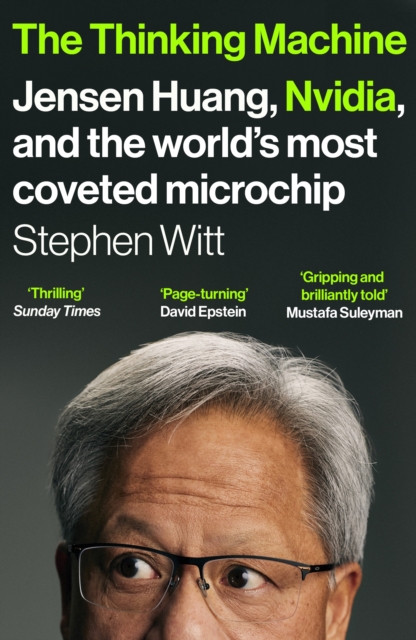
The Thinking Machine
KSh 2,350.00

The Thinking Machine
KSh 3,050.00

Power and Progress
KSh 2,700.00
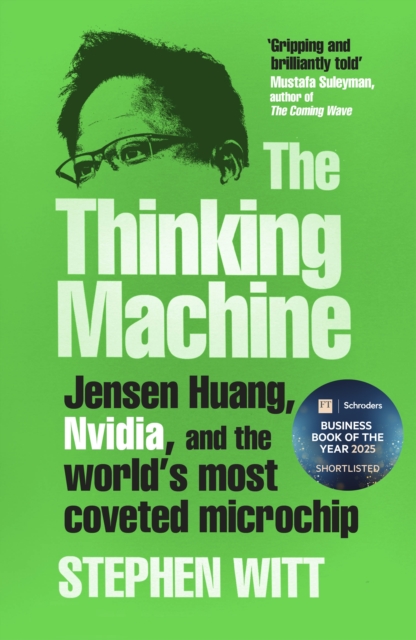
The Thinking Machine
KSh 4,500.00

Understanding Alzheimer's Disease
KSh 6,400.00

Crusading for Chemistry
KSh 6,750.00

Hack the signal
KSh 2,550.00

Understanding Diabetes
KSh 6,400.00

Daniel Lee, Agriculturist – His Life North and South
KSh 4,650.00
Not So Fast
KSh 4,600.00
Not So Fast
KSh 6,900.00