
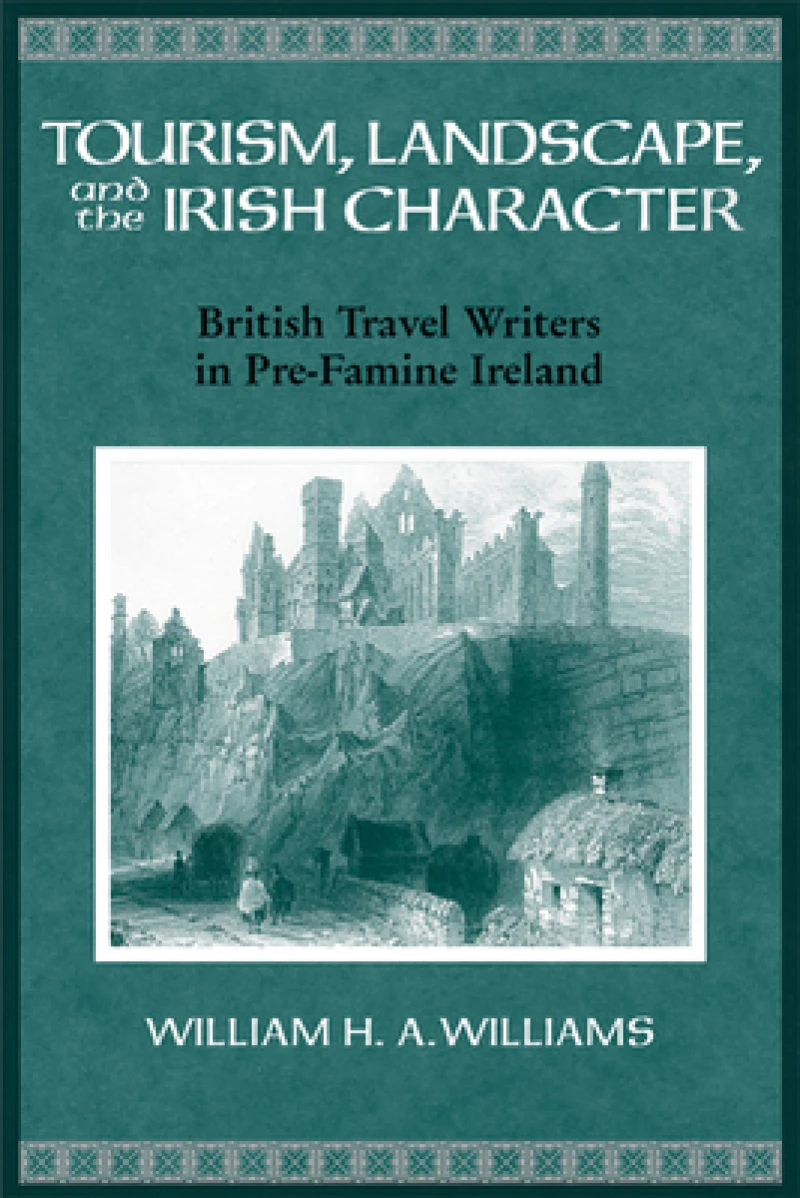
Tourism, Landscape and the Irish Character : British Travel Writers in Pre-Famine Ireland
Book Details
Format
Paperback / Softback
Book Series
History of Ireland and the Irish Diaspora
ISBN-10
0299225240
ISBN-13
9780299225247
Publisher
University of Wisconsin Press
Imprint
University of Wisconsin Press
Country of Manufacture
US
Country of Publication
GB
Publication Date
Feb 29th, 2012
Print length
280 Pages
Weight
390 grams
Dimensions
22.60 x 15.20 x 2.00 cms
Ksh 4,400.00
Temporarily out of stock, due soon
0 in stock
Delivery Location
Delivery fee: Select location
Secure
Quality
Fast
British tourists in Ireland in the eighteenth and nineteenth centuries were both charmed and repulsed. Picturesque but poor, abject yet sublime in its Gothic melancholy, the Ireland they experienced did not fit their British sense of progress, propriety, and Protestantism. Tourism, Landscape, and the Irish Character draws from more than one hundred accounts by English, Scottish, Welsh, and Anglo-Irish tourists written between 1750 and 1850 to probe the moral judgements British observers made about the Irish countryside and its native inhabitants.
Whether consciously or not, these travel writers defined their own British identity in opposition to a perceived Irish strangeness: the rituals of Catholicism, the seemingly histrionic lamentations of the funeral wake, cemeteries with displays of human bones, the archaic Irish language or the Celtic-infused English that they heard spoken. Overlooking the acute despair in England's own industrial cities, they opined that the poverty, bog lands, and ill-thatched houses of rural Ireland indicated failures of the Irish character.
By the eve of the Famine of the 1840s, travel writers were employing stereotypes of Celtic, Catholic carelessness in the south of Ireland and Saxon neatness and enterprise in predominantly Protestant Ulster, even calling for "Saxon" colonisation of the west of Ireland. The Famine cleared the land of many of the peasants, but the western landscape, magnificent in its scenery but poor in its soil, eventually defeated most of the British "colonists," leaving the region to an ever-increasing number of tourists who could enjoy the picturesque mountainscapes without the distracting contradiction of an impoverished populace.
Whether consciously or not, these travel writers defined their own British identity in opposition to a perceived Irish strangeness: the rituals of Catholicism, the seemingly histrionic lamentations of the funeral wake, cemeteries with displays of human bones, the archaic Irish language or the Celtic-infused English that they heard spoken. Overlooking the acute despair in England's own industrial cities, they opined that the poverty, bog lands, and ill-thatched houses of rural Ireland indicated failures of the Irish character.
By the eve of the Famine of the 1840s, travel writers were employing stereotypes of Celtic, Catholic carelessness in the south of Ireland and Saxon neatness and enterprise in predominantly Protestant Ulster, even calling for "Saxon" colonisation of the west of Ireland. The Famine cleared the land of many of the peasants, but the western landscape, magnificent in its scenery but poor in its soil, eventually defeated most of the British "colonists," leaving the region to an ever-increasing number of tourists who could enjoy the picturesque mountainscapes without the distracting contradiction of an impoverished populace.
Get Tourism, Landscape and the Irish Character by at the best price and quality guaranteed only at Werezi Africa's largest book ecommerce store. The book was published by University of Wisconsin Press and it has pages.

