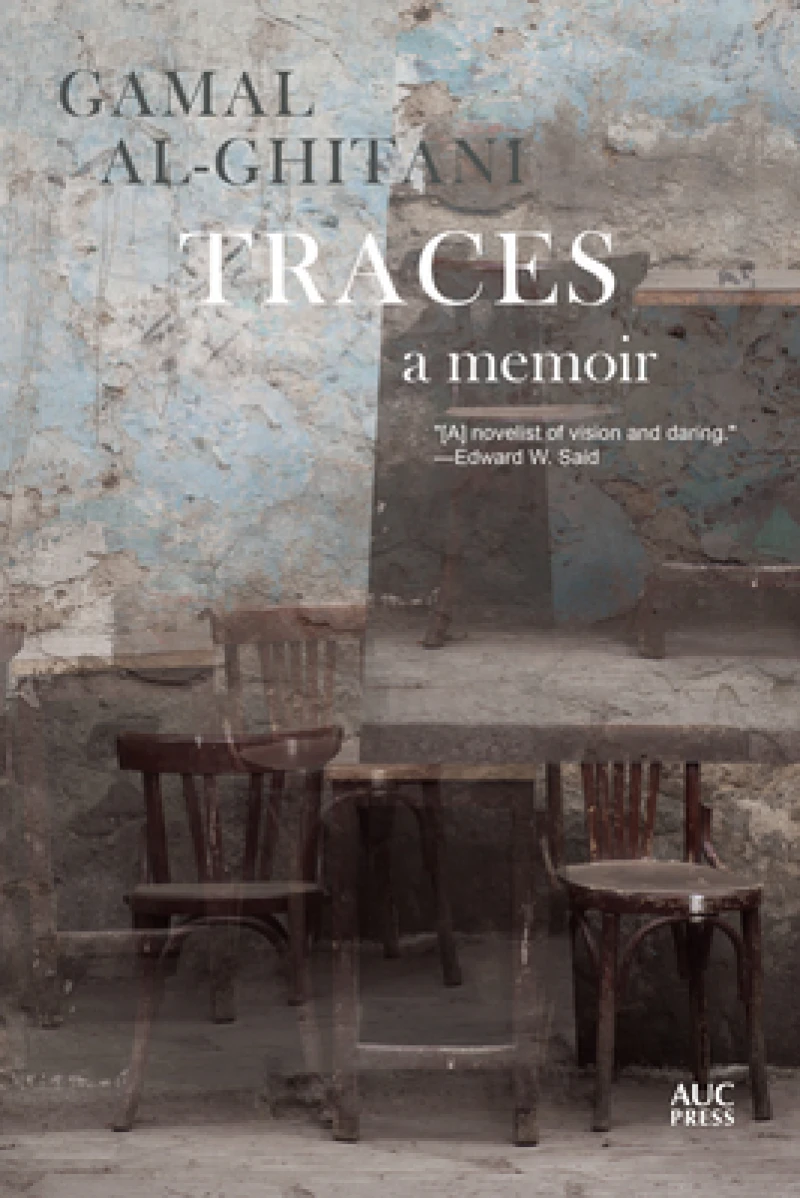
One of Egypt''s greatest contemporary writers reflects on life and love
This haunting memoir, written ten years before al-Ghitani’s death, weaves together a series of vignettes in a style that mimics the uneven, discontinuous nature of memory itself.
These fragments are summoned from across the span of a singular lifetime. We read of his childhood adventures, his erotic awakenings, his time as a political prisoner, and his reports from the battlefront in Iraq and the corridors of power in Syria. Vivid passages capture fleeting glances of strangers through car windows, flavors and scents of delicacies savored, dreams and sorrows of neighbors in the apartment blocks of Cairo before Nasser, as well as chance conversations at points of transit, in cafés, on elegant streets, and with unnamed paramours.
These memories, and al-Ghitani’s musings on memory’s own finitude and mutability, make Traces both a memoir and a meditation on memory itself, in all its inscrutable workings and inevitable betrayals.
One of Egypt’s greatest contemporary writers, Gamal al-Ghitani (1945–2015) was born into a family of modest means in the Egyptian countryside. He trained as a carpet maker before turning his attention to writing, publishing over a dozen novels and several collections of short stories. This haunting memoir, one of seven autobiographical "notebooks" written before Ghitani’s death, weaves together a series of vignettes in a style that mimics the uneven, discontinuous nature of memory itself. These fragments, or traces, are summoned from across the span of a singular lifetime, from Ghitani’s rural birthplace in Upper Egypt to Cairo, to the Arab world and beyond. We read of his childhood adventures, his erotic awakenings, his time as a political prisoner, and his reports from the battlefront in Iraq and the corridors of power in Syria. There are vivid passages that capture fleeting glances of strangers through car windows, flavors and scents of delicacies he still savored, dreams and sorrows of neighbors in the apartment blocks of Cairo before Nasser, as well as recollections of chance conversations at points of transit, in cafés and on elegant streets, and trysts with unnamed paramours. These memories, and Ghitani’s musings on memory’s own finitude and mutability, make Traces both memoir and a meditation on memory itself, in all its inscrutable workings and inevitable betrayals.
Get Traces by at the best price and quality guaranteed only at Werezi Africa's largest book ecommerce store. The book was published by The American University in Cairo Press and it has pages.

Our digital collection is currently being curated to ensure the best possible reading experience on Werezi. We'll be launching our Ebooks platform shortly.