

Trading Power : West Germany's Rise to Global Influence, 1963–1975
Book Details
Format
Hardback
ISBN-10
1108424643
ISBN-13
9781108424646
Publisher
Cambridge University Press
Imprint
Cambridge University Press
Country of Manufacture
GB
Country of Publication
GB
Publication Date
Nov 3rd, 2022
Print length
475 Pages
Weight
858 grams
Dimensions
23.50 x 16.10 x 3.50 cms
Product Classification:
European history20th century history: c 1900 to c 2000Economic historyHistoryEuropean history
KSh 7,550.00
Currently unavailable
0 in stock
Delivery Location
Delivery fee: Select location
Secure
Quality
Fast
Highlights how West Germany leveraged its economic power to become a key pillar of NATO, the European Community, and the global economy in the 1960s and 1970s; how it reduced Cold War tensions with the Soviet bloc; and how it renounced military status symbols such as nuclear weapons.
Trading Power traces the successes and failures of a generation of German political leaders as the Bonn Republic emerged as a substantial force in European, Atlantic, and world affairs. Over the course of the 1960s and 1970s, West Germans relinquished many trappings of hard power, most notably nuclear weapons, and learned to leverage their economic power instead. Obsessed with stability and growth, Bonn governments battled inflation in ways that enhanced the international position of the Deutsche Mark while upending the international monetary system. Germany''s remarkable export achievements exerted a strong hold on the Soviet bloc, forming the basis for a new Ostpolitik under Willy Brandt. Through much trial and error, the Federal Republic learned how to find a balance among key Western allies, and in the mid-1970s Helmut Schmidt ensured Germany''s centrality to institutions such as the European Council and the G-7 – the newly emergent leadership structures of the West.
Get Trading Power by William Glenn Gray at the best price and quality guaranteed only at Werezi Africa's largest book ecommerce store. The book was published by Cambridge University Press and it has 475 pages.
Customers Who Bought This Also Bought

Age of Revolutions
KSh 2,350.00

Eichmann in Jerusalem
KSh 2,350.00

Trouble With Being Born
KSh 2,000.00

Hiroshima
KSh 2,000.00

Freedom
KSh 6,300.00

Holocaust
KSh 2,700.00
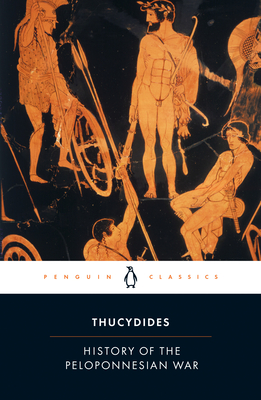
The History of the Peloponnesian War
KSh 2,700.00
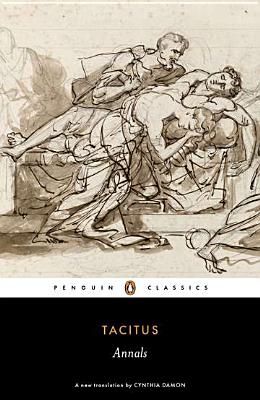
Annals
KSh 2,350.00

Greek Lives
KSh 2,150.00

Sleepwalkers
KSh 3,400.00

Napoleon The Great
KSh 3,600.00

Diary of a Young Girl
KSh 1,800.00

