
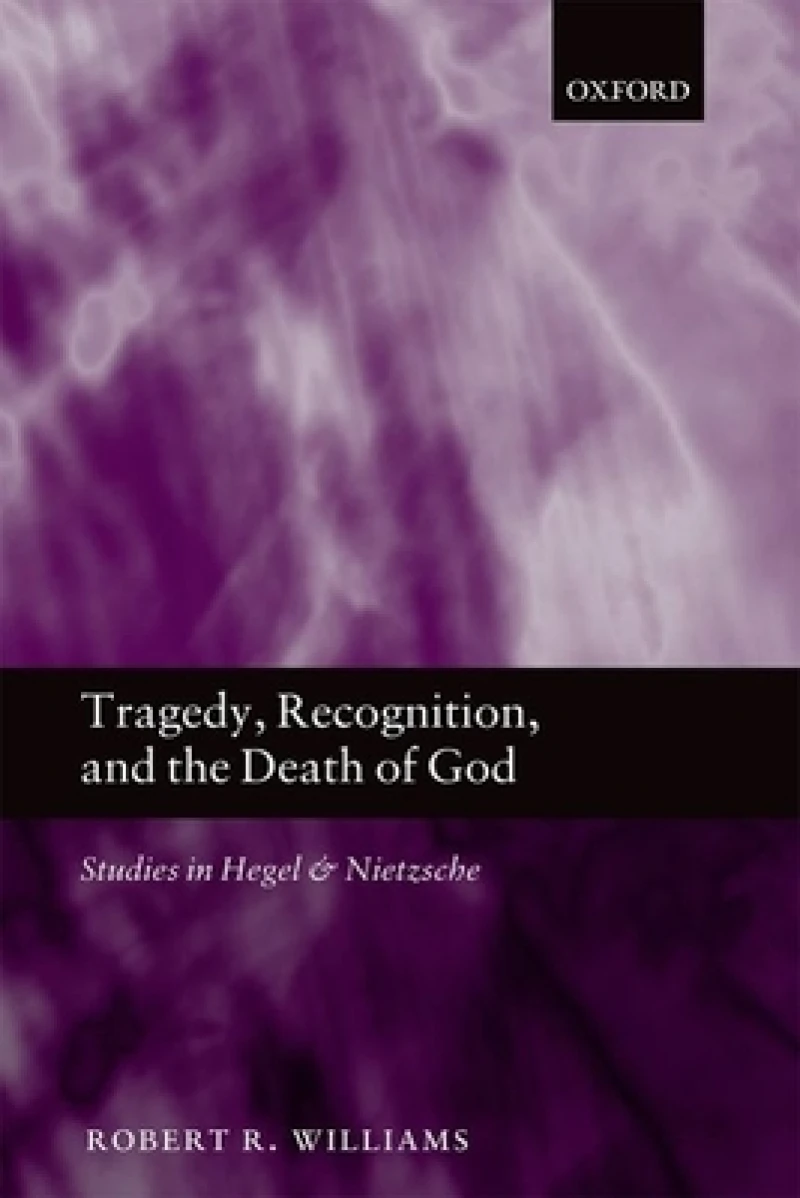
Tragedy, Recognition, and the Death of God : Studies in Hegel and Nietzsche
Book Details
Format
Hardback or Cased Book
ISBN-10
0199656053
ISBN-13
9780199656059
Publisher
Oxford University Press
Imprint
Oxford University Press
Country of Manufacture
GB
Country of Publication
GB
Publication Date
Sep 27th, 2012
Print length
424 Pages
Weight
780 grams
Dimensions
16.60 x 23.90 x 2.70 cms
Product Classification:
PhilosophyHistory of Western philosophyPhilosophy of religionHistory of ideas
Ksh 22,500.00
Manufactured on Demand
0 in stock
Delivery Location
Delivery fee: Select location
Secure
Quality
Fast
Robert R. Williams offers a bold new account of divergences and convergences in the work of Hegel and Nietzsche. He explores four themes - the philosophy of tragedy; recognition and community; critique of Kant; and the death of God - and explicates both thinkers' critiques of traditional theology and metaphysics.
Hegel and Nietzsche are two of the most important figures in philosophy and religion. Robert R. Williams challenges the view that they are mutually exclusive. He identifies four areas of convergence. First, Hegel and Nietzsche express and define modern interest in tragedy as a philosophical topic. Each seeks to correct the traditional philosophical and theological suppression of a tragic view of existence. This suppression of the tragic is required by the moral vision of the world, both in the tradition and in Kant''s practical philosophy and its postulates. For both Hegel and Nietzsche, the moral vision of the world is a projection of spurious, life-negating values that Nietzsche calls the ascetic ideal, and that Hegel identifies as the spurious infinite. The moral God is the enforcer of morality. Second, while acknowledging a tragic dimension of existence, Hegel and Nietzsche nevertheless affirm that existence is good in spite of suffering. Both affirm a vision of human freedom as open to otherness and requiring recognition and community. Struggle and contestation have affirmative significance for both. Third, while the moral God is dead, this does not put an end to the God-question. Theology must incorporate the death of God as its own theme. The union of God and death expressing divine love is for Hegel the basic speculative intuition. This implies a dipolar, panentheistic concept of a tragic, suffering God, who risks, loves, and reconciles. Fourth, Williams argues that both Hegel and Nietzsche pursue theodicy, not as a justification of the moral God, but rather as a question of the meaningfulness and goodness of existence despite nihilism and despite tragic conflict and suffering. The inseparability of divine love and anguish means that reconciliation is no conflict-free harmony, but includes a paradoxical tragic dissonance: reconciliation is a disquieted bliss in disaster.
Get Tragedy, Recognition, and the Death of God by at the best price and quality guaranteed only at Werezi Africa's largest book ecommerce store. The book was published by Oxford University Press and it has pages.

