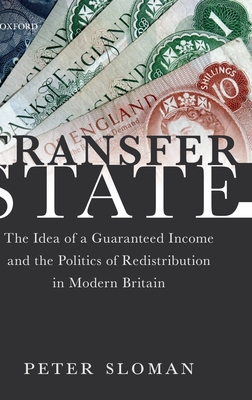
Transfer State : The Idea of a Guaranteed Income and the Politics of Redistribution in Modern Britain
by
Peter Sloman
Book Details
Format
Hardback
ISBN-10
0198813260
ISBN-13
9780198813262
Publisher
Oxford University Press
Imprint
Oxford University Press
Country of Manufacture
GB
Country of Publication
GB
Publication Date
Oct 30th, 2019
Print length
318 Pages
Weight
606 grams
Dimensions
16.20 x 24.00 x 2.60 cms
Product Classification:
HistoryCentral government policiesEconomicsEconomic history
KSh 20,000.00
Currently unavailable
0 in stock
Delivery Location
Delivery fee: Select location
Secure
Quality
Fast
This book provides the first detailed history of guaranteed income schemes in modern Britain. It examines past and present British social policy debate to argue that the case for recasting the UK's transfer state to incorporate a Universal Basic Income is increasingly powerful.
The idea of a guaranteed minimum income has been central to British social policy debates for more than a century. Since the First World War, a variety of market economists, radical activists, and social reformers have emphasized the possibility of tackling poverty through direct cash transfers between the state and its citizens. As manufacturing employment has declined and wage inequality has grown since the 1970s, cash benefits and tax credits have become an important source of income for millions of working-age households, including many low-paid workers with children. The nature and purpose of these transfer payments, however, remain highly contested. Conservative and New Labour governments have used in-work benefits and conditionality requirements to ''activate'' the unemployed and reinforce the incentives to take low-paid work - an approach which has reached its apogee in Universal Credit. By contrast, a growing number of campaigners have argued that the challenge of providing economic security in an age of automation would be better met by paying a Universal Basic Income to all citizens. Transfer State provides the first detailed history of guaranteed income proposals in modern Britain, which brings together intellectual history and archival research to show how the pursuit of an integrated tax and benefit system has shaped UK public policy since 1918. The result is a major new analysis of the role of cash transfers in the British welfare state which sets Universal Credit in a historical perspective and examines the cultural and political barriers to a Universal Basic Income.
Get Transfer State by Peter Sloman at the best price and quality guaranteed only at Werezi Africa's largest book ecommerce store. The book was published by Oxford University Press and it has 318 pages.
Customers Who Bought This Also Bought
Born in Blackness – Africa, Africans, and the Making of the Modern World, 1471 to the Second World War
KSh 2,950.00

Migrations
KSh 5,450.00
The Lost City of Z
KSh 2,000.00

On War
KSh 1,200.00

The Lumumba Plot
KSh 3,050.00

Boer War
KSh 3,400.00

White Nights and Other Stories
KSh 3,900.00
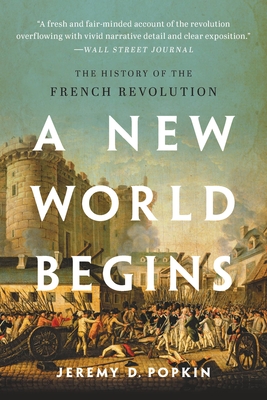
A New World Begins
KSh 3,950.00

Reformation
KSh 3,400.00

Hiroshima Men
KSh 4,500.00

Genius Myth
KSh 3,050.00
A New World Begins
KSh 6,600.00