
Search

Categories

    • categories-img Jacket, Women
    • categories-img Woolend Jacket
    • categories-img Western denim
    • categories-img Mini Dresss
    • categories-img Jacket, Women
    • categories-img Woolend Jacket
    • categories-img Western denim
    • categories-img Mini Dresss
    • categories-img Jacket, Women
    • categories-img Woolend Jacket
    • categories-img Western denim
    • categories-img Mini Dresss
    • categories-img Jacket, Women
    • categories-img Woolend Jacket
    • categories-img Western denim
    • categories-img Mini Dresss
    • categories-img Jacket, Women
    • categories-img Woolend Jacket
    • categories-img Western denim
    • categories-img Mini Dresss

Filter By Price

$
-
$

Dietary Needs

Top Rated Product

product-img product-img

Modern Chair

$165.00
product-img product-img

Plastic Chair

$165.00
product-img product-img

Design Rooms

$165.00

Brands

  • Wooden
  • Chair
  • Modern
  • Fabric
  • Shoulder
  • Winter
  • Accessories
  • Dress

Welcome and thank you for visiting us. For any query call us on 0799 626 359 or Email [email protected]

Offcanvas Menu Open

Shopping Cart

Africa largest book store

Sub Total:

Search for any Title

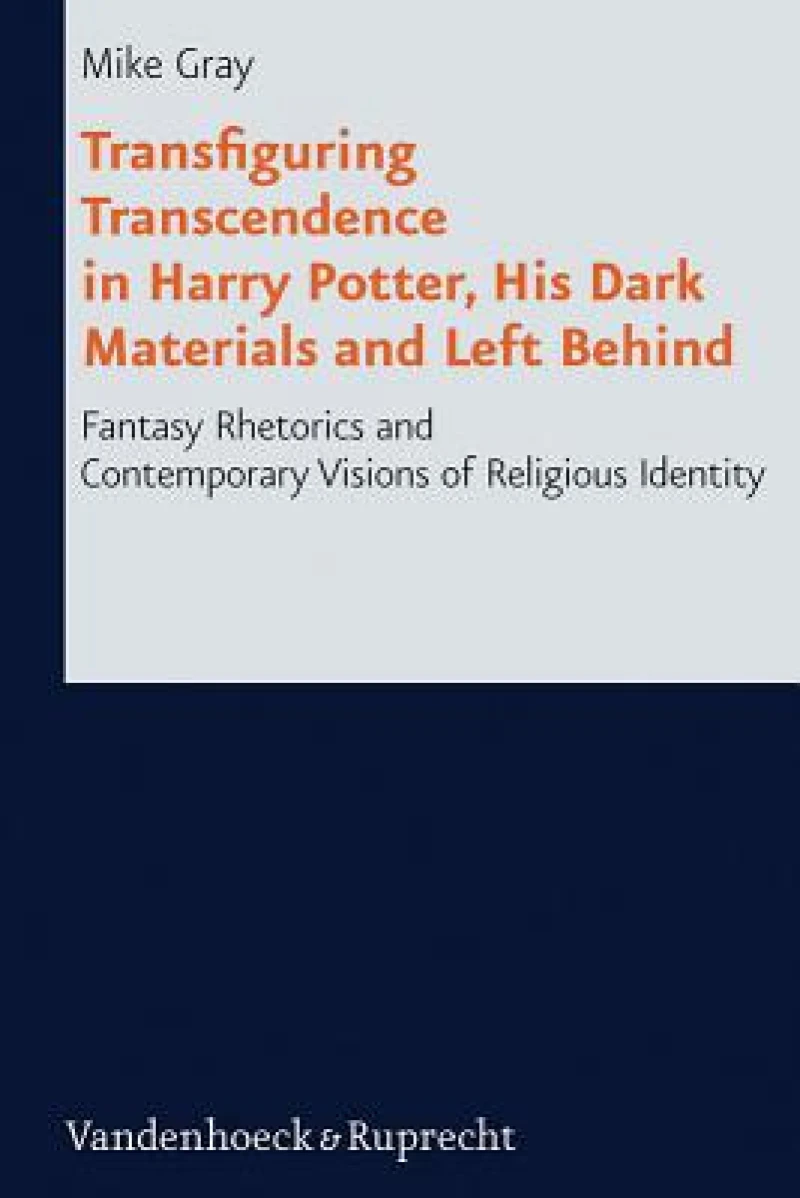
Transfiguring Transcendence in Harry Potter, His Dark Materials and Left Behind : Fantasy Rhetorics and Contemporary Visions of Religious Identity

By: (Author) Mike Gray

Werezi Extended Catalogue
Delivery in 34 days

Ksh 25,750.00

Format: Hardback or Cased Book

ISBN-10: 3525604475

ISBN-13: 9783525604472

Publisher: Vandenhoeck & Ruprecht GmbH & Co KG

Imprint: Vandenhoeck & Ruprecht GmbH & Co KG

Country of Manufacture: DE

Country of Publication: GB

Publication Date: Oct 23rd, 2013

Print length: 308 Pages

Weight: 634 grams

Choose your Location

Shipping & Delivery

Door Delivery

Delivery fee

Delivery in 34 days

  • Description

  • Reviews

Three recent and commercially successful series of novels employ and adapt the resources of popular fantasy fiction to create visions of religious identity: J.K. Rowlings Harry Potter books, Phillip Pullmans Dark Materials and Tim LaHaye and Jerry Jenkins Left Behind series. The act of creating fantasy counter-worlds naturally involves all three stories in the creation of what Mike Gray terms transfigurations of transcendence: hopeful albeit paradoxical encodings of the ambiguous, non-observable reality whose primary locus in modern society is the societally extra-systemic human individual. Popular fantasy fiction turns out to involve acts of world-creation that are inherently religious and inherently paradoxical.A substantive examination shows that all three are involved in more or less intentional re-narrations of traditional Christian beliefs and narratives. The "atheist" His Dark Materials series does not deny but re-imagines the Christian visions of selfhood; the "traditionalist" Left Behind series does not simply replicate but modifies its own declared values; the apparent secularity of the Harry Potter series is shaped by its creative reception of Christian patterns and narratives. While the stories visions of selfhood clearly clash, the basic paradoxes involved in their struggle to articulate transcendence expose significant parallels and a productive conversation with the Christian tradition.It is not simply that popular fantasy fiction is theologically relevant the Christian Heilsgeschichte, too, proves to be highly relevant in popular culture. However, while far from obsolescent, models of religious identity in contemporary society require criticism and creativity and, as evinced most powerfully in the Harry Potter stories, a flair for constructive engagement with paradox. Three recent and commercially successful series of novels employ and adapt the resources of popular fantasy fiction to create visions of religious identity: J.K. Rowlings Harry Potter books, Phillip Pullmans Dark Materials and Tim LaHaye and Jerry Jenkins Left Behind series.The act of creating fantasy counter-worlds naturally involves all three stories in the creation of what Mike Gray terms transfigurations of transcendence: hopeful albeit paradoxical encodings of the ambiguous, non-observable reality whose primary locus in modern society is the societally extra-systemic human individual. Popular fantasy fiction turns out to involve acts of world-creation that are inherently religious and inherently paradoxical.A substantive examination shows that all three are involved in more or less intentional re-narrations of traditional Christian beliefs and narratives. The "atheist" His Dark Materials series does not deny but re-imagines the Christian visions of selfhood; the "traditionalist" Left Behind series does not simply replicate but modifies its own declared values; the apparent secularity of the Harry Potter series is shaped by its creative reception of Christian patterns and narratives. While the stories visions of selfhood clearly clash, the basic paradoxes involved in their struggle to articulate transcendence expose significant parallels and a productive conversation with the Christian tradition.It is not simply that popular fantasy fiction is theologically relevant the Christian Heilsgeschichte, too, proves to be highly relevant in popular culture. However, while far from obsolescent, models of religious identity in contemporary society require criticism and creativity and, as evinced most powerfully in the Harry Potter stories, a flair for constructive engagement with paradox.

Get Transfiguring Transcendence in Harry Potter, His Dark Materials and Left Behind by at the best price and quality guranteed only at Werezi Africa largest book ecommerce store. The book was published by Vandenhoeck & Ruprecht GmbH & Co KG and it has pages. Enjoy Shopping Best Offers & Deals on books Online from Werezi - Receive at your doorstep - Fast Delivery - Secure mode of Payment

Customer Reviews

Based on 0 reviews

Mind, Body, & Spirit
