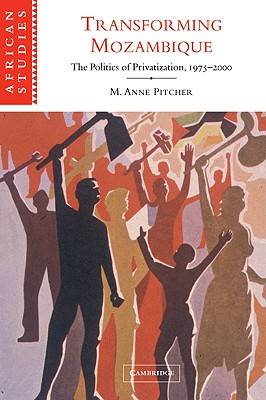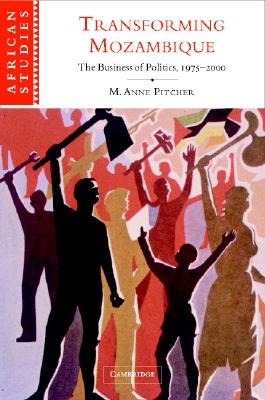
Transforming Mozambique : The Politics of Privatization, 1975–2000
Book Details
Format
Hardback
Book Series
African Studies
ISBN-10
0521820111
ISBN-13
9780521820110
Publisher
Cambridge University Press
Imprint
Cambridge University Press
Country of Manufacture
GB
Country of Publication
GB
Publication Date
Nov 14th, 2002
Print length
320 Pages
Weight
64 grams
Dimensions
22.90 x 15.20 x 2.20 cms
KSh 17,800.00
Currently unavailable
0 in stock
Delivery Location
Delivery fee: Select location
Secure
Quality
Fast
Economic transformations in Africa have been dramatic. This 2002 study of Mozambique's shift to a market economy reveals that it is more political and protracted than critics contend. The state remains a central actor, but social forces have also shaped the outcome of the restructuring.
Many of the economic transformations in Africa have been as dramatic as those in Eastern Europe. Yet much of the comparative literature on transitions has overlooked African countries. This 2002 study of Mozambique's shift from a command to a market economy draws on a wealth of empirical material, including archival sources, interviews, political posters and corporate advertisements, to reveal that the state is a central actor in the reform process, despite the claims of neo-liberals and their critics. Alongside the state, social forces - from World Bank officials to rural smallholders - have also accelerated, thwarted or shaped change in Mozambique. M. Anne Pitcher offers an intriguing analysis of the dynamic interaction between previous and emerging agents, ideas and institutions, to explain the erosion of socialism and the politics of privatization in a developing country. She demonstrates that Mozambique's political economy is a heterogenous blend of ideological and institutional continuities and ruptures.
Get Transforming Mozambique by M. Anne Pitcher at the best price and quality guaranteed only at Werezi Africa's largest book ecommerce store. The book was published by Cambridge University Press and it has 320 pages.
Customers Who Bought This Also Bought
Orientalism
KSh 2,350.00

The Collected Essays of Ralph Ellison
KSh 3,600.00
Jorge Amado
KSh 8,850.00
The Guatemala Reader
KSh 4,950.00
Jorge Amado
KSh 30,950.00

Demoralization of Teachers
KSh 15,450.00
Except for Palestine
KSh 3,400.00

A Grammar of Mangghuer
KSh 10,050.00

Grammar of Mangghuer
KSh 30,950.00

Routledge Handbook on China-Middle East Relations
KSh 9,250.00
Except for Palestine
KSh 3,400.00

The Israeli-Palestinian Conflict
KSh 9,200.00