
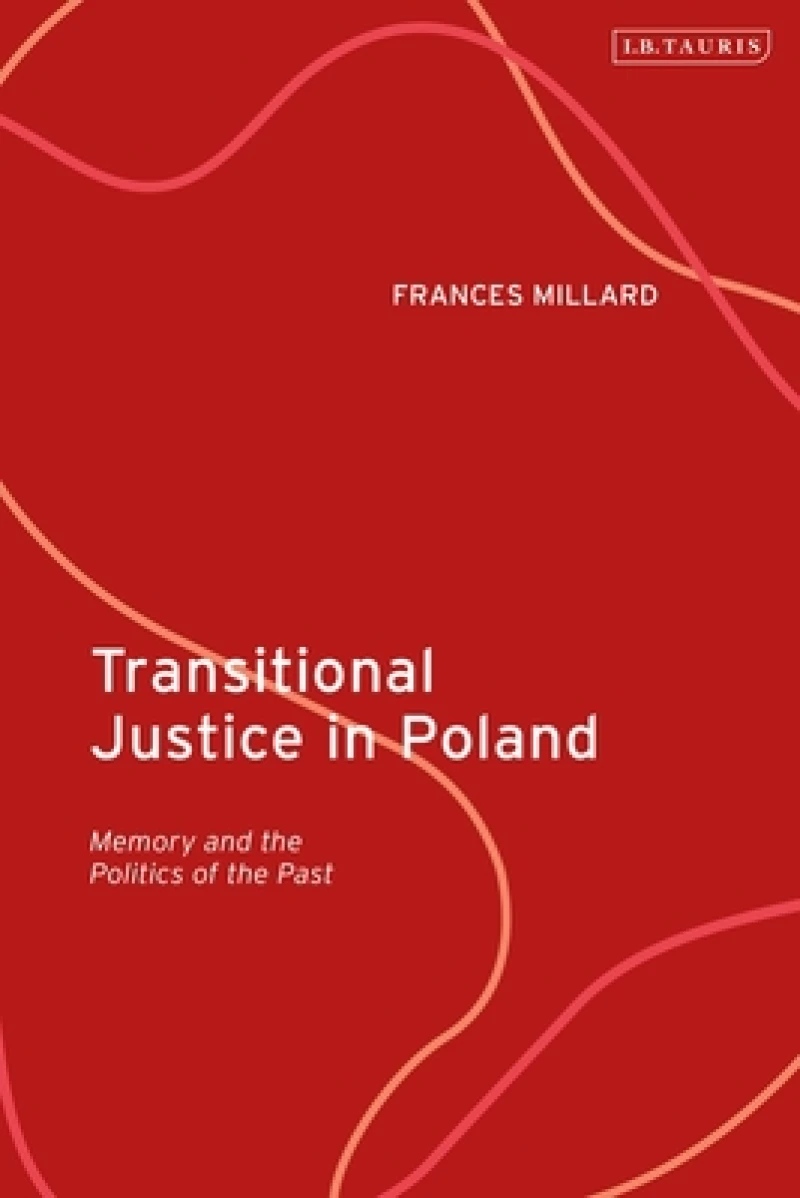
Transitional Justice in Poland : Memory and the Politics of the Past
Book Details
Format
Hardback or Cased Book
ISBN-10
0755601335
ISBN-13
9780755601332
Publisher
Bloomsbury Publishing PLC
Imprint
I.B. Tauris
Country of Manufacture
GB
Country of Publication
GB
Publication Date
Jan 28th, 2021
Print length
272 Pages
Weight
570 grams
Dimensions
16.40 x 24.20 x 2.30 cms
Product Classification:
PolandEuropean historyPolitics & governmentPolitics and governmentFar-left political ideologies and movementsMarxism & CommunismPolitical structures / systems: democracyPolitical structures: democracyHuman rights & civil liberties lawLaw: Human rights and civil libertiesEuropean history
Ksh 18,000.00
Manufactured on Demand
Delivery in 14 days
5 copies in stock
Delivery Location
Delivery fee: Select location
Delivery in 14 days
Secure
Quality
Fast
In this study of the mechanisms of transitional justice in Poland, Frances Millard asks: How does society come to terms with its past? How should it punish the perpetrators of oppression and acknowledge its victims? In the former communist countries of Central and Eastern Europe the task of answering these questions came down to the need to eliminate the communist parties'' hold over the state, the economy and society in order to move towards democracy. Millard argues that the key step in achieving this was uncovering the truth about the previous regime''s past, prosecuting the perpetrators of past crimes and providing compensation and restitution for its victims.
Through the specific case of Poland, Millard provides a comprehensive assessment of the mechanisms and institutions used to achieve this, such as lustration, law enforcement through a Constitutional Tribunal and institutions dedicated to dealing with the past such as the Institute of National Remembrance. Crucially, these processes have assumed new significance in recent years after the Law and Justice Party came to power in 2015, using transitional justice as a tool of political control which has enabled the restructuring of Polish democracy.
Through the specific case of Poland, Millard provides a comprehensive assessment of the mechanisms and institutions used to achieve this, such as lustration, law enforcement through a Constitutional Tribunal and institutions dedicated to dealing with the past such as the Institute of National Remembrance. Crucially, these processes have assumed new significance in recent years after the Law and Justice Party came to power in 2015, using transitional justice as a tool of political control which has enabled the restructuring of Polish democracy.
Get Transitional Justice in Poland by at the best price and quality guaranteed only at Werezi Africa's largest book ecommerce store. The book was published by Bloomsbury Publishing PLC and it has pages.

