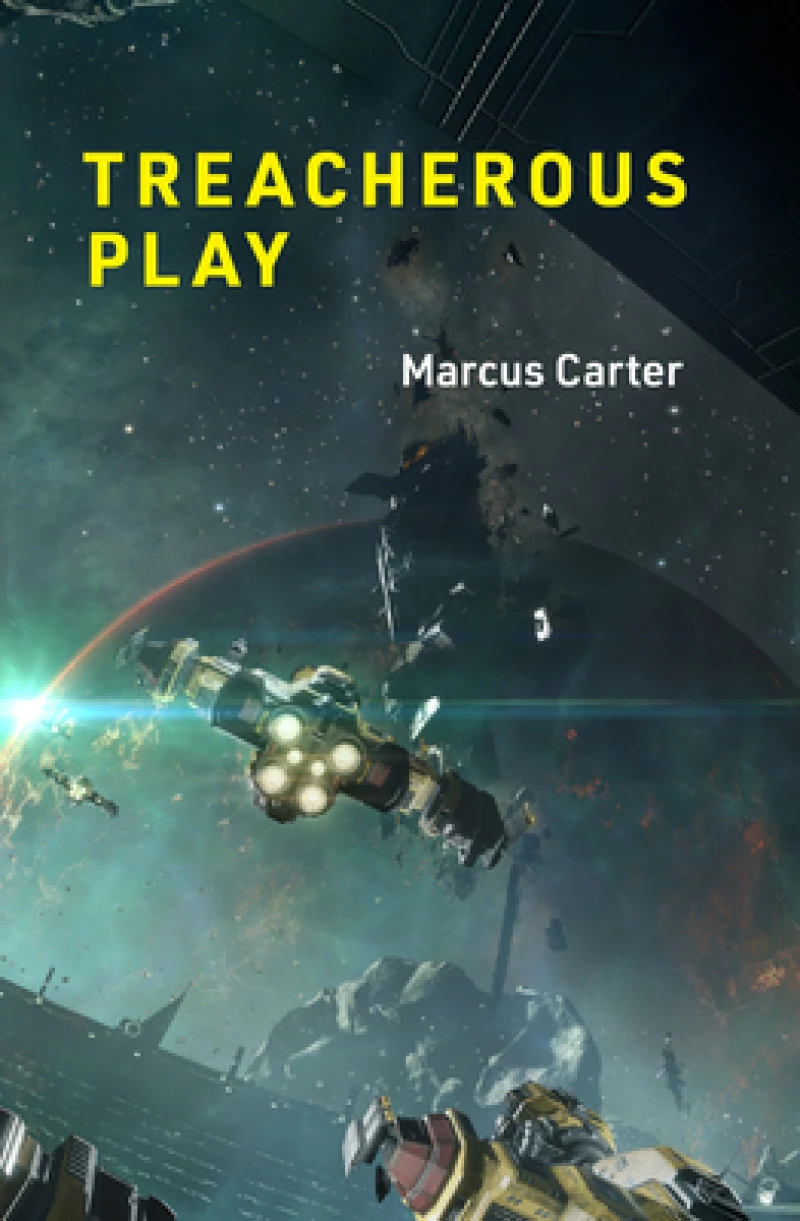
Treacherous Play
Book Details
Format
Hardback or Cased Book
ISBN-10
0262046318
ISBN-13
9780262046312
Publisher
MIT Press Ltd
Imprint
MIT Press
Country of Manufacture
GB
Country of Publication
GB
Publication Date
Feb 1st, 2022
Print length
160 Pages
Weight
288 grams
Dimensions
14.20 x 21.10 x 2.20 cms
Product Classification:
Computer games / online games: strategy guides
Ksh 4,300.00
Re-Printing
Delivery in 12 days
4 copies in stock
Delivery Location
Delivery fee: Select location
Delivery in 12 days
Secure
Quality
Fast
The ethics and experience of “treacherous play”: an exploration of three games that allow deception and betrayal—EVE Online, DayZ, and Survivor.
Deception and betrayal in gameplay are generally considered off-limits, designed out of most multiplayer games. There are a few games, however, in which deception and betrayal are allowed, and even encouraged. In Treacherous Play, Marcus Carter explores the ethics and experience of playing such games, offering detailed explorations of three games in which this kind of “dark play” is both lawful and advantageous: EVE Online, DayZ, and the television series Survivor. Examining aspects of games that are often hidden, ignored, or designed away, Carter shows the appeal of playing treacherously.
Carter looks at EVE Online’s notorious scammers and spies, drawing on his own extensive studies of them, and describes how treacherous play makes EVE successful. Making a distinction between treacherous play and griefing or trolling, he examines the experiences of DayZ players to show how negative experiences can be positive in games, and a core part of their appeal. And he explains how in Survivor’s tribal council votes, a player’s acts of betrayal can exact a cost. Then, considering these games in terms of their design, he discusses how to design for treacherous play.
Carter’s account challenges the common assumptions that treacherous play is unethical, antisocial, and engaged in by bad people. He doesn’t claim that more games should feature treachery, but that examining this kind of play sheds new light on what play can be.
Deception and betrayal in gameplay are generally considered off-limits, designed out of most multiplayer games. There are a few games, however, in which deception and betrayal are allowed, and even encouraged. In Treacherous Play, Marcus Carter explores the ethics and experience of playing such games, offering detailed explorations of three games in which this kind of “dark play” is both lawful and advantageous: EVE Online, DayZ, and the television series Survivor. Examining aspects of games that are often hidden, ignored, or designed away, Carter shows the appeal of playing treacherously.
Carter looks at EVE Online’s notorious scammers and spies, drawing on his own extensive studies of them, and describes how treacherous play makes EVE successful. Making a distinction between treacherous play and griefing or trolling, he examines the experiences of DayZ players to show how negative experiences can be positive in games, and a core part of their appeal. And he explains how in Survivor’s tribal council votes, a player’s acts of betrayal can exact a cost. Then, considering these games in terms of their design, he discusses how to design for treacherous play.
Carter’s account challenges the common assumptions that treacherous play is unethical, antisocial, and engaged in by bad people. He doesn’t claim that more games should feature treachery, but that examining this kind of play sheds new light on what play can be.
Get Treacherous Play by at the best price and quality guaranteed only at Werezi Africa's largest book ecommerce store. The book was published by MIT Press Ltd and it has pages.