
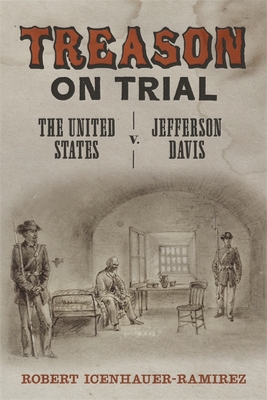
Treason on Trial : The United States V. Jefferson Davis
Book Details
Format
Hardback
ISBN-10
0807170801
ISBN-13
9780807170809
Publisher
Louisiana State University Press
Imprint
Louisiana State University Press
Country of Manufacture
US
Country of Publication
GB
Publication Date
Jun 5th, 2019
Print length
376 Pages
Weight
643 grams
Dimensions
22.90 x 15.20 x 2.90 cms
KSh 8,250.00
Temporarily out of stock, due soon
0 in stock
Delivery Location
Delivery fee: Select location
Secure
Quality
Fast
In the aftermath of the Civil War, federal officials imprisoned and indicted Jefferson Davis for treason. Although the federal government pursued the charges, the case never went to trial. This book argues that while national politics played a role in the trial's direction, the actions of lesser-known individuals resulted in the failure to convict.
In the immediate aftermath of the Civil War, federal officials captured, imprisoned, and indicted Jefferson Davis for treason. If found guilty, the former Confederate president faced execution for his role in levying war against the United States. Although the federal government pursued the charges for over four years, the case never went to trial. In this comprehensive analysis of the saga, Treason on Trial, Robert Icenhauer-Ramirez suggests that while national politics played a role in the trial's direction, the actions of lesser-known individuals ultimately resulted in the failure to convict Davis.
Early on, two primary factions argued against trying the case. Influential northerners dreaded the prospect of a public trial, fearing it would reopen the wounds of the war and make a martyr of Davis. Conversely, white southerners pointed to the treatment and prosecution of Davis as vindictive on the part of the federal government. Moreover, they maintained, the right to secede from the Union remained within the bounds of the law, effectively linking the treason charge against Davis with the constitutionality of secession.
While Icenhauer-Ramirez agrees that politics played a role in the case, he suggests that focusing exclusively on that aspect obscures the importance of the participants. In the United States of America v. Jefferson Davis, preeminent lawyers represented both parties. According to Icenhauer-Ramirez, Lucius H. Chandler, the local prosecuting attorney, lacked the skill and temperament necessary to put the case on a footing that would lead to trial. In addition, Supreme Court Chief Justice Salmon P. Chase had little desire to preside over the divisive case and intentionally stymied the prosecution's efforts. The deft analysis in Treason on Trial illustrates how complications caused by Chandler and Chase led to a three-year delay and, eventually, to the dismissal of the case in 1868, when President Andrew Johnson granted blanket amnesty to those who participated in the armed rebellion.
Early on, two primary factions argued against trying the case. Influential northerners dreaded the prospect of a public trial, fearing it would reopen the wounds of the war and make a martyr of Davis. Conversely, white southerners pointed to the treatment and prosecution of Davis as vindictive on the part of the federal government. Moreover, they maintained, the right to secede from the Union remained within the bounds of the law, effectively linking the treason charge against Davis with the constitutionality of secession.
While Icenhauer-Ramirez agrees that politics played a role in the case, he suggests that focusing exclusively on that aspect obscures the importance of the participants. In the United States of America v. Jefferson Davis, preeminent lawyers represented both parties. According to Icenhauer-Ramirez, Lucius H. Chandler, the local prosecuting attorney, lacked the skill and temperament necessary to put the case on a footing that would lead to trial. In addition, Supreme Court Chief Justice Salmon P. Chase had little desire to preside over the divisive case and intentionally stymied the prosecution's efforts. The deft analysis in Treason on Trial illustrates how complications caused by Chandler and Chase led to a three-year delay and, eventually, to the dismissal of the case in 1868, when President Andrew Johnson granted blanket amnesty to those who participated in the armed rebellion.
Get Treason on Trial by Robert Icenhauer-Ramirez at the best price and quality guaranteed only at Werezi Africa's largest book ecommerce store. The book was published by Louisiana State University Press and it has 376 pages.
Customers Who Bought This Also Bought
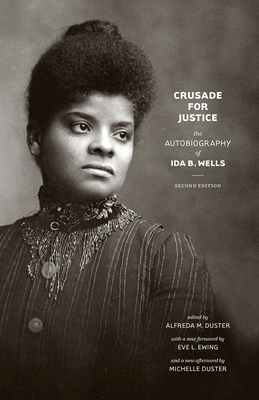
Crusade for Justice – The Autobiography of Ida B. Wells, Second Edition
KSh 4,050.00

Killers of the Flower Moon
KSh 2,000.00

Warmth of Other Suns
KSh 3,050.00
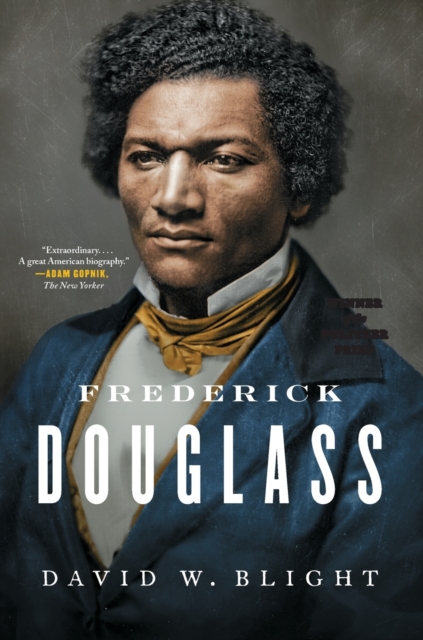
Frederick Douglass
KSh 3,350.00
107 Days
KSh 4,500.00

Second Treatise of Government – Norton Library
KSh 1,600.00

Tuesdays With Morrie
KSh 2,000.00
My Bondage and My Freedom
KSh 1,600.00

Hidden Figures
KSh 2,000.00
America, América
KSh 3,650.00
Holding the Line
KSh 2,000.00
Nuclear Folly
KSh 3,050.00
