
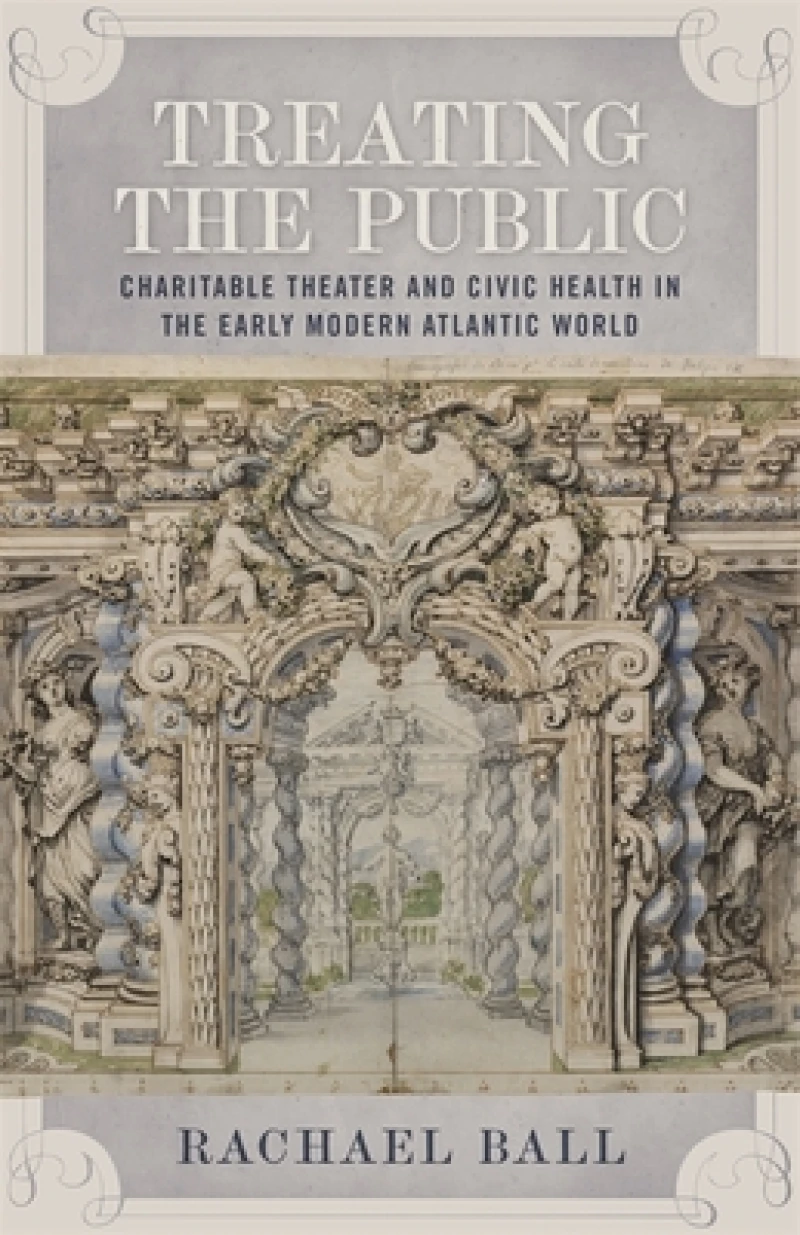
Treating the Public : Charitable Theater and Civic Health in the Early Modern Atlantic World
by
Rachael Ball
Book Details
Format
Hardback or Cased Book
ISBN-10
0807165085
ISBN-13
9780807165089
Publisher
Louisiana State University Press
Imprint
Louisiana State University Press
Country of Manufacture
US
Country of Publication
GB
Publication Date
Apr 10th, 2017
Print length
216 Pages
Weight
424 grams
Dimensions
14.80 x 22.50 x 2.40 cms
Ksh 6,600.00
Temporarily out of stock, due soon
0 in stock
Delivery Location
Delivery fee: Select location
Secure
Quality
Fast
Presents a comparative history of commercial theatre, public opinion, and charitable organisations in eight cities across the Spanish and Anglo-Atlantic worlds during the sixteenth and seventeenth centuries. This innovative study uncovers the rapid expansion of public drama into urban daily life in the Spanish Atlantic.
In Treating the Public, Rachael Ball presents a comparative history of commercial theater, public opinion, and charitable organizations in eight cities across the Spanish and Anglo-Atlantic worlds during the sixteenth and seventeenth centuries. This innovative study uncovers the rapid expansion of public drama into urban daily life in the Spanish Atlantic, revealing the means by which men and women provided and sought theatrical entertainment while practicing Catholic piety and working to aid the poor. Ball focuses her analysis on the theaters of Madrid, Seville, Mexico City, and Puebla de los Angeles, which she compares to English-speaking theaters throughout the Atlantic world in cities and towns including London, Bristol, Dublin, and Williamsburg, Virginia.
Ball shows how the corrales de comedias, or inn-yard theaters, became staples of city life throughout Spain and the Spanish Atlantic. This development stemmed, she argues, from a tremendous output of dramatic works and from the theaters' charitable activities that included donating a percentage of admission fees to hospitals and orphanages. As a result, groups like theatrical companies, religious lay brotherhoods, city leaders, and hospitals forged collaborative relationships which at once allowed the corrales to flourish and protected theaters as charitable institutions. Ball highlights the uniqueness of this system by contrasting it with public drama in England, where financial dependence on courtly and noble patronage slowed the spread of regular theatrical performances to provincial cities and colonial centers.
Using an array of archival and print sources, Ball links the largely disconnected national histories of Spanish, English, and colonial American theaters. Treating the Public uncovers the depth of the comedia tradition that flourished in early modern Spain as well as the geographic scope of the Spanish theater as a political, social, and cultural institution.
Ball shows how the corrales de comedias, or inn-yard theaters, became staples of city life throughout Spain and the Spanish Atlantic. This development stemmed, she argues, from a tremendous output of dramatic works and from the theaters' charitable activities that included donating a percentage of admission fees to hospitals and orphanages. As a result, groups like theatrical companies, religious lay brotherhoods, city leaders, and hospitals forged collaborative relationships which at once allowed the corrales to flourish and protected theaters as charitable institutions. Ball highlights the uniqueness of this system by contrasting it with public drama in England, where financial dependence on courtly and noble patronage slowed the spread of regular theatrical performances to provincial cities and colonial centers.
Using an array of archival and print sources, Ball links the largely disconnected national histories of Spanish, English, and colonial American theaters. Treating the Public uncovers the depth of the comedia tradition that flourished in early modern Spain as well as the geographic scope of the Spanish theater as a political, social, and cultural institution.
Get Treating the Public by at the best price and quality guaranteed only at Werezi Africa's largest book ecommerce store. The book was published by Louisiana State University Press and it has pages.

