
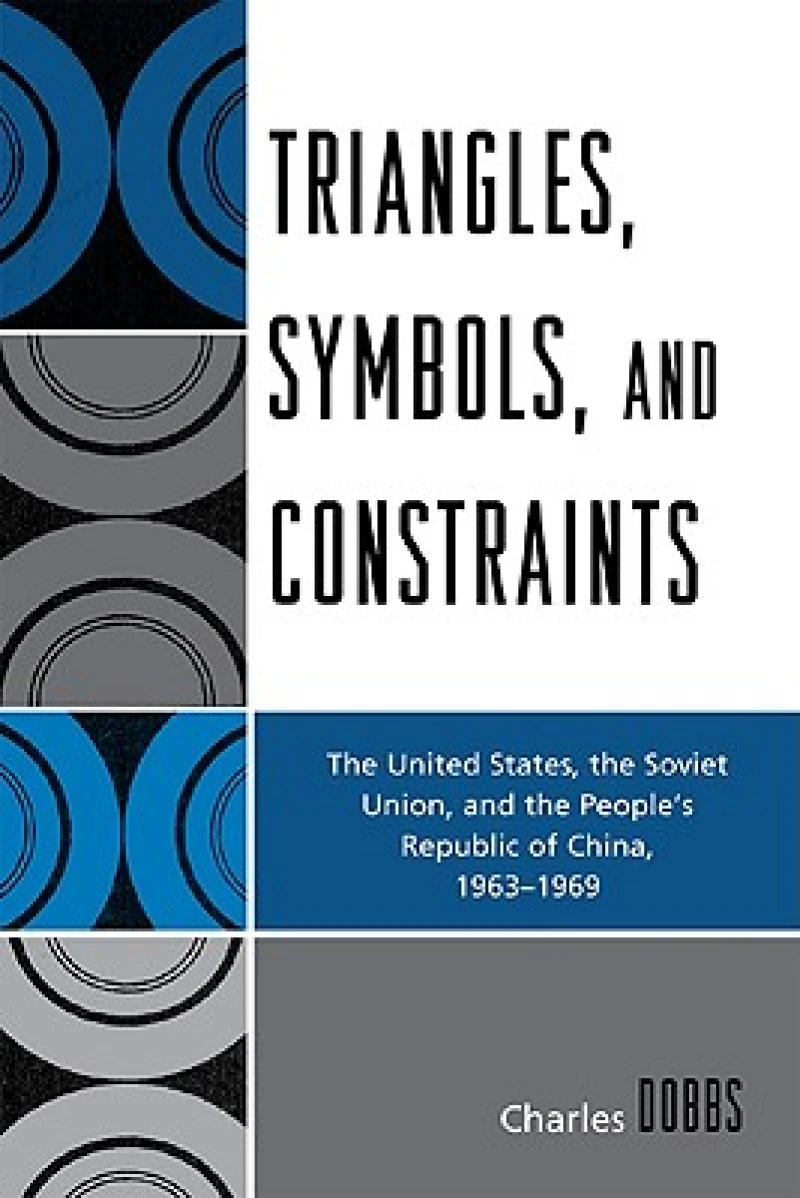
Triangles, Symbols, and Constraints : The United States, the Soviet Union, and the People's Republic of China, 1963-1969
Book Details
Format
Paperback / Softback
ISBN-10
0761849998
ISBN-13
9780761849995
Publisher
University Press of America
Imprint
University Press of America
Country of Manufacture
GB
Country of Publication
GB
Publication Date
Jan 25th, 2010
Print length
328 Pages
Weight
488 grams
Dimensions
17.20 x 22.60 x 2.80 cms
Ksh 10,950.00
Manufactured on Demand
0 in stock
Delivery Location
Delivery fee: Select location
Secure
Quality
Fast
This book discusses dramatic power struggles within and between the Soviet Union, the People's Republic of China, and the United States of America during Lyndon Johnson's presidency. This book explains Johnson's goals for easing Cold War tensions and how his best intentions fell prey to triangles, symbols, and constraints.
In his five-plus years as president of the United States, Lyndon Johnson witnessed dramatic power struggles within and between the Soviet Union, the People''s Republic of China, and the United States of America. New Soviet leaders were determined to build Soviet power and extend Soviet influence. Mao''s revolutionary ideology so dominated China that there were few levers to move Sino-American relations ahead. Johnson wanted to ease Cold War tensions by reaching a range of agreements with the Soviet Union on nuclear weapons and establishing relations with the People''s Republic of China in order to end its isolation in the world community. However, multiple events frustrated Johnson''s good intentions. The Soviet leadership that overthrew Nikita Khrushchev was committed to expanding its military might before negotiating with Washington; it also began focusing more and more on the worsening Sino-Soviet split. Mao Zedong entered into the Great Proletarian Cultural Revolution, and China seemed to devour itself. Meanwhile, the Vietnam War made negotiations among all three great powers more difficult, limiting room to maneuver. But Johnson persevered, and by 1968 the apparent American retreat symbolized by the North Korean seizure of the USS Pueblo and the Communist Tet Offensive in Vietnam, along with the Soviet invasion of Czechoslovakia, seemed to change the construct between the great powers. Beijing, emerging from the worst of the Cultural Revolution, increasingly feared Soviet intentions, and Moscow wanted to prevent a Sino-American rapprochement. Although Johnson did not achieve his lofty goals, he created the pre-conditions that Richard Nixon later harvested for the détente with Moscow and rapprochement with Beijing. Johnson''s best intentions fell prey to triangles, symbols, and constraints.
Get Triangles, Symbols, and Constraints by at the best price and quality guaranteed only at Werezi Africa's largest book ecommerce store. The book was published by University Press of America and it has pages.

