
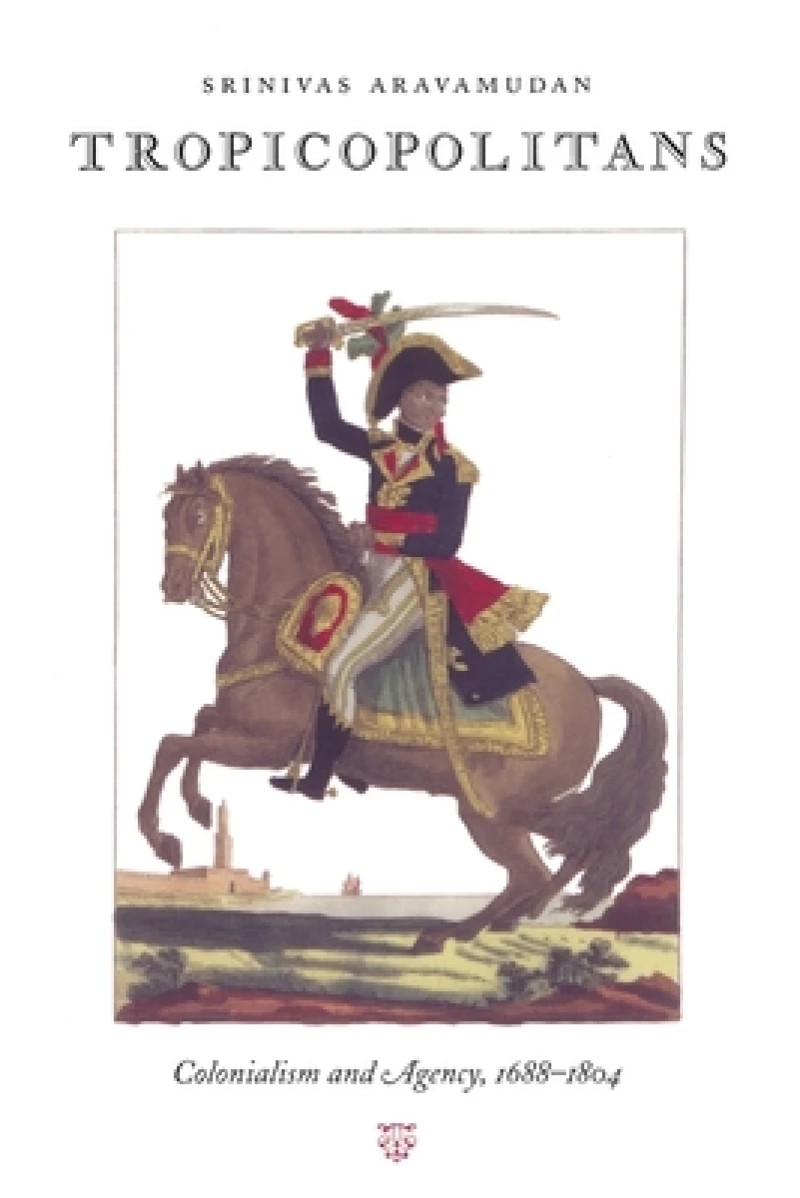
Tropicopolitans : Colonialism and Agency, 1688–1804
Book Details
Format
Paperback / Softback
Book Series
Post-Contemporary Interventions
ISBN-10
082232315X
ISBN-13
9780822323150
Publisher
Duke University Press
Imprint
Duke University Press
Country of Manufacture
US
Country of Publication
GB
Publication Date
May 17th, 1999
Print length
440 Pages
Weight
610 grams
Dimensions
15.80 x 22.80 x 2.90 cms
Product Classification:
IrelandUnited Kingdom, Great BritainLiterary theoryLiterary studies: generalLiterary studies: c 1500 to c 1800Literary studies: c 1800 to c 1900Colonialism & imperialismNational liberation & independence, post-colonialismHistory of ideasHistory of ideasColonialism and imperialismNational liberation and independence
Ksh 5,600.00
Werezi Extended Catalogue
0 in stock
Delivery Location
Delivery fee: Select location
Secure
Quality
Fast
Aims to reconstruct the colonial imagination of the eighteenth century. By exploring representations of peoples and cultures subjected to colonial discourse, the author makes a case for the agency - or the capacity to resist domination - of those oppressed. He reveals the development of anticolonial consciousness prior to the nineteenth century.
In Tropicopolitans Srinivas Aravamudan reconstructs the colonial imagination of the eighteenth century. By exploring representations of peoples and cultures subjected to colonial discourse, he makes a case for the agency-or the capacity to resist domination-of those oppressed. Aravamudan’s analysis of texts that accompanied European commercial and imperial expansion from the Glorious Revolution through the French Revolution reveals the development of anticolonial consciousness prior to the nineteenth century.
“Tropicalization” is the central metaphor of this analysis, a term that incorporates both the construction of various dynamic tropes by which the colonized are viewed and the site of the study, primarily the tropics. Tropicopolitans, then, are those people who bear and resist the representations of colonialist discourse. In readings that expose new relationships between literary representation and colonialism in the eighteenth century, Aravamudan considers such texts as Behn’s Oroonoko, Defoe’s Robinson Crusoe and Captain Singleton, Addison’s Cato, and Swift’s Gulliver’s Travels and The Drapier’s Letters. He extends his argument to include analyses of Johnson’s Rasselas, Beckford’s Vathek, Montagu’s travel letters, Equiano’s autobiography, Burke’s political and aesthetic writings, and AbbÉ de Raynal’s Histoire des deux Indes. Offering a radical approach to literary history, this study provides new mechanisms for understanding the development of anticolonial agency.
Introducing eighteenth-century studies to a postcolonial hermeneutics, Tropicopolitans will interest scholars engaged in postcolonial studies, eighteenth-century literature, and literary theory.
“Tropicalization” is the central metaphor of this analysis, a term that incorporates both the construction of various dynamic tropes by which the colonized are viewed and the site of the study, primarily the tropics. Tropicopolitans, then, are those people who bear and resist the representations of colonialist discourse. In readings that expose new relationships between literary representation and colonialism in the eighteenth century, Aravamudan considers such texts as Behn’s Oroonoko, Defoe’s Robinson Crusoe and Captain Singleton, Addison’s Cato, and Swift’s Gulliver’s Travels and The Drapier’s Letters. He extends his argument to include analyses of Johnson’s Rasselas, Beckford’s Vathek, Montagu’s travel letters, Equiano’s autobiography, Burke’s political and aesthetic writings, and AbbÉ de Raynal’s Histoire des deux Indes. Offering a radical approach to literary history, this study provides new mechanisms for understanding the development of anticolonial agency.
Introducing eighteenth-century studies to a postcolonial hermeneutics, Tropicopolitans will interest scholars engaged in postcolonial studies, eighteenth-century literature, and literary theory.
Get Tropicopolitans by at the best price and quality guaranteed only at Werezi Africa's largest book ecommerce store. The book was published by Duke University Press and it has pages.

