
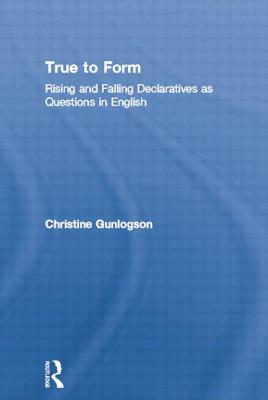
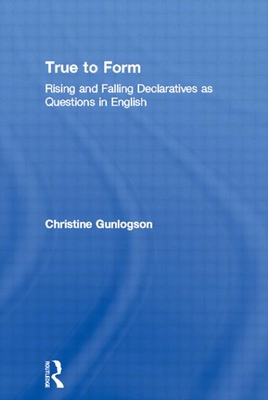
True to Form : Rising and Falling Declaratives as Questions in English
Book Details
Format
Paperback / softback
Book Series
Outstanding Dissertations in Linguistics
ISBN-10
0415865077
ISBN-13
9780415865074
Publisher
Taylor & Francis Ltd
Imprint
Routledge
Country of Manufacture
GB
Country of Publication
GB
Publication Date
Feb 13th, 2014
Print length
124 Pages
Weight
230 grams
Product Classification:
LinguisticsLiterature: history & criticismLiterature: history and criticism
KSh 11,150.00
Currently unavailable
0 in stock
Delivery Location
Delivery fee: Select location
Secure
Quality
Fast
This book is concerned with the meaning and use of two kinds of declarative sentences:
1) It''s raining?
2) It''s raining.
The difference between (1) and (2) is intonational: (1) has a final rise--indicated by the question mark--while (2) ends with a fall.
Christine Gunlogson''s central claim is that the meaning and use of both kinds of sentences must be understood in terms of the meaning of their defining formal elements, namely declarative sentence type and rising versus falling intonation. Gunlogson supports that claim through an investigation of the use of declaratives as questions. On one hand, Gunlogson demonstrates that rising and falling declaratives share an aspect of conventional meaning attributable to their declarative form, distinguishing them both from the corresponding polar interrogative (Is it raining?) and constraining their use as questions. On the other hand, since (1) and (2) constitute a minimal pair, differing only in intonation, systematic differences in character and function between them--in particular, the relative "naturalness" of (1) as a question compared to (2) --must be located in the contrast between the fall and the rise.
To account for these two sets of differences, Gunlogson gives a compositional account of rising and falling declaratives under which declarative form expresses commitment to the propositional content of the declarative. Rising versus falling intonation on declaratives is responsible for attribution of the commitment to the Addressee versus the Speaker, respectively. The result is an inherent contextual "bias" associated with declaratives, which constitutes the crucial point of difference with interrogatives. The compositional analysis is implemented in the framework of context update semantics (Heim 1982 and others), using an articulated version of the Common Ground (Stalnaker 1978) that distinguishes the commitments of the individual discourse participants.
Restrictions on the use of declaratives as questions, as well as differences between rising and falling declaratives as questions, are shown to follow from this account. Gunlogson argues that neither rising nor falling declaratives are inherently questioning--rather, the questioning function of declaratives arises through the interaction of sentence type, intonation, and context.
1) It''s raining?
2) It''s raining.
The difference between (1) and (2) is intonational: (1) has a final rise--indicated by the question mark--while (2) ends with a fall.
Christine Gunlogson''s central claim is that the meaning and use of both kinds of sentences must be understood in terms of the meaning of their defining formal elements, namely declarative sentence type and rising versus falling intonation. Gunlogson supports that claim through an investigation of the use of declaratives as questions. On one hand, Gunlogson demonstrates that rising and falling declaratives share an aspect of conventional meaning attributable to their declarative form, distinguishing them both from the corresponding polar interrogative (Is it raining?) and constraining their use as questions. On the other hand, since (1) and (2) constitute a minimal pair, differing only in intonation, systematic differences in character and function between them--in particular, the relative "naturalness" of (1) as a question compared to (2) --must be located in the contrast between the fall and the rise.
To account for these two sets of differences, Gunlogson gives a compositional account of rising and falling declaratives under which declarative form expresses commitment to the propositional content of the declarative. Rising versus falling intonation on declaratives is responsible for attribution of the commitment to the Addressee versus the Speaker, respectively. The result is an inherent contextual "bias" associated with declaratives, which constitutes the crucial point of difference with interrogatives. The compositional analysis is implemented in the framework of context update semantics (Heim 1982 and others), using an articulated version of the Common Ground (Stalnaker 1978) that distinguishes the commitments of the individual discourse participants.
Restrictions on the use of declaratives as questions, as well as differences between rising and falling declaratives as questions, are shown to follow from this account. Gunlogson argues that neither rising nor falling declaratives are inherently questioning--rather, the questioning function of declaratives arises through the interaction of sentence type, intonation, and context.
Get True to Form by Christine Gunlogson at the best price and quality guaranteed only at Werezi Africa's largest book ecommerce store. The book was published by Taylor & Francis Ltd and it has 124 pages.
Customers Who Bought This Also Bought

Creativity in the English Curriculum
KSh 5,650.00
Du contrat social, ou principes du droit politique.
KSh 4,850.00

Réflexions sur L''étude des Langues Asiatiques, Adressées à Sir James Mackintosh, Suivies D''une Lettr
KSh 2,550.00
Readings in Linguistics I & II
KSh 7,700.00
Analysing Sentences
KSh 7,400.00
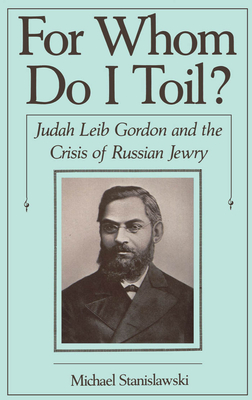
For Whom Do I Toil?
KSh 21,350.00
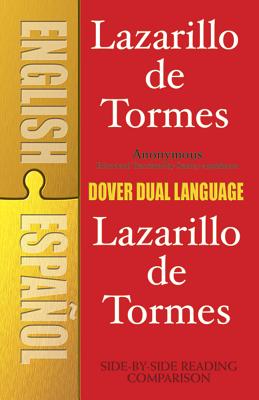
Lazarillo De Tormes
KSh 1,800.00
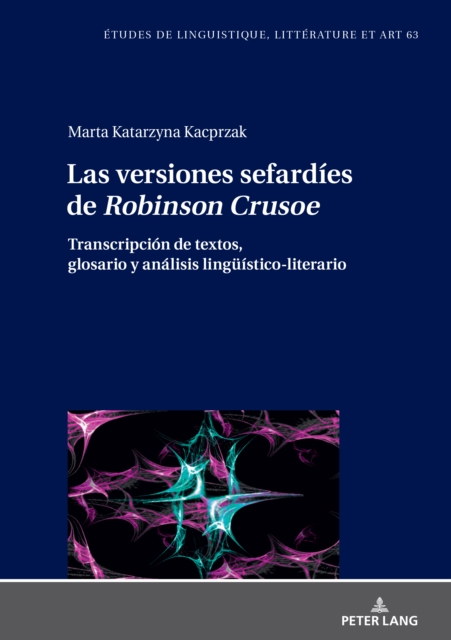
Las versiones sefardíes de Robinson Crusoe
KSh 6,850.00
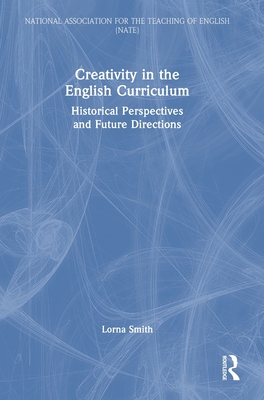
Creativity in the English Curriculum
KSh 30,950.00

English Language Teaching
KSh 30,950.00

Katzen und Kinder: Koprasente Phanomene in virtuellen Meetings
KSh 16,400.00
The Crucible of Carolina
KSh 17,000.00
More by Christine Gunlogson
More in This Genre
Creativity in the English Curriculum
KSh 5,650.00
Du contrat social, ou principes du droit politique.
KSh 4,850.00
Réflexions sur L''étude des Langues Asiatiques, Adressées à Sir James Mackintosh, Suivies D''une Lettr
KSh 2,550.00
Readings in Linguistics I & II
KSh 7,700.00
Analysing Sentences
KSh 7,400.00
For Whom Do I Toil?
KSh 21,350.00
