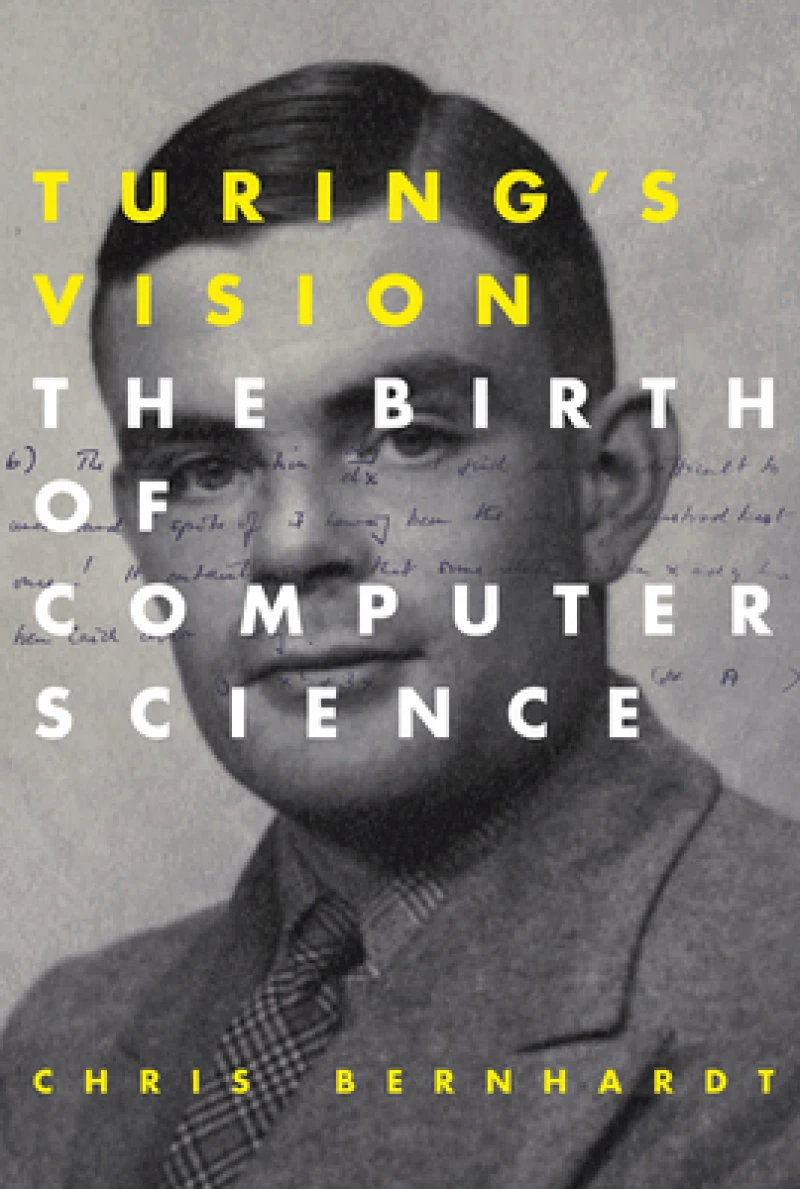
Turing''s Vision : The Birth of Computer Science
Book Details
Format
Paperback / Softback
Book Series
Turing's Vision
ISBN-10
0262533510
ISBN-13
9780262533515
Publisher
MIT Press Ltd
Imprint
MIT Press
Country of Manufacture
GB
Country of Publication
GB
Publication Date
Apr 21st, 2017
Print length
208 Pages
Weight
218 grams
Dimensions
20.40 x 13.90 x 1.50 cms
Ksh 3,600.00
Werezi Extended Catalogue
Delivery in 7 days
2 copies in stock
Delivery Location
Delivery fee: Select location
Delivery in 7 days
Secure
Quality
Fast
Turing's fascinating and remarkable theory, which now forms the basis of computer science, explained for the general reader.
An accessible and fascinating exploration of how Alan Turing’s mathematical theory gave rise to modern computer science and applications—from the desktops to cell phones
In 1936, when he was just 24 years old, Alan Turing wrote a remarkable paper in which he outlined the theory of computation, laying out the ideas that underlie all modern computers. This groundbreaking and powerful theory now forms the basis of computer science. In Turing’s Vision, Chris Bernhardt explains the theory for the general reader, beginning with its foundations and systematically building to its surprising conclusions. He also views Turing’s theory in the context of mathematical history, other views of computation (including those of Alonzo Church), Turing’s later work, and the birth of the modern computer.
Turing wanted to show that there were problems that were beyond any computer’s ability to solve; in particular, he wanted to find a decision problem that he could prove was undecidable. To explain Turing’s ideas, Bernhardt examines 3 well-known decision problems to explore the concept of undecidability; investigates theoretical computing machines, including Turing machines; explains universal machines; and proves that certain problems are undecidable, including Turing’s problem concerning computable numbers.
In 1936, when he was just 24 years old, Alan Turing wrote a remarkable paper in which he outlined the theory of computation, laying out the ideas that underlie all modern computers. This groundbreaking and powerful theory now forms the basis of computer science. In Turing’s Vision, Chris Bernhardt explains the theory for the general reader, beginning with its foundations and systematically building to its surprising conclusions. He also views Turing’s theory in the context of mathematical history, other views of computation (including those of Alonzo Church), Turing’s later work, and the birth of the modern computer.
Turing wanted to show that there were problems that were beyond any computer’s ability to solve; in particular, he wanted to find a decision problem that he could prove was undecidable. To explain Turing’s ideas, Bernhardt examines 3 well-known decision problems to explore the concept of undecidability; investigates theoretical computing machines, including Turing machines; explains universal machines; and proves that certain problems are undecidable, including Turing’s problem concerning computable numbers.
Get Turing''s Vision by at the best price and quality guaranteed only at Werezi Africa's largest book ecommerce store. The book was published by MIT Press Ltd and it has pages.