
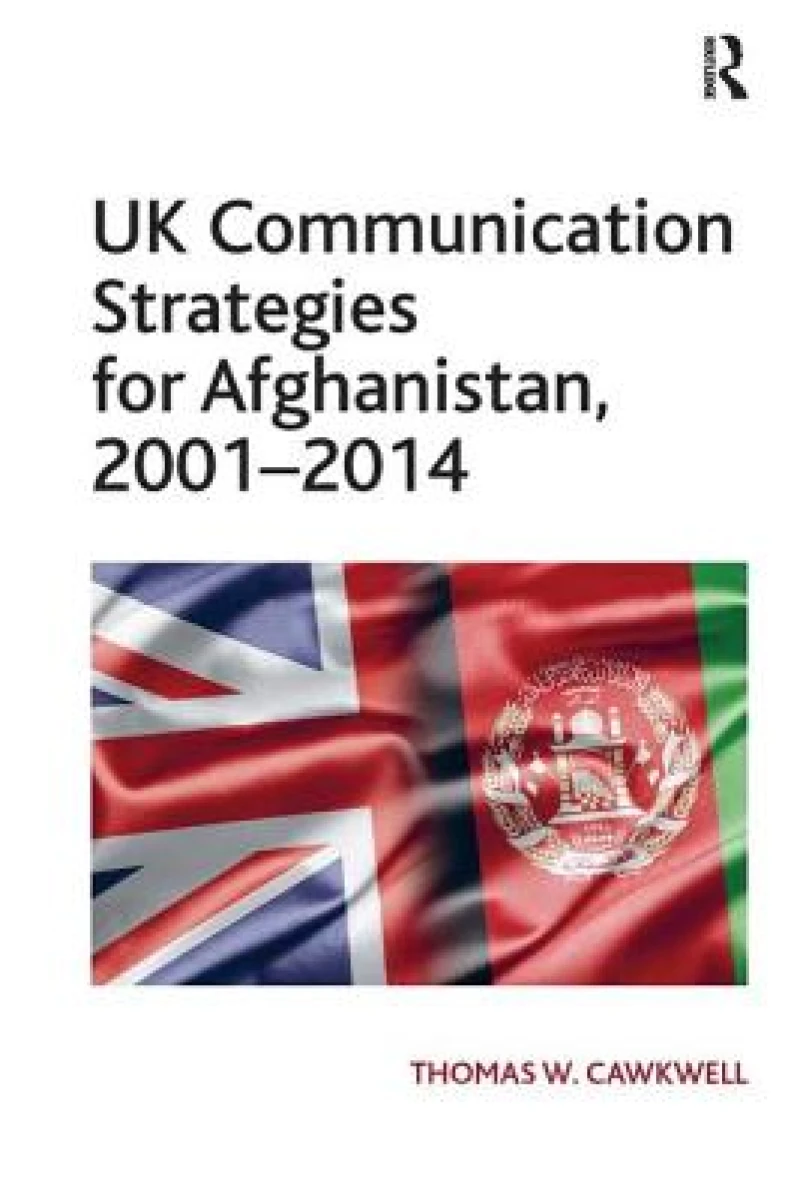
UK Communication Strategies for Afghanistan 2001?2014
Book Details
Format
Hardback or Cased Book
ISBN-10
1472473523
ISBN-13
9781472473523
Publisher
Taylor & Francis Ltd
Imprint
Routledge
Country of Manufacture
GB
Country of Publication
GB
Publication Date
Oct 28th, 2015
Print length
206 Pages
Weight
540 grams
Product Classification:
Peace studies & conflict resolutionPeace studies and conflict resolutionSocial & political philosophyPolitics & governmentPolitics and governmentPolitical campaigning & advertisingPolitical campaigning and advertisingArmed conflictSocial and political philosophyMilitary engineering
Ksh 30,950.00
Werezi Extended Catalogue
0 in stock
Delivery Location
Delivery fee: Select location
Secure
Quality
Fast
The war in Afghanistan came to an end in 2014 after nearly thirteen years of conflict. Throughout that period, British officials have described UK operations there in various conflicting and often contradictory ways; as a counter-terrorism mission, a stabilisation mission, and a counter-narcotics mission, respectively. This book investigates how the war was ?sold? to the British public and how Britain?s ?transnational? foreign and defence policy impacted on the unfolding of UK strategy in Afghanistan and the way it was communicated. It argues that because the UK?s foreign and defence policy is transnationally-oriented - meaning that it is foundationally aimed at maintaining alliance with the United States and the institutional coherence of NATO - UK strategy is contingent upon collective security and, crucially, is fundamentally concerned with the means of policy (maintaining alliances) over the ends (using alliances to effect change). Explaining the inalienability of collective security systems to national security is no easy task, however, and, when faced with the adversities of Afghanistan, the UK state has since 2008 instead opted to describe the significance of Afghanistan in narrow, nation-centric, counter-terrorist concerns in order to maintain public support for collective security operations there whilst, paradoxically, framing the conflict in a manner that avoids talking about the transnational structure and purpose of the mission. This kind of ?strategic? communication is increasingly becoming a focus of the UK state as it faces a transnational dilemma of maintaining its collective security bonds whilst facing a public increasingly sceptical of liberal interventionism.
Get UK Communication Strategies for Afghanistan 2001?2014 by at the best price and quality guaranteed only at Werezi Africa's largest book ecommerce store. The book was published by Taylor & Francis Ltd and it has pages.

