
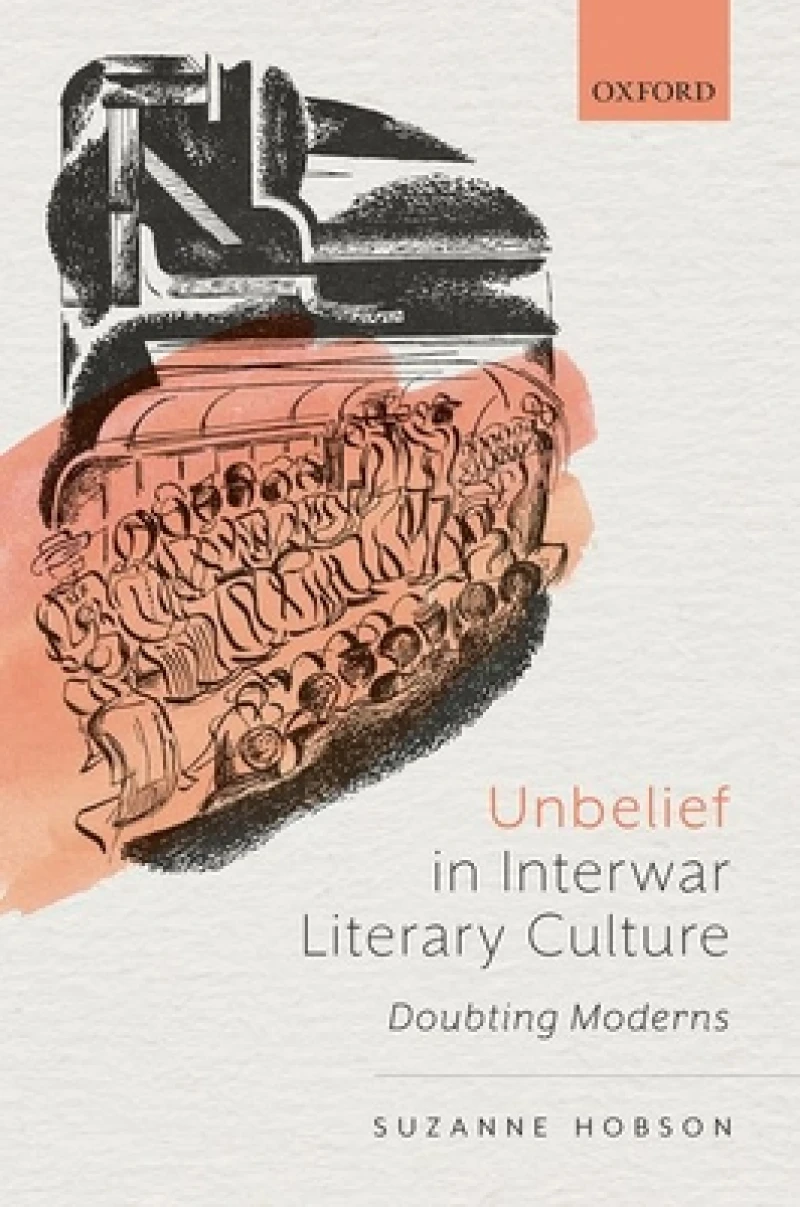
Unbelief in Interwar Literary Culture : Doubting Moderns
Book Details
Format
Hardback or Cased Book
ISBN-10
0192846477
ISBN-13
9780192846471
Publisher
Oxford University Press
Imprint
Oxford University Press
Country of Manufacture
GB
Country of Publication
GB
Publication Date
Feb 1st, 2022
Print length
250 Pages
Weight
528 grams
Dimensions
16.40 x 24.00 x 2.30 cms
Ksh 16,400.00
Werezi Extended Catalogue
0 in stock
Delivery Location
Delivery fee: Select location
Secure
Quality
Fast
Explores connections between literary figures and organized secularist movements and groups in the interwar period, with a focus on the works of Vernon Lee, H.G. Wells, George Moore, D.H. Lawrence, and Mary Borden, among others.
This volume offers a new account of the relationship between literary and secularist scenes of writing in interwar Britain. Organized secularism has sometimes been seen as a phenomenon that lived and died with the nineteenth century. But associations such as the National Secular Society and the Rationalist Press Association survived into the twentieth and found new purpose in the promotion and publishing of serious literature. This book assembles a group of literary figures whose work was recommended as being of particular interest to the unbelieving readership targeted by these organisations. Some, including Vernon Lee, H.G. Wells, Naomi Mitchison, and K.S. Bhat, were members or friends of the R.P.A.; others, such as Mary Butts, were sceptical but nonetheless registered its importance in their work; a third group, including D.H. Lawrence and George Moore, wrote in ways seen as sympathetic to the Rationalist cause. All of these writers produced fiction that was experimental in form and, though few of them could be described as modernist, they shared with modernist writers a will to innovate. This book explores how Rationalist ideas were adapted and transformed by these experiments, focusing in particular on the modifications required to accommodate the strong mode of unbelief associated with British secularism to the notional mode of belief usually solicited by fiction. Whereas modernism is often understood as the literature for a secular age, Unbelief in Interwar Literary Culture looks elsewhere to find a literature that draws more directly on secularism for its aesthetics and its ethics.
Get Unbelief in Interwar Literary Culture by at the best price and quality guaranteed only at Werezi Africa's largest book ecommerce store. The book was published by Oxford University Press and it has pages.

