
Uncertain Boundaries : The Social and Political Construction of European Economies
Book Details
Format
Paperback / softback
Book Series
Cambridge Studies in Comparative Politics
ISBN-10
0521030757
ISBN-13
9780521030755
Publisher
Cambridge University Press
Imprint
Cambridge University Press
Country of Manufacture
GB
Country of Publication
GB
Publication Date
Jan 18th, 2007
Print length
180 Pages
Weight
277 grams
Dimensions
22.80 x 15.20 x 1.20 cms
Product Classification:
Comparative politicsPolitical economy
KSh 6,100.00
Currently unavailable
0 in stock
Delivery Location
Delivery fee: Select location
Secure
Quality
Fast
This book argues that European economies were not deregulated in the 1980s. While old, politically centralized institutions have lost importance, institutional arrangements continue to shape economic behaviour of peripheral actors. The author outlines an alternative pattern for the 'micro-social' regulation of European economies.
During the post-World War II period, a pattern emerged in several European countries: the concentrated and centralized political regulation of the economy, based on the adoption of Keynesian policies, the development of the welfare state and moderately successful attempts at tripartite integration. This pattern entered a deep crisis in the 1980s however, and in the view of many observers, was replaced by a far-reaching deregulation of the economy. The author argues that social and political institutions have by no means lost their ability to structure economic activities. They have, in fact, shaped the different ways in which the European economies have adjusted to market conditions. A pattern of 'micro-social' regulation of European economies emerged as a potential candidate to take the place of the 'macropolitical' one. This volume discusses the conditions under which a change from a macro to a micro form takes place, as well as the features of the emerging pattern.
Get Uncertain Boundaries by Marino Regini at the best price and quality guaranteed only at Werezi Africa's largest book ecommerce store. The book was published by Cambridge University Press and it has 180 pages.
Customers Who Bought This Also Bought

Age of Revolutions
KSh 2,350.00

How Civil Wars Start
KSh 2,000.00

Autobiography
KSh 2,350.00

The Origins of Political Order
KSh 2,700.00
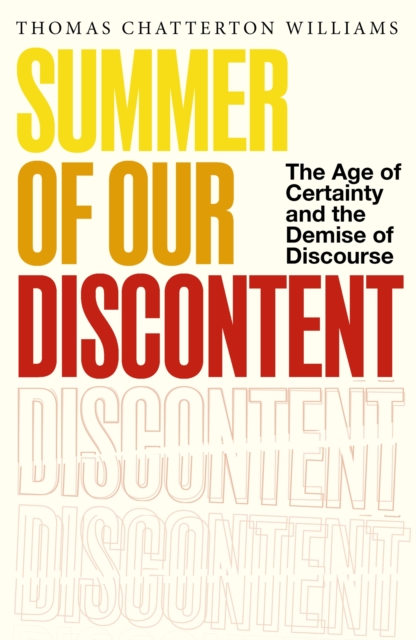
Summer of Our Discontent
KSh 4,500.00

Political Order and Political Decay
KSh 2,700.00

Great Power Diplomacy
KSh 5,400.00

Summer of Our Discontent
KSh 2,350.00

Narrow Corridor
KSh 2,350.00

Israel’s Palestinians
KSh 4,700.00

Order and Region Making in the Middle East
KSh 17,100.00

Nasser's Blessed Movement
KSh 3,400.00