
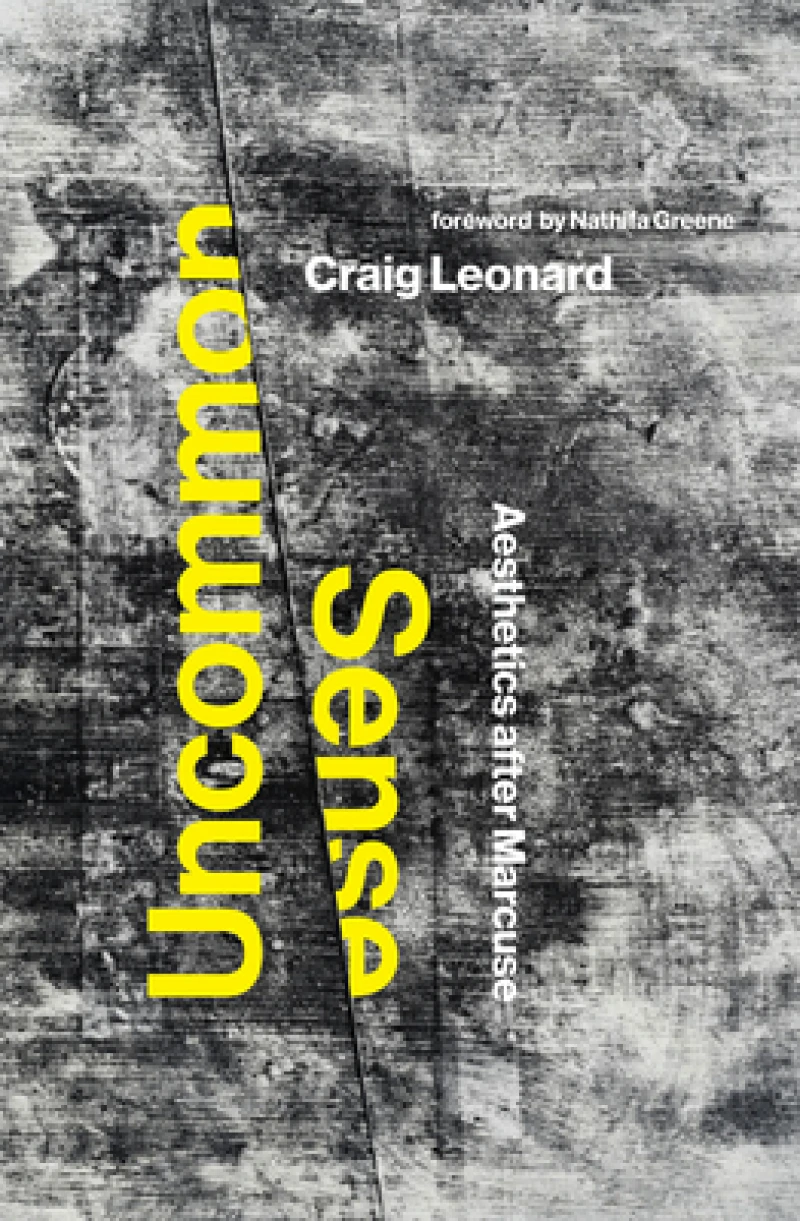
Uncommon Sense : Aesthetics after Marcuse
Book Details
Format
Paperback / Softback
ISBN-10
0262544466
ISBN-13
9780262544467
Publisher
MIT Press Ltd
Imprint
MIT Press
Country of Manufacture
GB
Country of Publication
GB
Publication Date
Sep 27th, 2022
Print length
248 Pages
Weight
326 grams
Dimensions
13.20 x 20.30 x 1.80 cms
Product Classification:
Theory of art
Ksh 3,800.00
Re-Printing
Delivery in 14 days
3 copies in stock
Delivery Location
Delivery fee: Select location
Delivery in 14 days
Secure
Quality
Fast
An examination of Herbert Marcuse’s political claim for the aesthetic dimension, focusing on defamiliarization as a means of developing radical sensibility.
In Uncommon Sense, Craig Leonard argues for the contemporary relevance of the aesthetic theory of Herbert Marcuse—an original member of the Frankfurt School and icon of the New Left—while also acknowledging his philosophical limits. His account reinvigorates Marcuse for contemporary readers, putting his aesthetic theory into dialogue with antiracist and anti-capitalist activism. Leonard emphasizes several key terms not previously analyzed within Marcuse’s aesthetics, including defamiliarization, anti-art, and habit. In particular, he focuses on the centrality of defamiliarization—a subversion of common sense that can be a means to the development of what Marcuse refers to as “radical sensibility.”
Leonard brings forward Marcuse’s claim that the aesthetic dimension is political because of its refusal to operate according to the repressive common sense that establishes and maintains relationships dictated by advanced capitalism. For Marcuse, defamiliarization is at the center of the aesthetic dimension, offering the direct means of stimulating its political potential. Leonard expands upon Marcuse’s aesthetics by drawing on the work of Sylvia Wynter, going beyond Marcuse’s predominantly European and patrilineal intellectual framework—while still retaining his aesthetic theory’s fundamental characteristics—toward a human dimension requiring decolonial, feminist, antiracist, and counterpoetic perspectives.
In Uncommon Sense, Craig Leonard argues for the contemporary relevance of the aesthetic theory of Herbert Marcuse—an original member of the Frankfurt School and icon of the New Left—while also acknowledging his philosophical limits. His account reinvigorates Marcuse for contemporary readers, putting his aesthetic theory into dialogue with antiracist and anti-capitalist activism. Leonard emphasizes several key terms not previously analyzed within Marcuse’s aesthetics, including defamiliarization, anti-art, and habit. In particular, he focuses on the centrality of defamiliarization—a subversion of common sense that can be a means to the development of what Marcuse refers to as “radical sensibility.”
Leonard brings forward Marcuse’s claim that the aesthetic dimension is political because of its refusal to operate according to the repressive common sense that establishes and maintains relationships dictated by advanced capitalism. For Marcuse, defamiliarization is at the center of the aesthetic dimension, offering the direct means of stimulating its political potential. Leonard expands upon Marcuse’s aesthetics by drawing on the work of Sylvia Wynter, going beyond Marcuse’s predominantly European and patrilineal intellectual framework—while still retaining his aesthetic theory’s fundamental characteristics—toward a human dimension requiring decolonial, feminist, antiracist, and counterpoetic perspectives.
Get Uncommon Sense by at the best price and quality guaranteed only at Werezi Africa's largest book ecommerce store. The book was published by MIT Press Ltd and it has pages.

