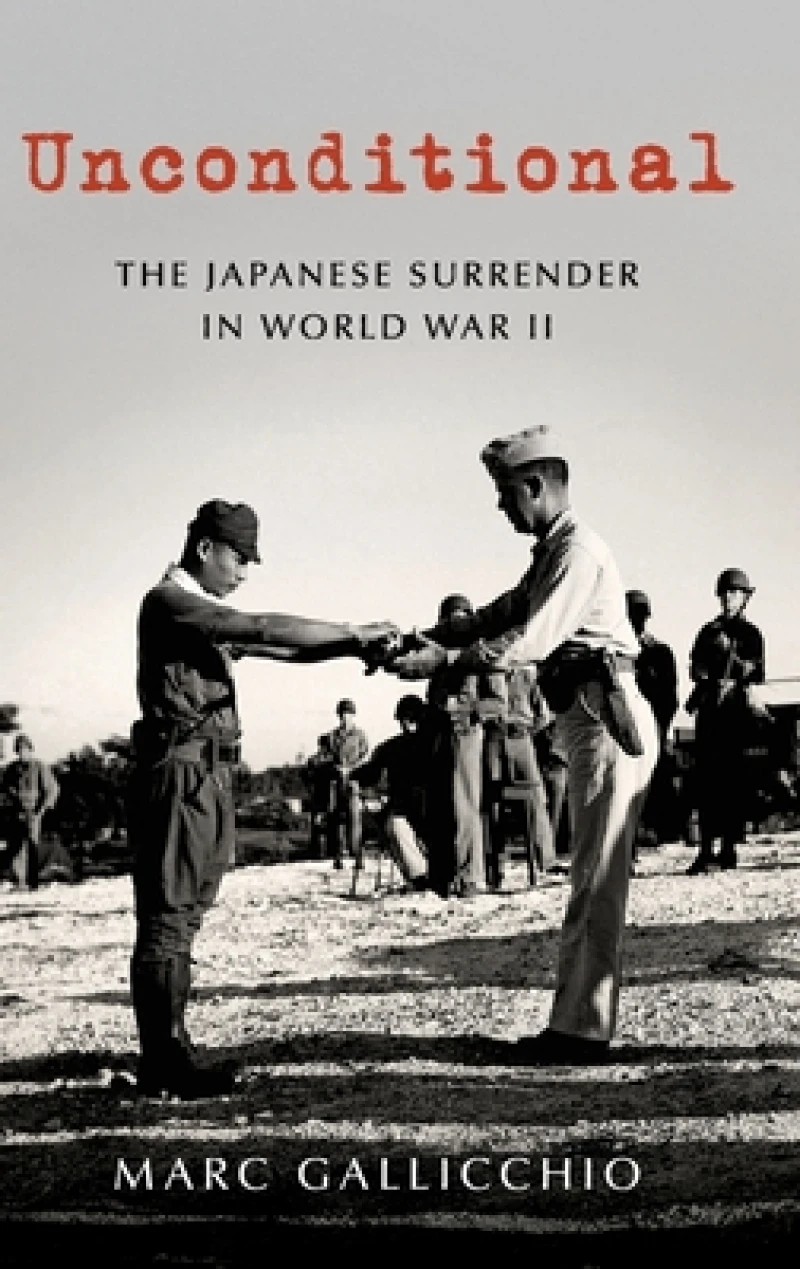
Unconditional : The Japanese Surrender in World War II
Book Details
Format
Hardback or Cased Book
Book Series
Pivotal Moments in American History
ISBN-10
019009110X
ISBN-13
9780190091101
Publisher
Oxford University Press Inc
Imprint
Oxford University Press Inc
Country of Manufacture
US
Country of Publication
GB
Publication Date
Sep 8th, 2020
Print length
288 Pages
Weight
540 grams
Dimensions
16.40 x 24.20 x 2.60 cms
Product Classification:
Asian historyHistory of the Americas20th century history: c 1900 to c 2000Second World War
Ksh 5,200.00
Werezi Extended Catalogue
0 in stock
Delivery Location
Delivery fee: Select location
Secure
Quality
Fast
Publishing on 75th anniversary of the Japanese surrender in September 1945, Unconditional not only offers a narrative of the Japanese surrender in its historical moment, but reveals how the policy underlying it poisoned American postwar politics and warped our understanding of World War II for decades.
Signed on September 2, 1945 aboard the American battleship USS Missouri in Tokyo Bay by Japanese and Allied leaders, the instrument of surrender formally ended the war in the Pacific and brought to a close one of the most cataclysmic engagements in history, one that had cost the lives of millions. VJ--Victory over Japan--Day had taken place two weeks or so earlier, in the wake of the dropping of the atomic bombs on Hiroshima and Nagasaki and the entrance of the Soviet Union into the war. In the end, the surrender itself fulfilled the commitment that Franklin Roosevelt had made that it be "unconditional," as had been the case with Nazi Germany in May, 1945. Though readily accepted as war policy at the time, after Roosevelt''s death in April 1945, popular support for unconditional surrender wavered, particularly when the bloody campaigns on Iwo Jima and Okinawa made clear the cost of military victory against Japan. The ending of the war in Europe spurred calls in Congress, particularly among anti-New Deal Republicans, to shift the American economy to peacetime and bring home troops. Even after the atomic bombs had been dropped, Japan continued to seek a negotiated surrender, further complicating the debate. Though this was the last time Americans would impose surrender unconditionally, questions surrounding it continued at home through the 1950s and 1960s, when liberal and conservative views reversed, and particularly in Vietnam and the definition of "peace with honor." It remained controversial through the ceremonies surrounding the 50th anniversary and the Gulf War, when the subject revived.In Unconditional, which publishes in time for the 75th anniversary of the surrender, Bancroft Prize co-winner Marc Gallicchio offers a narrative of the surrender in its historical moment, revealing how and why the event unfolded as it did and the principle figures behind it, including George C. Marshall and Douglas MacArthur, who would effectively become the leader of Japan during the American occupation. It also reveals how the policy underlying it remained controversial at the time and in the decades following, shaping our understanding of World War II.
Get Unconditional by at the best price and quality guaranteed only at Werezi Africa's largest book ecommerce store. The book was published by Oxford University Press Inc and it has pages.