

Understanding Crisis Communication : The Interplay of Social Media, Trust, Scientific knowledge and Public Policy
Book Details
Format
Hardback
ISBN-10
3032164044
ISBN-13
9783032164049
Publisher
Springer Nature Switzerland AG
Imprint
Palgrave Macmillan
Country of Manufacture
GB
Country of Publication
GB
Publication Date
May 5th, 2026
Print length
196 Pages
Product Classification:
Communication studiesMedia studiesMedia studiesHuman geography
KSh 25,200.00
Currently unavailable
0 in stock
Delivery Location
Delivery fee: Select location
Secure
Quality
Fast
Beyond these case studies, it engages with theoretical frameworks of crisis communication, explores the interplay between scientific knowledge and public policy, and underscores the vital role of transparency and trust in effective crisis management.
This book offers a rigorous examination of how crises—particularly nuclear disasters—are communicated through media and how these narratives shape public trust, policy-making, and scientific discourse. It investigates the growing influence of social media in framing crisis narratives and their impact on perception and decision-making. Drawing on detailed analyses of the SL-1 Accident (1961), Three Mile Island (1979), Chernobyl (1986), and Fukushima Daiichi (2011), the book identifies patterns and lessons from past communication strategies. Beyond these case studies, it engages with theoretical frameworks of crisis communication, explores the interplay between scientific knowledge and public policy, and underscores the vital role of transparency and trust in effective crisis management. Designed for scholars, practitioners, and policy-makers, this work equips readers with critical insights and practical tools to navigate the complexities of crisis communication in an era defined by digital media.
Get Understanding Crisis Communication by Jiankun Gong, Kwan Hoong Ng at the best price and quality guaranteed only at Werezi Africa's largest book ecommerce store. The book was published by Springer Nature Switzerland AG and it has 196 pages.
Customers Who Bought This Also Bought

Cultish
KSh 2,350.00

How to Read the Bible for All Its Worth
KSh 3,250.00

The Art of Fighting
KSh 3,950.00

The Gutenberg Galaxy
KSh 6,000.00

Persuasion and Power
KSh 4,850.00

Helping College Students Write
KSh 6,850.00
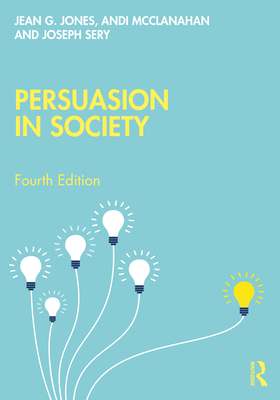
Persuasion in Society
KSh 17,100.00
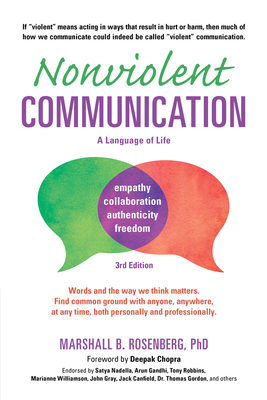
Nonviolent Communication: A Language of Life
KSh 3,050.00

The Dynamics of Persuasion
KSh 9,800.00

Fundamental Issues, Measurement and Study Design
KSh 35,100.00

The Psychology of Clear Leadership Communication
KSh 30,950.00

Patterns in Language and Communication
KSh 18,800.00
More by Jiankun Gong, Kwan Hoong Ng

Problems and Solutions in Medical Physics
KSh 10,100.00

Problems and Solutions in Medical Physics
KSh 26,300.00

Problems and Solutions in Medical Physics
KSh 26,300.00

Problems and Solutions in Medical Physics
KSh 10,100.00

Problems and Solutions in Medical Physics
KSh 11,150.00

Problems and Solutions in Medical Physics
KSh 30,950.00

Problems and Solutions in Medical Physics
KSh 12,400.00

Problems and Solutions in Medical Physics
KSh 30,950.00
