
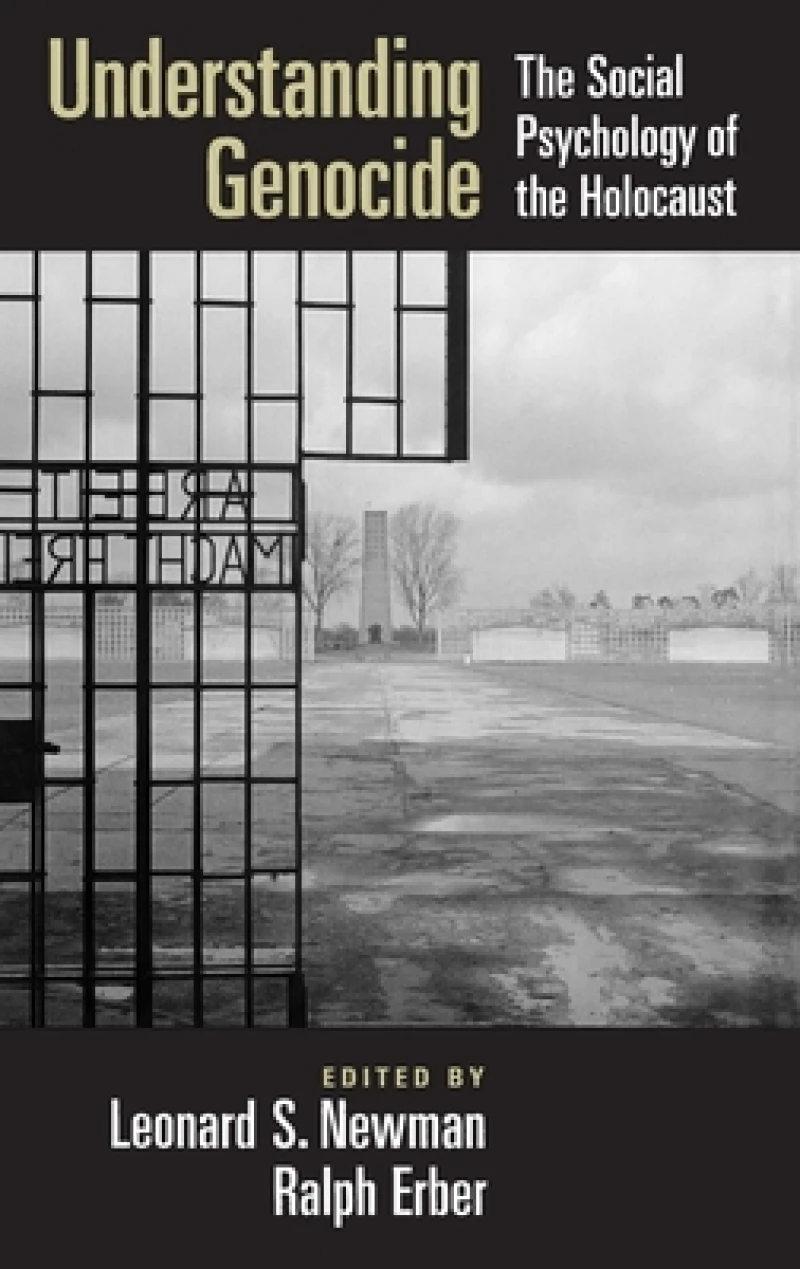
Understanding Genocide : The Social Psychology of the Holocaust
Book Details
Format
Hardback or Cased Book
ISBN-10
0195133625
ISBN-13
9780195133622
Publisher
Oxford University Press Inc
Imprint
Oxford University Press Inc
Country of Manufacture
GB
Country of Publication
GB
Publication Date
Oct 10th, 2002
Print length
376 Pages
Weight
710 grams
Dimensions
16.50 x 24.30 x 2.70 cms
Ksh 10,150.00
Manufactured on Demand
Delivery in 14 days
1 copies in stock
Delivery Location
Delivery fee: Select location
Delivery in 14 days
Secure
Quality
Fast
The contributors of this volume present an authoritative social psychological account of the Holocaust. This is in keeping with the past 50 years of research into and public interest in genocidal behaviour at both the individual and group levels. Explanatory concepts are developed such as cognitive dissonance, attributional error, and pluralistic ignorance.
When and why do groups target each other for extermination? How do seemingly normal people become participants in genocide? Why do some individuals come to the rescue of members of targeted groups, while others just passively observe their victimization? And how do perpetrators and bystanders later come to terms with the choices that they made? These questions have long vexed scholars and laypeople alike, and they have not decreased in urgency as we enter the twenty-first century. In this book--the first collection of essays representing social psychological perspectives on genocide and the Holocaust-- prominent social psychologists use the principles derived from contemporary research in their field to try to shed light on the behavior of the perpetrators of genocide. The primary focus of this volume is on the Holocaust, but the conclusions reached have relevance for attempts to understand any episode of mass killing. Among the topics covered are how crises and dificult life conditions might set the stage for violent intergroup conflict; why some groups are more likely than others to be selected as scapegoats; how certain cultural values and beliefs could facilitate the initiation of genocide; the roles of conformity and obedience to authority in shaping behavior; how engaging in violent behavior makes it easier to for one to aggress again; the evidence for a "genocide-prone" personality; and how perpetrators deceive themselves about what they have done. The book does not culminate in a grand theory of intergroup violence; instead, it seeks to provide the reader with new ways of making sense of the horrors of genocide. In other words, the goal of all of the contributors is to provide us with at least some of the knowledge that we will need to anticipate and prevent future such tragic episodes.
Get Understanding Genocide by at the best price and quality guaranteed only at Werezi Africa's largest book ecommerce store. The book was published by Oxford University Press Inc and it has pages.

