
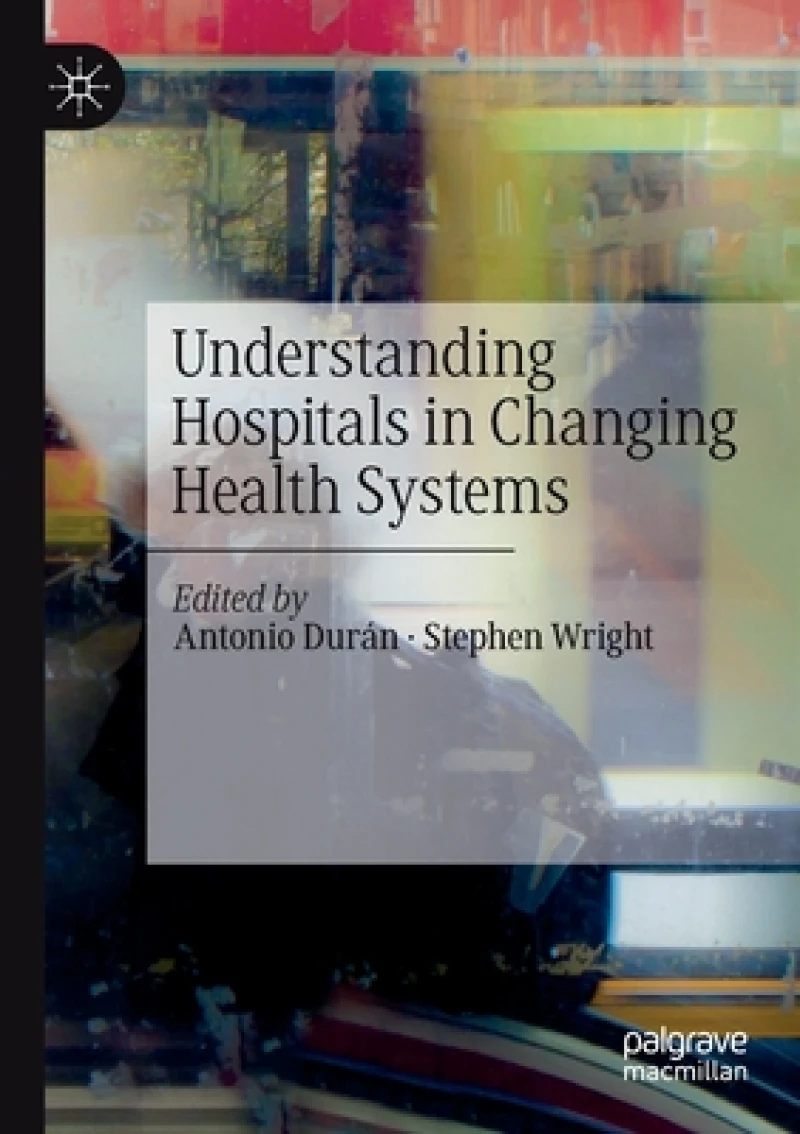
Understanding Hospitals in Changing Health Systems
2020 ed.
Book Details
Format
Paperback / Softback
ISBN-10
3030281744
ISBN-13
9783030281748
Edition
2020 ed.
Publisher
Springer Nature Switzerland AG
Imprint
Springer Nature Switzerland AG
Country of Manufacture
GB
Country of Publication
GB
Publication Date
Jan 15th, 2021
Print length
242 Pages
Weight
354 grams
Dimensions
14.90 x 21.00 x 1.80 cms
Product Classification:
Comparative politicsPublic administrationPublic administration / Public policyCentral / national / federal governmentCentral governmentHealth economicsHealth economicsHealth systems & servicesHealth systems and servicesMedical administration & managementMedical administration and management
Ksh 14,400.00
Werezi Extended Catalogue
0 in stock
Delivery Location
Delivery fee: Select location
Secure
Quality
Fast
"This timely book provides insight into the changing role of the ''hospital'' in the face of technological, organizational innovation and ever-tightening health budgets."
James Barlow, Imperial College Business School, UK
"This book covers various relevant aspects of the hospital in different states and contexts. Underlining the importance of business models for future hospitals, this publication presents models of care from a historic and a current perspective. All authors possess a deep insight into different health care systems, not only as scholars but as experts working for world-renowned health policy institutions such as the World Health Organization, the World Bank or the European Observatory for Health Systems."
Siegfried Walch, Management Center Innsbruck, Austria
"For an organisation like mine, representing those involved in the strategic planning of healthcare infrastructure, this book provides invaluable insights into what really matters - now and for the future - in the complex and contentious field of hospital development."
Jonathan Erskine, European Health Property Network, Netherlands
This book seeks to reframe current policy discussions on hospitals. Healthcare services turn expensive economic resources-people, capital, pharmaceuticals, energy, materials-into care and cure. Hospitals concentrate the use and the cost of these resources, particularly highly-trained people, expensive capital, and embedded technologies. But other areas of health, such as public health and primary care, seem to attract more attention and affection, at least within the health policy community. How to make sense of this paradox? Hospitals choose, or are assigned, to deliver certain parts of care packages. They are organised to do this via "business models". These necessarily incorporate models of care - the processes of dealing with patients. The activity needs to be governed, in the widest senses. Rational decisions need to be taken about both the care and the resources to be used. This book pulls these elements together, to stimulate a debate.
Get Understanding Hospitals in Changing Health Systems by at the best price and quality guaranteed only at Werezi Africa's largest book ecommerce store. The book was published by Springer Nature Switzerland AG and it has pages.

