
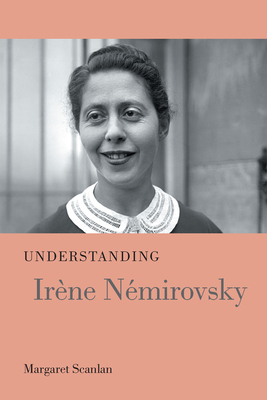
Understanding Irène Némirovsky
Book Details
Format
Hardback
ISBN-10
1611178681
ISBN-13
9781611178685
Publisher
University of South Carolina Press
Imprint
University of South Carolina Press
Country of Manufacture
US
Country of Publication
GB
Publication Date
Jun 30th, 2018
Print length
192 Pages
Weight
396 grams
Dimensions
23.60 x 16.00 x 1.90 cms
Product Classification:
Literature: history & criticismLiterature: history and criticism
KSh 6,500.00
Currently unavailable
0 in stock
Delivery Location
Delivery fee: Select location
Secure
Quality
Fast
A best-selling novelist in the 1930s, Irene Nemirovsky (1903-1942) was rediscovered in 2004, when her Suite Francaise, set during the fall of France and the first year of German occupation, became a popular and critical success both in France and in the United States. This book offers a sympathetic, nuanced exploration of the fiction and turbulent life of this best-selling author.
A sympathetic, nuanced exploration of the fiction and turbulent life of this best-selling author
A best-selling novelist in the 1930s, Irène Némirovsky (1903–1942) was rediscovered in 2004, when her Suite Française, set during the fall of France and the first year of German occupation, became a popular and critical success both in France and in the United States. Surviving in manuscript form for sixty years after the author’s deportation to Auschwitz, the work drew respectful attention as the voice of an early Holocaust victim. However, as remaining portions of Némirovsky’s oeuvre returned to print, many twenty-first-century readers were appalled. Works such as David Golder and The Ball were condemned as crudely anti-Semitic, and when biographical details such as her 1938 conversion to Catholicism became known, hostility toward this “self-hating” Jew deepened.
Countering such criticisms, Understanding Irène Némirovsky offers a sympathetic, nuanced reading of Némirovsky’s fiction. Margaret Scanlan begins with an overview of the writer’s life—her upper-class Russian childhood, her family’s immigration to France, her troubled relationship with her neglectful mother—and then traces how such experiences informed her novels and stories, including works set in revolutionary Russia, among the nouveau riche on the Riviera, and in struggling French families and failing businesses during the Depression. Scanlan examines the Suite Française and other works that address the rise of fascism and anti-Semitism. Viewing Némirovsky as a major talent with a distinctive style and voice, Scanlan argues for Némirovsky’s keen awareness of the unsettled times in which she lived and examines the ways in which even her novels of manners analyze larger social issues.
The Russian Revolution had convinced Némirovsky that violent liberations led to further violence and repression, that interior freedom required political stability. In 1940, when French democracy had collapsed and many seemed reconciled to the Vichy state, Némirovsky’s idea of private freedom faltered—a recognition that her last work, Suite Française, for all its seeming reticence, makes poignantly clear.
A best-selling novelist in the 1930s, Irène Némirovsky (1903–1942) was rediscovered in 2004, when her Suite Française, set during the fall of France and the first year of German occupation, became a popular and critical success both in France and in the United States. Surviving in manuscript form for sixty years after the author’s deportation to Auschwitz, the work drew respectful attention as the voice of an early Holocaust victim. However, as remaining portions of Némirovsky’s oeuvre returned to print, many twenty-first-century readers were appalled. Works such as David Golder and The Ball were condemned as crudely anti-Semitic, and when biographical details such as her 1938 conversion to Catholicism became known, hostility toward this “self-hating” Jew deepened.
Countering such criticisms, Understanding Irène Némirovsky offers a sympathetic, nuanced reading of Némirovsky’s fiction. Margaret Scanlan begins with an overview of the writer’s life—her upper-class Russian childhood, her family’s immigration to France, her troubled relationship with her neglectful mother—and then traces how such experiences informed her novels and stories, including works set in revolutionary Russia, among the nouveau riche on the Riviera, and in struggling French families and failing businesses during the Depression. Scanlan examines the Suite Française and other works that address the rise of fascism and anti-Semitism. Viewing Némirovsky as a major talent with a distinctive style and voice, Scanlan argues for Némirovsky’s keen awareness of the unsettled times in which she lived and examines the ways in which even her novels of manners analyze larger social issues.
The Russian Revolution had convinced Némirovsky that violent liberations led to further violence and repression, that interior freedom required political stability. In 1940, when French democracy had collapsed and many seemed reconciled to the Vichy state, Némirovsky’s idea of private freedom faltered—a recognition that her last work, Suite Française, for all its seeming reticence, makes poignantly clear.
Get Understanding Irène Némirovsky by Margaret Scanlan at the best price and quality guaranteed only at Werezi Africa's largest book ecommerce store. The book was published by University of South Carolina Press and it has 192 pages.
Customers Who Bought This Also Bought

On Freedom
KSh 2,350.00

The Origin of Others
KSh 3,600.00

There Are Places in the World Where Rules Are Less Important Than Kindness
KSh 3,600.00

Amazing Peace
KSh 3,050.00

Lewis Carroll and "Alice" on Stage
KSh 9,350.00

There Are Places in the World Where Rules Are Less Important Than Kindness
KSh 2,350.00

Swim in a Pond in the Rain
KSh 2,000.00

The Obscene Bird of Night – unabridged, centennial edition
KSh 3,050.00

I''m Not Here to Give a Speech
KSh 1,800.00

This Craft of Verse
KSh 3,600.00

On Great Writing (On the Sublime)
KSh 2,000.00

The Naked Eye
KSh 2,350.00
More by Margaret Scanlan


More in This Genre
On Freedom
KSh 2,350.00
The Origin of Others
KSh 3,600.00
There Are Places in the World Where Rules Are Less Important Than Kindness
KSh 3,600.00
Amazing Peace
KSh 3,050.00
Lewis Carroll and "Alice" on Stage
KSh 9,350.00
There Are Places in the World Where Rules Are Less Important Than Kindness
KSh 2,350.00
