
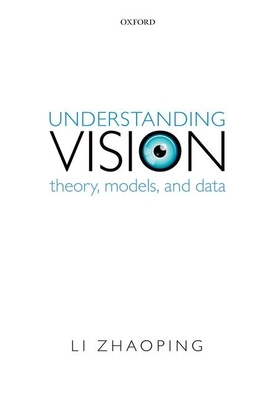
Understanding Vision : Theory, Models, and Data
by
Li Zhaoping
Book Details
Format
Paperback / softback
ISBN-10
0198829361
ISBN-13
9780198829362
Publisher
Oxford University Press
Imprint
Oxford University Press
Country of Manufacture
GB
Country of Publication
GB
Publication Date
May 31st, 2018
Print length
400 Pages
Weight
756 grams
Dimensions
24.60 x 17.30 x 1.90 cms
Product Classification:
Experimental psychologyCognition and cognitive psychologyPerceptionOphthalmologyNeurosciences
KSh 8,850.00
Temporarily out of stock, due soon
0 in stock
Delivery Location
Delivery fee: Select location
Secure
Quality
Fast
Vision science has grown hugely in the past decades, but there have been few books showing readers how to adopt a computional approach to understanding visual perception, along with the underlying mechanisms in the brain. This book explains the computational principles and models of biological visual processing, and in particular, primate vision.
While the field of vision science has grown significantly in the past three decades, there have been few comprehensive books that showed readers how to adopt a computional approach to understanding visual perception, along with the underlying mechanisms in the brain.Understanding Vision explains the computational principles and models of biological visual processing, and in particular, of primate vision. The book is written in such a way that vision scientists, unfamiliar with mathematical details, should be able to conceptually follow the theoretical principles and their relationship with physiological, anatomical, and psychological observations, without going through the more mathematical pages. For those with a physical science background, especially those from machine vision, this book serves as an analytical introduction to biological vision. It can be used as a textbook or a reference book in a vision course, or a computational neuroscience course for graduate students or advanced undergraduate students. It is also suitable for self-learning by motivated readers. in addition, for those with a focused interest in just one of the topics in the book, it is feasible to read just the chapter on this topic without having read or fully comprehended the other chapters. In particular, Chapter 2 presents a brief overview of experimental observations on biological vision; Chapter 3 is on encoding of visual inputs, Chapter 5 is on visual attentional selection driven by sensory inputs, and Chapter 6 is on visual perception or decoding. Including many examples that clearly illustrate the application of computational principles to experimental observations, Understanding Vision is valuable for students and researchers in computational neuroscience, vision science, machine and computer vision, as well as physicists interested in visual processes.
Get Understanding Vision by Li Zhaoping at the best price and quality guaranteed only at Werezi Africa's largest book ecommerce store. The book was published by Oxford University Press and it has 400 pages.
Customers Who Bought This Also Bought

The Origins of Object Knowledge
KSh 15,950.00

APA Handbook of Behavior Analysis
KSh 60,650.00

A Datafied Mind
KSh 5,800.00
Industrial Neuroscience in Aviation
KSh 19,800.00

Kognitive Neurowissenschaften
KSh 14,750.00
Researching Daily Life
KSh 8,100.00

Choice, Decision, and Measurement
KSh 9,000.00
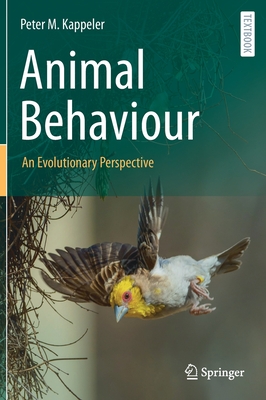
Animal Behaviour
KSh 13,500.00
The Neuropsychopathology of Schizophrenia
KSh 27,000.00

Cognitive Psychology
KSh 13,500.00

Invisible Gorilla
KSh 2,000.00
Contextual Cognition
KSh 9,000.00
