
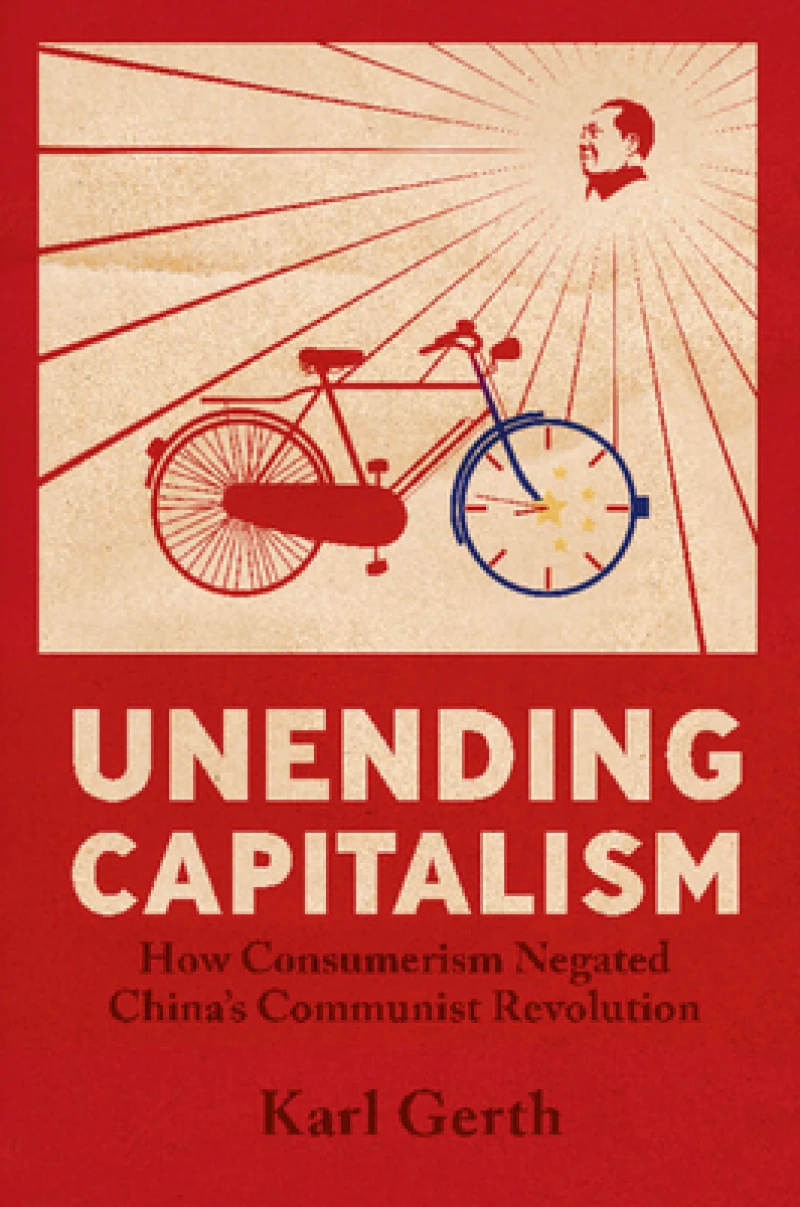
Unending Capitalism : How Consumerism Negated China's Communist Revolution
by
Karl Gerth
Book Details
Format
Paperback / Softback
ISBN-10
0521688469
ISBN-13
9780521688468
Publisher
Cambridge University Press
Imprint
Cambridge University Press
Country of Manufacture
GB
Country of Publication
GB
Publication Date
May 14th, 2020
Print length
394 Pages
Weight
586 grams
Dimensions
15.30 x 22.70 x 2.20 cms
Ksh 4,850.00
Manufactured on Demand
0 in stock
Delivery Location
Delivery fee: Select location
Secure
Quality
Fast
With the establishment of the PRC in 1949, the Chinese Communist Party aimed to end capitalism. Karl Gerth argues that despite the socialist rhetoric of class warfare, Communist Party policies developed capitalism and expanded consumerism. This negated the goals of the Communist Revolution across the Mao era (1949–1976) down to the present.
What forces shaped the twentieth-century world? Capitalism and communism are usually seen as engaged in a fight-to-the-death during the Cold War. With the establishment of the People''s Republic of China in 1949, the Chinese Communist Party aimed to end capitalism. Karl Gerth argues that despite the socialist rhetoric of class warfare and egalitarianism, Communist Party policies actually developed a variety of capitalism and expanded consumerism. This negated the goals of the Communist Revolution across the Mao era (1949–1976) down to the present. Through topics related to state attempts to manage what people began to desire - wristwatches and bicycles, films and fashion, leisure travel and Mao badges - Gerth challenges fundamental assumptions about capitalism, communism, and countries conventionally labeled as socialist. In so doing, his provocative history of China suggests how larger forces related to the desire for mass-produced consumer goods reshaped the twentieth-century world and remade people''s lives.
Get Unending Capitalism by at the best price and quality guaranteed only at Werezi Africa's largest book ecommerce store. The book was published by Cambridge University Press and it has pages.

