
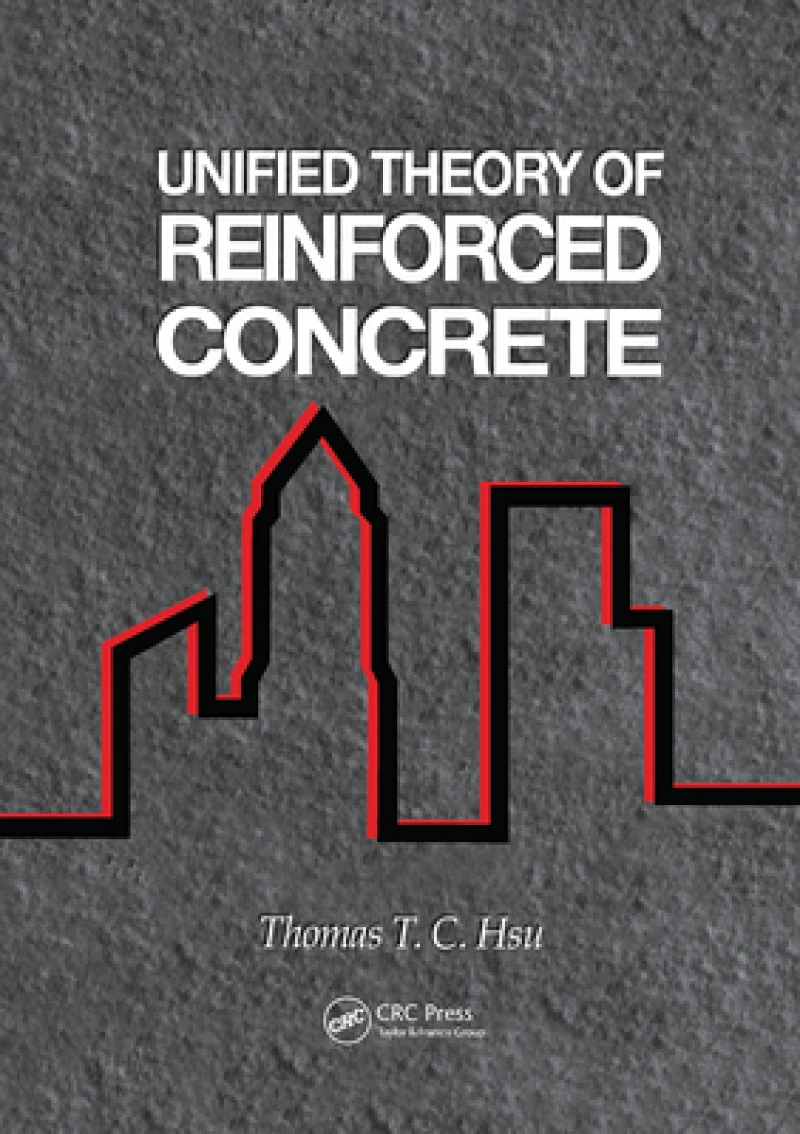
Unified Theory of Reinforced Concrete
Book Details
Format
Paperback / Softback
Book Series
New Directions in Civil Engineering
ISBN-10
0367450135
ISBN-13
9780367450137
Publisher
Taylor & Francis Ltd
Imprint
Routledge
Country of Manufacture
GB
Country of Publication
GB
Publication Date
Dec 2nd, 2019
Print length
336 Pages
Weight
453 grams
Product Classification:
Materials scienceCivil engineering, surveying & buildingStructural engineering
Ksh 12,050.00
Werezi Extended Catalogue
0 in stock
Delivery Location
Delivery fee: Select location
Secure
Quality
Fast
Reinforced concrete structures are subjected to a complex variety of stresses and strains. The four basic actions are bending, axial load, shear, and torsion. Presently, there is no single comprehensive theory for reinforced concrete structural behavior that addresses all of these basic actions and their interactions. Furthermore, there is little consistency among countries around the world in their building codes, especially in the specifications for shear and torsion.
Unified Theory of Reinforced Concrete addresses this serious problem by integrating available information with new research data, developing one unified theory of reinforced concrete behavior that embraces and accounts for all four basic actions and their combinations. The theory is presented in a systematic manner, elucidating its five component models from a pedagogical and historical perspective while emphasizing the fundamental principles of equilibrium, compatibility, and the constitutive laws of materials. The significance of relationships between models and their intrinsic consistencies are emphasized. This theory can serve as the foundation on which to build a universal design code that can be adopted internationally. In addition to frames, the book explains the fundamental concept of the design of wall-type and shell-type structures.
Unified Theory of Reinforced Concrete will be an important reference for all engineers involved in the design of concrete structures. The book can also serve well as a text for a graduate course in structural engineering.
Unified Theory of Reinforced Concrete addresses this serious problem by integrating available information with new research data, developing one unified theory of reinforced concrete behavior that embraces and accounts for all four basic actions and their combinations. The theory is presented in a systematic manner, elucidating its five component models from a pedagogical and historical perspective while emphasizing the fundamental principles of equilibrium, compatibility, and the constitutive laws of materials. The significance of relationships between models and their intrinsic consistencies are emphasized. This theory can serve as the foundation on which to build a universal design code that can be adopted internationally. In addition to frames, the book explains the fundamental concept of the design of wall-type and shell-type structures.
Unified Theory of Reinforced Concrete will be an important reference for all engineers involved in the design of concrete structures. The book can also serve well as a text for a graduate course in structural engineering.
Reinforced concrete structures are subjected to a complex variety of stresses and strains. The four basic actions are bending, axial load, shear, and torsion. Presently, there is no single comprehensive theory for reinforced concrete structural behavior that addresses all of these basic actions and their interactions. Furthermore, there is little consistency among countries around the world in their building codes, especially in the specifications for shear and torsion.
Unified Theory of Reinforced Concrete addresses this serious problem by integrating available information with new research data, developing one unified theory of reinforced concrete behavior that embraces and accounts for all four basic actions and their combinations. The theory is presented in a systematic manner, elucidating its five component models from a pedagogical and historical perspective while emphasizing the fundamental principles of equilibrium, compatibility, and the constitutive laws of materials. The significance of relationships between models and their intrinsic consistencies are emphasized. This theory can serve as the foundation on which to build a universal design code that can be adopted internationally. In addition to frames, the book explains the fundamental concept of the design of wall-type and shell-type structures.
Unified Theory of Reinforced Concrete will be an important reference for all engineers involved in the design of concrete structures. The book can also serve well as a text for a graduate course in structural engineering.
Unified Theory of Reinforced Concrete addresses this serious problem by integrating available information with new research data, developing one unified theory of reinforced concrete behavior that embraces and accounts for all four basic actions and their combinations. The theory is presented in a systematic manner, elucidating its five component models from a pedagogical and historical perspective while emphasizing the fundamental principles of equilibrium, compatibility, and the constitutive laws of materials. The significance of relationships between models and their intrinsic consistencies are emphasized. This theory can serve as the foundation on which to build a universal design code that can be adopted internationally. In addition to frames, the book explains the fundamental concept of the design of wall-type and shell-type structures.
Unified Theory of Reinforced Concrete will be an important reference for all engineers involved in the design of concrete structures. The book can also serve well as a text for a graduate course in structural engineering.
Get Unified Theory of Reinforced Concrete by at the best price and quality guaranteed only at Werezi Africa's largest book ecommerce store. The book was published by Taylor & Francis Ltd and it has pages.

