
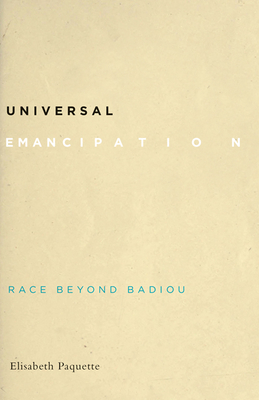
Universal Emancipation : Race Beyond Badiou
Book Details
Format
Paperback / softback
ISBN-10
1517909449
ISBN-13
9781517909444
Publisher
University of Minnesota Press
Imprint
University of Minnesota Press
Country of Manufacture
GB
Country of Publication
GB
Publication Date
Oct 27th, 2020
Print length
200 Pages
Weight
376 grams
Dimensions
14.10 x 21.60 x 1.60 cms
Product Classification:
Social discrimination & inequalityEthnic minorities & multicultural studies
KSh 3,500.00
Currently unavailable
0 in stock
Delivery Location
Delivery fee: Select location
Secure
Quality
Fast
A vital and timely contribution to the growing scholarship on the political thought of Alain Badiou Is inattention to questions of race more than just incidental to Alain Badiou’s philosophical system? Universal Emancipation reveals a crucial weakness in the approach to (in)difference in political life of this increasingly influential French thinker. With white nationalist movements on the rise, the tensions between commitments to universal principles and attention to difference and identity are even more pressing. Elisabeth Paquette’s powerful critical analysis demonstrates that Badiou’s theory of emancipation fails to account for racial and racialized subjects, thus attenuating its utility in thinking about freedom and justice. The crux of the argument relies on a distinction he makes between culture and politics, whereby freedom only pertains to the political and not the cultural. The implications of this distinction become evident when she turns to two examples within Badiou’s theory: the Négritude movement and the Haitian Revolution. According to Badiou’s 2017 book Black, while Négritude is an important cultural movement, it cannot be considered a political movement because Négritude writers and artists were too focused on particularities such as racial identity. Paquette argues that Badiou’s discussion of Négritude mirrors that of Jean-Paul Sartre in his 1948 essay “Black Orpheus” that has been critiqued by leading critical race theorists. Second, prominent Badiou scholar Nick Nesbitt claims that the Haitian Revolution could only be considered political if its adherents had shifted their focus away from race. However, Paquette argues that not only was race a central feature of this revolution but also that the revolution ought to be understood as a political emancipation movement. Paquette also moves beyond Badiou, drawing on the groundbreaking work of Sylvia Wynter to offer an alternative framework for emancipation. She juxtaposes Badiou’s use of universality as indifference to difference with Wynter’s pluri-conceptual theory of emancipation, emphasizing solidarity over indifference. Paquette then develops her view of a pluri-conceptual theory of emancipation, wherein particular identities, such as race, need not be subtracted from a theory of emancipation.
Get Universal Emancipation by Elisabeth Paquette at the best price and quality guaranteed only at Werezi Africa's largest book ecommerce store. The book was published by University of Minnesota Press and it has 200 pages.
Customers Who Bought This Also Bought
Decolonizing Language and Other Revolutionary Ideas
KSh 2,350.00
Decolonizing Language and Other Revolutionary Ideas
KSh 3,600.00
King
KSh 2,700.00
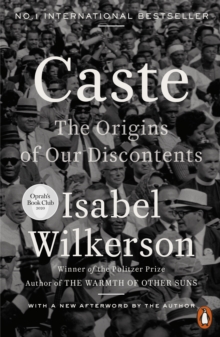
Caste
KSh 2,700.00
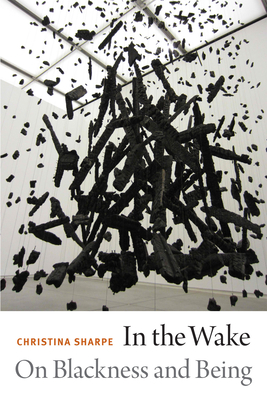
In the Wake
KSh 3,600.00

And So I Roar
KSh 2,000.00

Invisible Women
KSh 2,350.00

Africa''s Tarnished Name
KSh 700.00
Equality
KSh 2,150.00
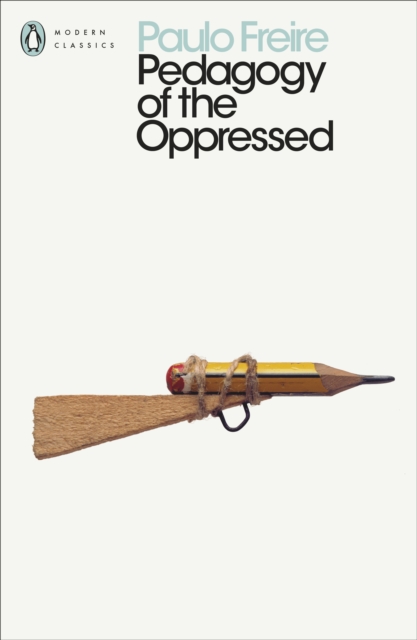
Pedagogy of the Oppressed
KSh 2,000.00

Citizen
KSh 2,350.00

God's Bits of Wood
KSh 3,050.00
