
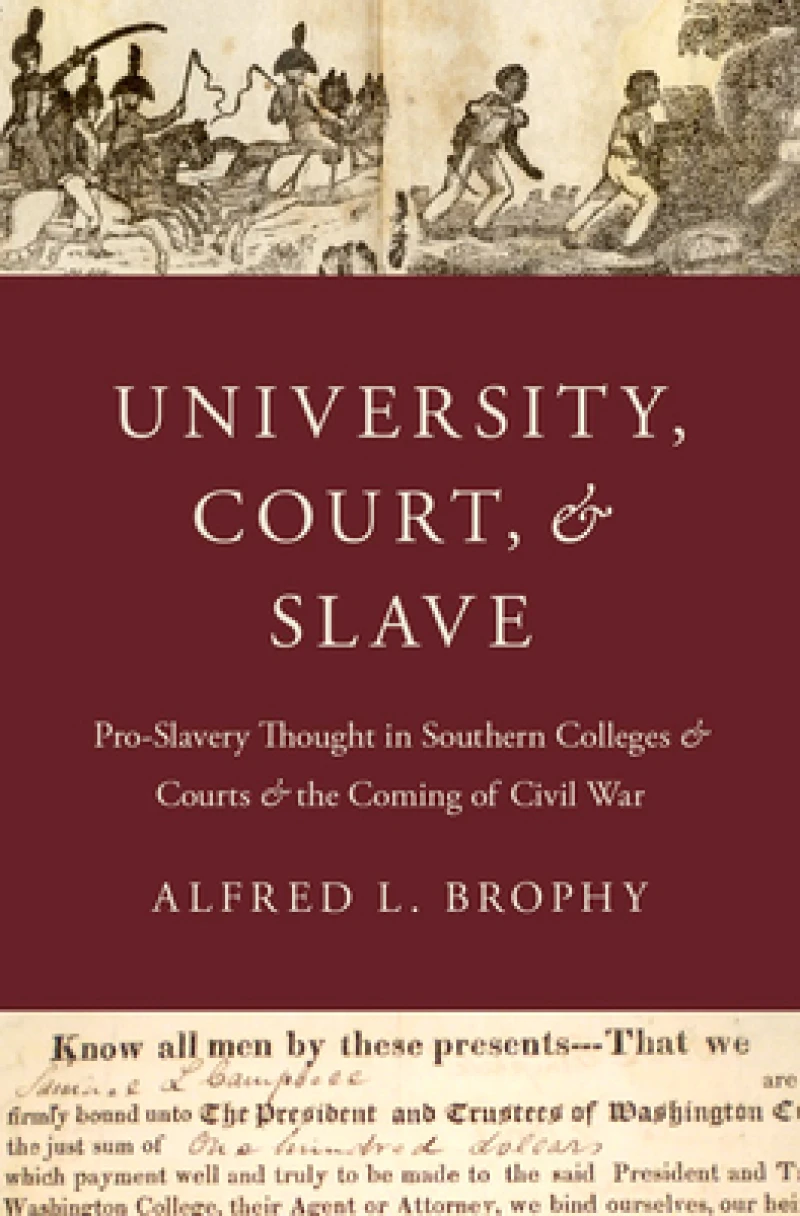
University, Court, and Slave : Pro-Slavery Thought in Southern Colleges and Courts and the Coming of Civil War
Book Details
Format
Hardback or Cased Book
ISBN-10
0199964238
ISBN-13
9780199964239
Publisher
Oxford University Press Inc
Imprint
Oxford University Press Inc
Country of Manufacture
US
Country of Publication
GB
Publication Date
Sep 8th, 2016
Print length
402 Pages
Weight
635 grams
Dimensions
16.50 x 23.90 x 3.80 cms
Ksh 11,200.00
Manufactured on Demand
0 in stock
Delivery Location
Delivery fee: Select location
Secure
Quality
Fast
University, Court, and Slave reveals long-forgotten connections between universities and pro-slavery thought. Proslavery faculty wrote about the economic and historical importance of slavery and helped shape a proslavery jurisprudence that made it harder to free slaves and pushed the South towards Civil War.
Alfred L. Brophy''s University, Court, and Slave reveals long-forgotten connections between pre-Civil War southern universities and slavery. Universities and their faculty owned people -- sometimes dozens of people -- and profited from their labor while many were physically abused on their campuses. Education was often paid for through the profits of enslaved labor. University faculty -- and students -- also promoted the institution of slavery. They wrote about the history of slavery, its central role in the southern economy, and developed a political theory that justified keeping some people in slavery. The university faculty spoke a common language of economic utility, history, and philosophy with those who made the laws for the southern states. That extensive writing promoting slavery helps us understand how southern politicians and judges thought about slavery.As antislavery rhetoric gained momentum, southern academics and their allies in the courts became bolder in their claims. Some went so far as to say that slavery was supported by natural law. The combination of economic reasoning and historical precedent helped shape a southern, proslavery jurisprudence. Following Lincoln''s November 1860 election southern academics joined politicians, judges, lawyers, and other leaders to argue that their economy and society was threatened. Southern jurisprudence led them to believe that any threats to slavery and property justified secession. In some cases, academics took their case to the southern public and, in one case, to the battlefield, to defend slavery.
Get University, Court, and Slave by at the best price and quality guaranteed only at Werezi Africa's largest book ecommerce store. The book was published by Oxford University Press Inc and it has pages.

