

University Physics for Life Sciences : A Cellular Approach
Book Details
Format
Hardback
ISBN-10
0262054450
ISBN-13
9780262054454
Publisher
MIT Press Ltd
Imprint
MIT Press
Country of Manufacture
GB
Country of Publication
GB
Publication Date
Mar 31st, 2026
Print length
400 Pages
Weight
567 grams
Product Classification:
Biology, life sciences
KSh 17,100.00
Not Yet Published
0 in stock
Delivery Location
Delivery fee: Select location
Secure
Quality
Fast
An introductory physics textbook for life science students that focuses on biological examples at the cellular and molecular level.
What physical phenomena will life science students encounter in their advanced coursework? Built from the ground up to answer this question, University Physics for Life Sciences offers an introductory physics textbook that focuses on biological examples at the cellular and molecular levels. It incorporates two foundational themes often excluded from standard physics textbooks: diffusion, a collection of elastic collisions between molecules, and electric dipoles, the basis for almost all biological molecular interactions. The first part of the book covers mechanics—kinematics, conservation of momentum and energy, and Newton’s laws, followed by enthalpy, entropy, and Gibbs free energy. The second part focuses on electricity, magnetism, and light, including Coulomb’s law, electric fields, potential, and current; magnetic fields and forces; and waves, optics, and quantum mechanics.
What physical phenomena will life science students encounter in their advanced coursework? Built from the ground up to answer this question, University Physics for Life Sciences offers an introductory physics textbook that focuses on biological examples at the cellular and molecular levels. It incorporates two foundational themes often excluded from standard physics textbooks: diffusion, a collection of elastic collisions between molecules, and electric dipoles, the basis for almost all biological molecular interactions. The first part of the book covers mechanics—kinematics, conservation of momentum and energy, and Newton’s laws, followed by enthalpy, entropy, and Gibbs free energy. The second part focuses on electricity, magnetism, and light, including Coulomb’s law, electric fields, potential, and current; magnetic fields and forces; and waves, optics, and quantum mechanics.
- Suits biology, pre-med, and pre-health undergraduates with some knowledge of calculus
- Uses computation to explain complex biological phenomena
- Covers diffusion, statistical mechanics and free energy as well as electric dipoles and their interactions with light
- Accessibly introduces Python programming
Get University Physics for Life Sciences by Lisa Lapidus, Nicholas Rombes at the best price and quality guaranteed only at Werezi Africa's largest book ecommerce store. The book was published by MIT Press Ltd and it has 400 pages.
Customers Who Bought This Also Bought

Biology for Cambridge International AS & A Level Coursebook
KSh 12,150.00
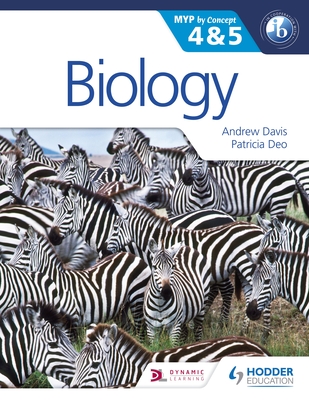
Biology for the IB MYP 4 & 5
KSh 9,950.00
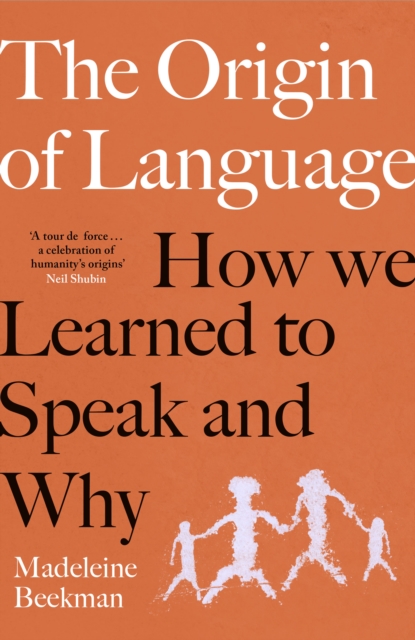
The Origin of Language
KSh 4,500.00

Animal Vegetable Criminal
KSh 1,800.00

Pearson Edexcel International A Level Biology Student Book
KSh 8,450.00

Pearson Edexcel International AS Level Biology Student Book
KSh 8,300.00

Pearson Edexcel International A Level Biology Lab Book
KSh 1,800.00

Bonk
KSh 2,000.00
The Gene
KSh 4,350.00
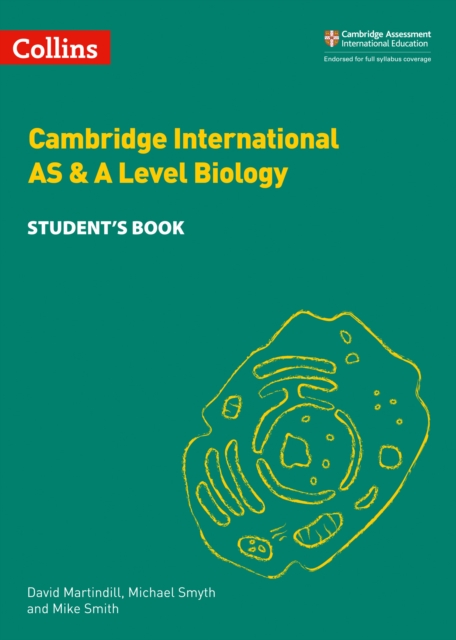
Caie as & a Level Biology SB
KSh 10,550.00

A-Level Biology: AQA Year 1 & 2 Complete Revision & Practice with Online Edition
KSh 4,450.00

They Had Names
KSh 3,900.00






More in This Genre
Biology for Cambridge International AS & A Level Coursebook
KSh 12,150.00
Biology for the IB MYP 4 & 5
KSh 9,950.00
The Origin of Language
KSh 4,500.00
Animal Vegetable Criminal
KSh 1,800.00
Pearson Edexcel International A Level Biology Student Book
KSh 8,450.00
Pearson Edexcel International AS Level Biology Student Book
KSh 8,300.00
