
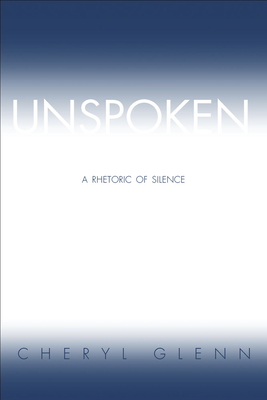
Unspoken : A Rhetoric of Silence
by
Cheryl Glenn
Book Details
Format
Paperback / softback
ISBN-10
0809325845
ISBN-13
9780809325849
Publisher
Southern Illinois University Press
Imprint
Southern Illinois University Press
Country of Manufacture
US
Country of Publication
GB
Publication Date
Aug 25th, 2004
Print length
221 Pages
Weight
350 grams
Dimensions
15.40 x 22.90 x 1.70 cms
Product Classification:
LinguisticsPhenomenology & ExistentialismPhenomenology and Existentialism
KSh 4,850.00
Currently unavailable
0 in stock
Delivery Location
Delivery fee: Select location
Secure
Quality
Fast
In our talkative Western culture, speech is synonymous with authority and influence while silence is frequently misheard as passive agreement when it often signifies much more. In her groundbreaking exploration of silence as a significant rhetorical art, Cheryl Glenn articulates the ways in which tactical silence can be as expressive and strategic an instrument of human communication as speech itself.
Drawing from linguistics, phenomenology, feminist studies, anthropology, ethnic studies, and literary analysis, Unspoken: A Rhetoric of Silence theorizes both a cartography and grammar of silence. By mapping the range of spaces silence inhabits, Glenn offers a new interpretation of its complex variations and uses.
Glenn contextualizes the rhetoric of silence by focusing on selected contemporary examples. Listening to silence and voice as gendered positions, she analyzes the highly politicized silences and words of a procession of figures she refers to as “all the President’s women,” including Anita Hill, Lani Guiner, Gennifer Flowers, and Chelsea Clinton. She also turns an investigative ear to the cultural taciturnity attributed to various Native American groups—Navajo, Apache, Hopi, and Pueblo—and its true meaning. Through these examples, Glenn reinforces the rhetorical contributions of the unspoken, codifying silence as a rhetorical device with the potential to deploy, defer, and defeat power.
Unspoken concludes by suggesting opportunities for further research into silence and silencing, including music, religion, deaf communities, cross-cultural communication, and the circulation of silence as a creative resource within the college classroom and for college writers.
Drawing from linguistics, phenomenology, feminist studies, anthropology, ethnic studies, and literary analysis, Unspoken: A Rhetoric of Silence theorizes both a cartography and grammar of silence. By mapping the range of spaces silence inhabits, Glenn offers a new interpretation of its complex variations and uses.
Glenn contextualizes the rhetoric of silence by focusing on selected contemporary examples. Listening to silence and voice as gendered positions, she analyzes the highly politicized silences and words of a procession of figures she refers to as “all the President’s women,” including Anita Hill, Lani Guiner, Gennifer Flowers, and Chelsea Clinton. She also turns an investigative ear to the cultural taciturnity attributed to various Native American groups—Navajo, Apache, Hopi, and Pueblo—and its true meaning. Through these examples, Glenn reinforces the rhetorical contributions of the unspoken, codifying silence as a rhetorical device with the potential to deploy, defer, and defeat power.
Unspoken concludes by suggesting opportunities for further research into silence and silencing, including music, religion, deaf communities, cross-cultural communication, and the circulation of silence as a creative resource within the college classroom and for college writers.
Get Unspoken by Cheryl Glenn at the best price and quality guaranteed only at Werezi Africa's largest book ecommerce store. The book was published by Southern Illinois University Press and it has 221 pages.
Customers Who Bought This Also Bought

Creativity in the English Curriculum
KSh 5,650.00
Du contrat social, ou principes du droit politique.
KSh 4,850.00

Réflexions sur L''étude des Langues Asiatiques, Adressées à Sir James Mackintosh, Suivies D''une Lettr
KSh 2,550.00
Readings in Linguistics I & II
KSh 7,700.00
Analysing Sentences
KSh 7,400.00
For Whom Do I Toil?
KSh 21,350.00

Lazarillo De Tormes
KSh 1,800.00

Las versiones sefardíes de Robinson Crusoe
KSh 6,850.00
Creativity in the English Curriculum
KSh 30,950.00

English Language Teaching
KSh 30,950.00

Katzen und Kinder: Koprasente Phanomene in virtuellen Meetings
KSh 16,400.00
The Crucible of Carolina
KSh 17,000.00
More by Cheryl Glenn

New Harbrace Guide
KSh 11,350.00
The New Harbrace Guide: Genres for Composing (w/ MLA9E Updates)
KSh 11,800.00
Writer''s Harbrace Handbook (w/ MLA9E & APA7E Updates)
KSh 17,300.00
Rhetorical Feminism and This Thing Called Hope
KSh 6,500.00
Hodges Harbrace Handbook, 2016 MLA Update
KSh 16,250.00

The New Harbrace Guide: Genres for Composing (w/ MLA9E Updates)
KSh 12,100.00

Harbrace Essentials w/ Resources for Writing in the Disciplines
KSh 10,400.00
Harbrace Essentials (w/ MLA9E Updates)
KSh 6,900.00
More in This Genre
Creativity in the English Curriculum
KSh 5,650.00
Du contrat social, ou principes du droit politique.
KSh 4,850.00
Réflexions sur L''étude des Langues Asiatiques, Adressées à Sir James Mackintosh, Suivies D''une Lettr
KSh 2,550.00
Readings in Linguistics I & II
KSh 7,700.00
Analysing Sentences
KSh 7,400.00
For Whom Do I Toil?
KSh 21,350.00
