
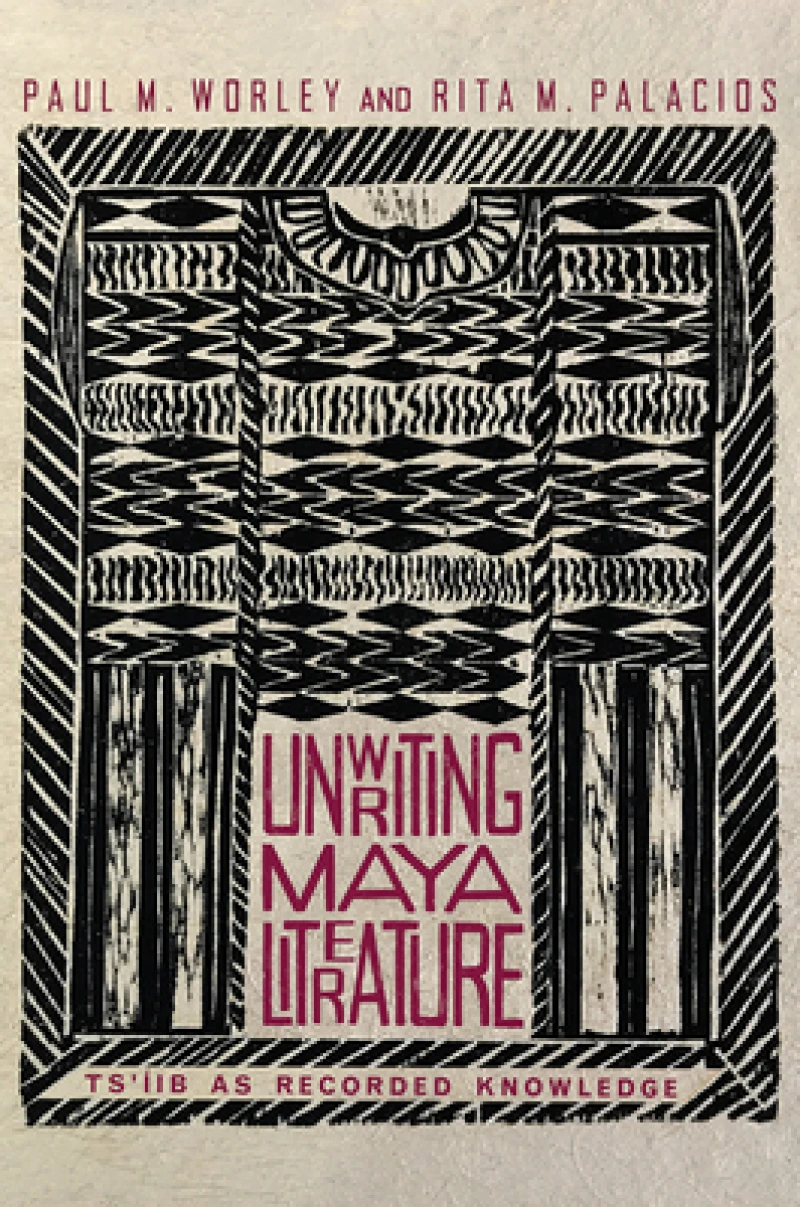
Unwriting Maya Literature : Ts'iib As Recorded Knowledge
Book Details
Format
Paperback / Softback
ISBN-10
081654848X
ISBN-13
9780816548484
Publisher
University of Arizona Press
Imprint
University of Arizona Press
Country of Manufacture
GB
Country of Publication
GB
Publication Date
Jun 14th, 2022
Print length
248 Pages
Weight
150 grams
Product Classification:
Literary studies: general
Ksh 4,300.00
Werezi Extended Catalogue
0 in stock
Delivery Location
Delivery fee: Select location
Secure
Quality
Fast
Provides an important decolonial framework for reading Maya texts that builds on the work of Maya authors and intellectuals such as Q’anjob’al Gaspar Pedro Gonzalez and Kaqchikel Irma Otzoy. The book offers critical praxis for understanding Mesoamerican works that encompass non-Western ways of reading and creating texts.
Unwriting Maya Literature provides an important decolonial framework for reading Maya texts that builds on the work of Maya authors and intellectuals such as Q’anjob’al Gaspar Pedro GonzÁlez and Kaqchikel Irma Otzoy. Paul M. Worley and Rita M. Palacios privilege the Maya category ts’Íib over constructions of the literary in order to reveal how Maya peoples themselves conceive of artistic creation. This offers a decolonial departure from theoretical approaches that remain situated within alphabetic Maya linguistic and literary creation.
As ts’Íib refers to a broad range of artistic production from painted codices and textiles to works composed in Latin script as well as plastic arts, the authors argue that texts by contemporary Maya writers must be read as dialoguing with a multimodal Indigenous understanding of text. In other words, ts’Íib is an alternative to understanding “writing” that does not stand in opposition to but rather fully encompasses alphabetic writing, placing it alongside and in dialogue with a number of other forms of recorded knowledge. This shift in focus allows for a critical reexamination of the role that weaving and bodily performance play in these literatures, as well as for a nuanced understanding of how Maya writers articulate decolonial Maya aesthetics in their works.
Unwriting Maya Literature places contemporary Maya literatures within a context situated in Indigenous ways of knowing and being. Through ts’Íib, the authors propose an alternative to traditional analysis of Maya cultural production that allows critics, students, and admirers to respectfully interact with the texts and their authors. Unwriting Maya Literature offers critical praxis for understanding Mesoamerican works that encompass non-Western ways of reading and creating texts.
As ts’Íib refers to a broad range of artistic production from painted codices and textiles to works composed in Latin script as well as plastic arts, the authors argue that texts by contemporary Maya writers must be read as dialoguing with a multimodal Indigenous understanding of text. In other words, ts’Íib is an alternative to understanding “writing” that does not stand in opposition to but rather fully encompasses alphabetic writing, placing it alongside and in dialogue with a number of other forms of recorded knowledge. This shift in focus allows for a critical reexamination of the role that weaving and bodily performance play in these literatures, as well as for a nuanced understanding of how Maya writers articulate decolonial Maya aesthetics in their works.
Unwriting Maya Literature places contemporary Maya literatures within a context situated in Indigenous ways of knowing and being. Through ts’Íib, the authors propose an alternative to traditional analysis of Maya cultural production that allows critics, students, and admirers to respectfully interact with the texts and their authors. Unwriting Maya Literature offers critical praxis for understanding Mesoamerican works that encompass non-Western ways of reading and creating texts.
Get Unwriting Maya Literature by at the best price and quality guaranteed only at Werezi Africa's largest book ecommerce store. The book was published by University of Arizona Press and it has pages.

