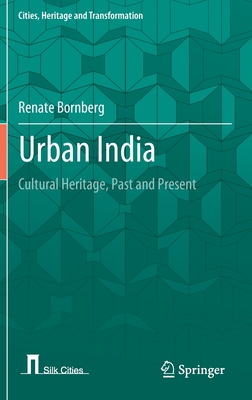
Book Details
Format
Paperback / softback
Book Series
Cities, Heritage and Transformation
ISBN-10
3031237390
ISBN-13
9783031237393
Edition
2023 ed.
Publisher
Springer International Publishing AG
Imprint
Springer International Publishing AG
Country of Manufacture
GB
Country of Publication
GB
Publication Date
Mar 5th, 2024
Print length
312 Pages
KSh 23,400.00
Currently unavailable
0 in stock
Delivery Location
Delivery fee: Select location
Secure
Quality
Fast
This book discusses the importance of socio-spatial patterns in cities that are embedded in the cultural heritage and self-understanding of a society, showing that Indian cities follow different urban concepts.
This book discusses the importance of socio-spatial patterns in cities that are embedded in the cultural heritage and self-understanding of a society, showing that Indian cities follow different urban concepts. In nine episodes (nine is a sacred figure), it highlights the principal influences and social impacts on cities from ancient times to contemporary city developments. As such, it provides planners and architects with insights that can easily be applied in contemporary cities and towns and help foster India’s cultural heritage—a much-needed, but little-discussed approach. Indian cities are the result of various factors, some imposed, others following local traditions that shaped them. They were founded around social needs, landscape conditions and production routines, as well as the religious influences of Hinduism, Buddhism, Jainism, Sikhism, Islam, Christianity and animism. However, Western town-planning models are often implemented, blurring the traditional way of life in cities. For sustainable town development, it is of key importance to find solutions that deal with Indian city models.
Get Urban India by Renate Bornberg at the best price and quality guaranteed only at Werezi Africa's largest book ecommerce store. The book was published by Springer International Publishing AG and it has 312 pages.
Customers Who Bought This Also Bought

Decolonising the Mind
KSh 4,700.00
Message
KSh 3,400.00

The Culture Map
KSh 3,050.00

Between The World And Me
KSh 2,000.00
Orientalism
KSh 2,350.00
Culture and Imperialism
KSh 2,700.00

Africa Is Not A Country
KSh 2,350.00

White Album
KSh 2,000.00
Moving the Centre
KSh 4,850.00

The Case for Christ
KSh 1,450.00

A Brief History of Equality
KSh 2,850.00

War Against Cliche
KSh 2,700.00