
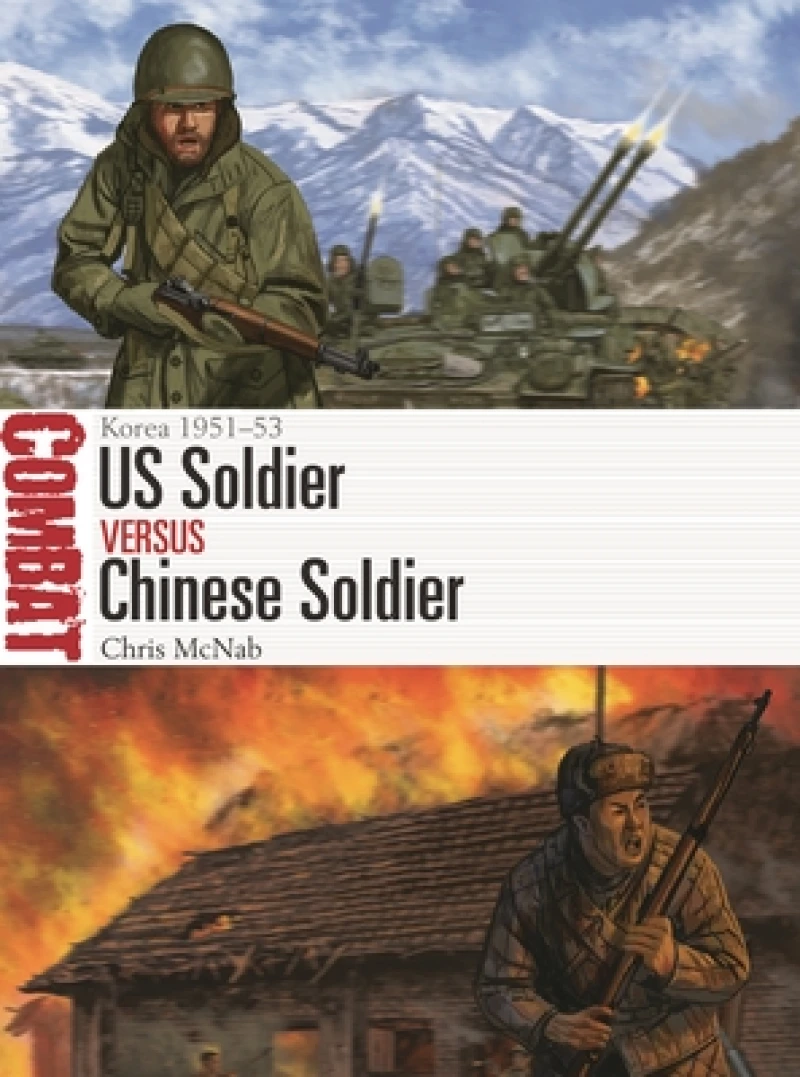
US Soldier vs Chinese Soldier : Korea 1951–53
by
Chris McNab
Book Details
Format
Paperback / Softback
Book Series
Combat
ISBN-10
1472845323
ISBN-13
9781472845320
Publisher
Bloomsbury Publishing PLC
Imprint
Osprey Publishing
Country of Manufacture
GB
Country of Publication
GB
Publication Date
Dec 22nd, 2022
Print length
80 Pages
Weight
258 grams
Dimensions
24.70 x 18.50 x 1.50 cms
Product Classification:
Military history: post WW2 conflictsWarfare & defence
Ksh 2,700.00
Werezi Extended Catalogue
Delivery in 14 days
Delivery Location
Delivery fee: Select location
Delivery in 14 days
Secure
Quality
Fast
This book examines the US infantry against the Chinese Army amid the unforgiving terrain of Korea during the first real clash of the Cold War. On June 25, 1950, North Korean troops invaded South Korea, triggering a bitter conflict that drew in US and other United Nations forces in support of the South, and soon prompted the Chinese to intervene on the side of the North. Featuring specially commissioned artwork, this study assesses the US and Chinese forces that clashed at Chipyongni (February 13–15, 1951), Triangle Hill (October 14–25, 1952), and Pork Chop Hill (July 6–11, 1953), casting light on the origins, doctrine, and combat effectiveness of these two very different forces during the struggle for victory in Korea. The Chinese forces fighting in Korea were composed of experienced, confident soldiers buoyed by the Communists’ success in the recent Chinese Civil War. Initially armed and equipped with much the same weaponry and doctrine that they had employed in World War II, US Army units in Korea would often find themselves outnumbered, fighting in extremely difficult terrain that precluded the widespread use of armor. Both sides would be tested to the limit by the demands of fighting in such a formidable setting.
This book examines the US infantry against the Chinese Army amid the unforgiving terrain of Korea during the first real clash of the Cold War.On June 25, 1950, North Korean troops invaded South Korea, triggering a bitter conflict that drew in US and other United Nations forces in support of the South, and soon prompted the Chinese to intervene on the side of the North. Featuring specially commissioned artwork, this study assesses the US and Chinese forces that clashed at Chipyongni (February 13–15, 1951), Triangle Hill (October 14–25, 1952), and Pork Chop Hill (July 6–11, 1953), casting light on the origins, doctrine, and combat effectiveness of these two very different forces during the struggle for victory in Korea. The Chinese forces fighting in Korea were composed of experienced, confident soldiers buoyed by the Communists’ success in the recent Chinese Civil War. Initially armed and equipped with much the same weaponry and doctrine that they had employed in World War II, US Army units in Korea would often find themselves outnumbered, fighting in extremely difficult terrain that precluded the widespread use of armor. Both sides would be tested to the limit by the demands of fighting in such a formidable setting.
Get US Soldier vs Chinese Soldier by at the best price and quality guaranteed only at Werezi Africa's largest book ecommerce store. The book was published by Bloomsbury Publishing PLC and it has pages.

