
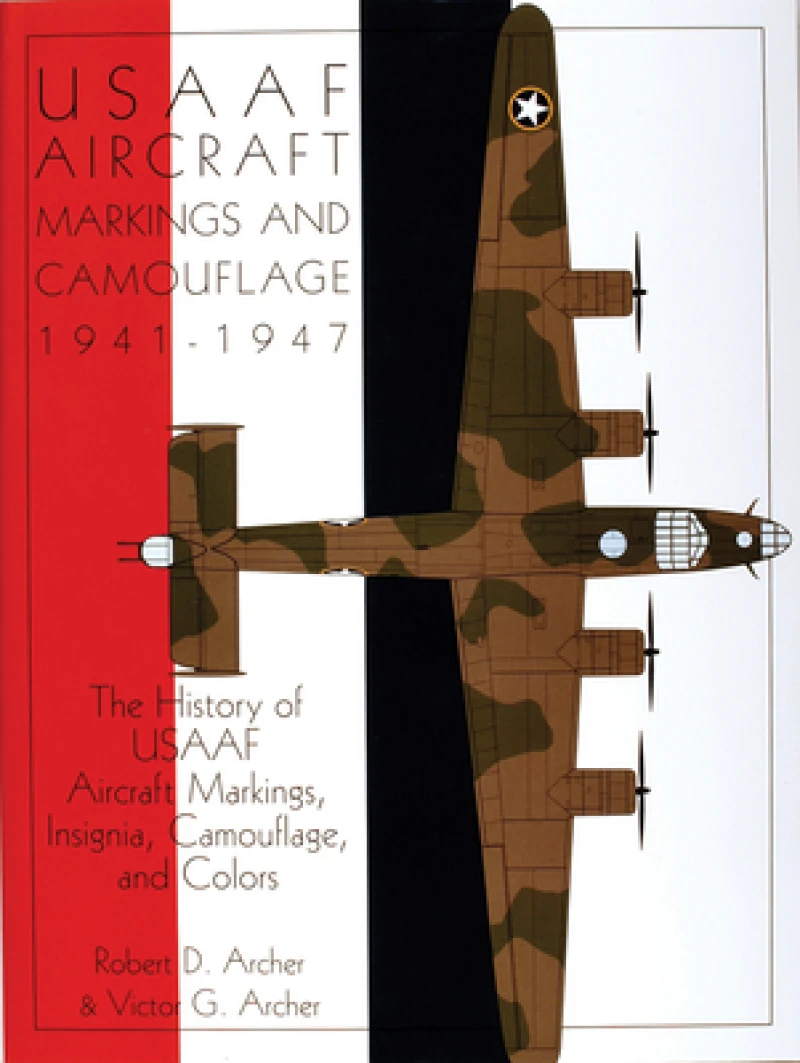
USAAF Aircraft Markings and Camouflage 1941-1947 : The History of USAAF Aircraft Markings, Insignia, Camouflage, and Colors
Book Details
Format
Hardback or Cased Book
ISBN-10
0764302469
ISBN-13
9780764302466
Publisher
Schiffer Publishing Ltd
Imprint
Schiffer Publishing Ltd
Country of Manufacture
CN
Country of Publication
GB
Publication Date
Jul 21st, 1997
Print length
352 Pages
Weight
2,334 grams
Dimensions
23.60 x 31.50 x 3.40 cms
Product Classification:
Air forces & warfare
Ksh 13,250.00
Temporarily out of stock, due soon
0 in stock
Delivery Location
Delivery fee: Select location
Secure
Quality
Fast
Compiled from official source documents this book covers the entire period of the USAAF, pre-war and post-war, and throughout World War II, up to the fomation of the independent U.S. Air Force in 1947. Described are many hitherto unknown facts about the USAAF involvement in the worldwide war theaters. This includes information about converting the Eighth Air Force in England to night bombing, because of the horrendous losses being suffered over Germany, and how the timely development of the Merlin-engined P-51 helped to prevent this. Full details are given of the conversion of B-17s to the night bombing role. The book covers the toal subject in chronological order, with chapters covering 1941, 1942, 1943, 1944, and 1945-1947. All details, and the reasons for the changes, are given for the camouflage colors, camouflage schemes, national insignia, and aircraft markings. A chapter is devoted to a brief description of the combat aircraft distinctive markings evolved by the Eighth Air Force (these will be covered fully in a subsequent book), a complete history of the Invasion stripes used during the Allied assault on Europe in 1944 (the author had these Top-Secret files declassified in 1966), and a selection of some of the unit insignia used by various USAAF units. A final chapter discusses the evolution of the camouflage and gloss colors used by the USAAF, including the official color standard numbers employed in the various color specifications up to, and including, FS 595B, and includes color swatches of them. Two appendices cover the aircraft designation system, and the aircraft maintenance markings. All aircraft camouflage schemes are shown in full color, as three-view drawins, where applicable. This includes the almost unknown special camouflage schemes evolved by the Army in North West Africa, to reduce losses due to the unexpected German counterattack, near the Kasserine Pass in Tunisia. The text of the numerous official technical orders are given in full, allowing the reader to see their complete progression for the first time. The meetins of the applicable joint meetings with members of the allied nations, and the effect of their decisions are fully covered, together with some surprising differences. This book is an indispensable reference for historians, restorers of USAAF aircraft, museums, and modelers.
Compiled from official source documents this book covers the entire period of the USAAF, pre-war and post-war, and throughout World War II, up to the fomation of the independent U.S. Air Force in 1947. Described are many hitherto unknown facts about the USAAF involvement in the worldwide war theaters. This includes information about converting the Eighth Air Force in England to night bombing, because of the horrendous losses being suffered over Germany, and how the timely development of the Merlin-engined P-51 helped to prevent this. Full details are given of the conversion of B-17s to the night bombing role. The book covers the toal subject in chronological order, with chapters covering 1941, 1942, 1943, 1944, and 1945-1947. All details, and the reasons for the changes, are given for the camouflage colors, camouflage schemes, national insignia, and aircraft markings. A chapter is devoted to a brief description of the combat aircraft distinctive markings evolved by the Eighth Air Force (these will be covered fully in a subsequent book), a complete history of the Invasion stripes used during the Allied assault on Europe in 1944 (the author had these Top-Secret files declassified in 1966), and a selection of some of the unit insignia used by various USAAF units. A final chapter discusses the evolution of the camouflage and gloss colors used by the USAAF, including the official color standard numbers employed in the various color specifications up to, and including, FS 595B, and includes color swatches of them. Two appendices cover the aircraft designation system, and the aircraft maintenance markings. All aircraft camouflage schemes are shown in full color, as three-view drawins, where applicable. This includes the almost unknown special camouflage schemes evolved by the Army in North West Africa, to reduce losses due to the unexpected German counterattack, near the Kasserine Pass in Tunisia. The text of the numerous official technical orders are given in full, allowing the reader to see their complete progression for the first time. The meetins of the applicable joint meetings with members of the allied nations, and the effect of their decisions are fully covered, together with some surprising differences. This book is an indispensable reference for historians, restorers of USAAF aircraft, museums, and modelers.
Get USAAF Aircraft Markings and Camouflage 1941-1947 by at the best price and quality guaranteed only at Werezi Africa's largest book ecommerce store. The book was published by Schiffer Publishing Ltd and it has pages.

