
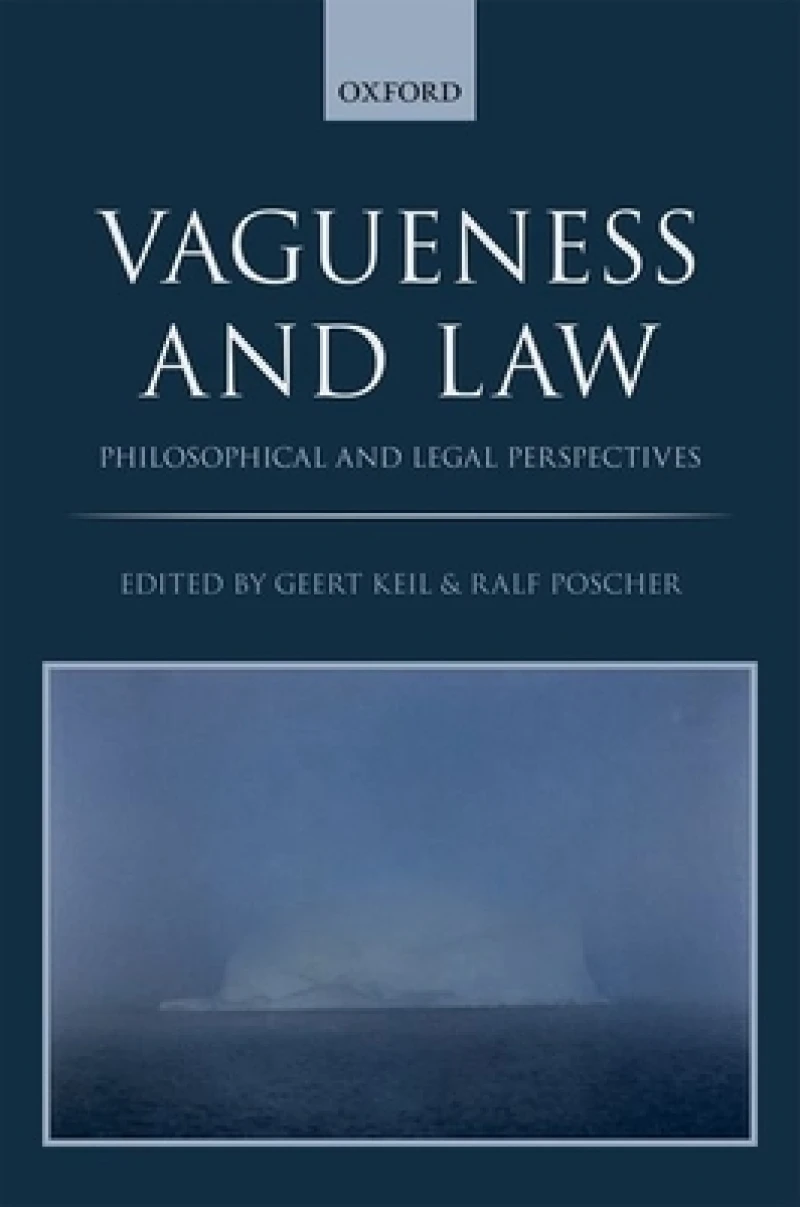
Vagueness and Law : Philosophical and Legal Perspectives
Book Details
Format
Hardback or Cased Book
ISBN-10
0198782888
ISBN-13
9780198782889
Publisher
Oxford University Press
Imprint
Oxford University Press
Country of Manufacture
GB
Country of Publication
GB
Publication Date
Dec 8th, 2016
Print length
350 Pages
Weight
696 grams
Dimensions
17.00 x 24.20 x 3.00 cms
Product Classification:
PhilosophyJurisprudence & philosophy of lawMethods, theory and philosophy of lawPhilosophy
Ksh 21,050.00
Manufactured on Demand
0 in stock
Delivery Location
Delivery fee: Select location
Secure
Quality
Fast
Bringing together leading scholars working on the topic of vagueness in philosophy and in law, this book fosters a dialogue between philosophers and legal scholars by examining how philosophers conceive vagueness in law from their theoretical perspective and how legal theorists make use of philosophical theories of vagueness.
Vague expressions are omnipresent in natural language. As such, their use in legal texts is virtually inevitable. If a law contains vague terms, the question whether it applies to a particular case often lacks a clear answer. One of the fundamental pillars of the rule of law is legal certainty. The determinacy of the law enables people to use it as a guide and places judges in the position to decide impartially. Vagueness poses a threat to these ideals. In borderline cases, the law seems to be indeterminate and thus incapable of serving its core rule of law value.In the philosophy of language, vagueness has become one of the hottest topics of the last two decades. Linguists and philosophers have investigated what distinguishes "soritical " vagueness from other kinds of linguistic indeterminacy, such as ambiguity, generality, open texture, and family resemblance concepts. There is a vast literature that discusses the logical, semantic, pragmatic, and epistemic aspects of these phenomena. Legal theory has hitherto paid little attention to the differences between the various kinds of linguistic indeterminacy that are grouped under the heading of "vagueness ", let alone to the various theories that try to account for these phenomena.Bringing together leading scholars working on the topic of vagueness in philosophy and in law, this book fosters a dialogue between philosophers and legal scholars by examining how philosophers conceive vagueness in law from their theoretical perspective and how legal theorists make use of philosophical theories of vagueness. The chapters of the book are organized into three parts. The first part addresses the import of different theories of vagueness for the law, referring to a wide range of theories from supervaluationist to contextualist and semantic realist accounts in order to address the question of whether the law can learn from engaging with philosophical discussions of vagueness. The second part of the book examines different vagueness phenomena. The contributions in part 2 suggest that the greater awareness to different vagueness phenomena can make lawyers aware of specific issues and solutions so far overlooked. The third part deals with the pragmatic aspects of vagueness in law, providing answers to the question of how to deal with vagueness in law and with the professional, political, moral, and ethical issues such vagueness gives rise to.
Get Vagueness and Law by at the best price and quality guaranteed only at Werezi Africa's largest book ecommerce store. The book was published by Oxford University Press and it has pages.

