
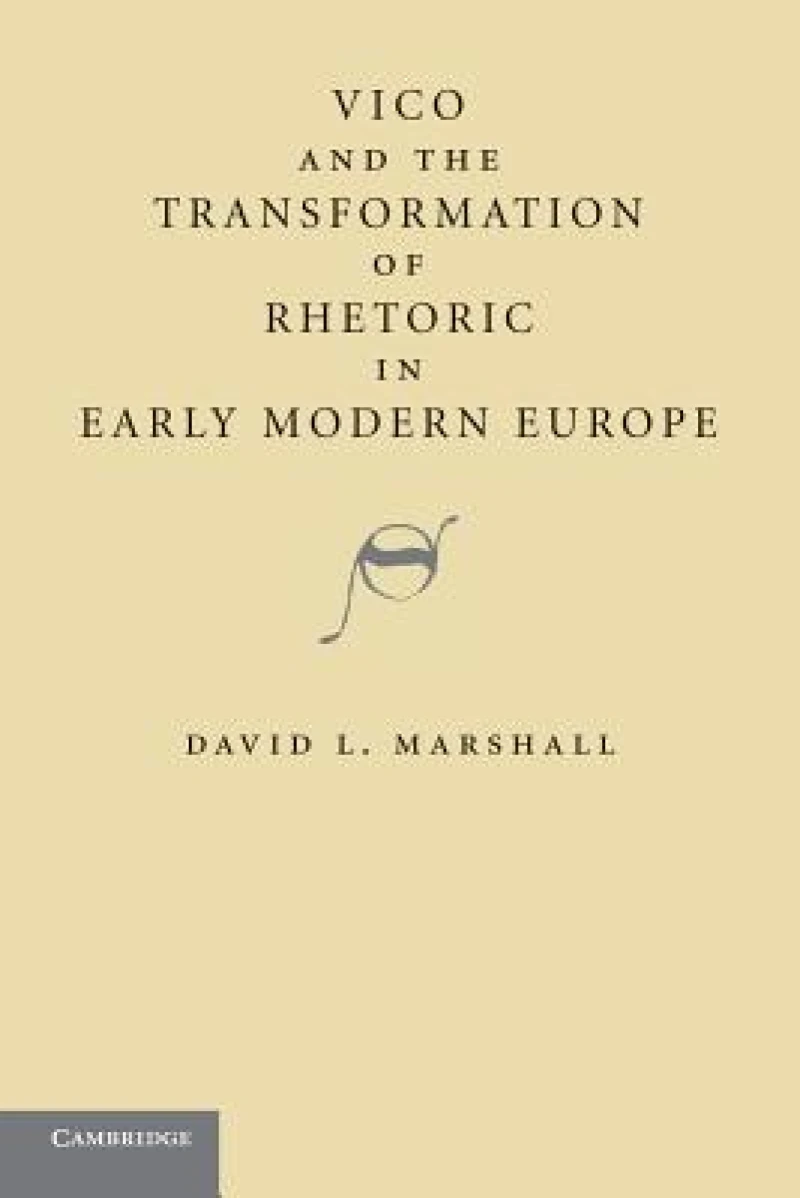
Vico and the Transformation of Rhetoric in Early Modern Europe
Book Details
Format
Paperback / Softback
ISBN-10
1107646723
ISBN-13
9781107646728
Publisher
Cambridge University Press
Imprint
Cambridge University Press
Country of Manufacture
GB
Country of Publication
GB
Publication Date
Jan 30th, 2014
Print length
312 Pages
Weight
470 grams
Dimensions
15.50 x 22.90 x 2.50 cms
Product Classification:
Western philosophy: c 1600 to c 1900Philosophical traditions and schools of thought
Ksh 8,650.00
Manufactured on Demand
0 in stock
Delivery Location
Delivery fee: Select location
Secure
Quality
Fast
This book examines the entirety of Giambattista Vico's oeuvre and demonstrates his significance as a theorist who adapted the discipline of rhetoric to modern conditions.
Considered the most original thinker in the Italian philosophical tradition, Giambattista Vico has been the object of much scholarly attention but little consensus. In this new interpretation, David L. Marshall examines the entirety of Vico's oeuvre and situates him in the political context of early modern Naples. Marshall presents Vico's work as an effort to resolve a contradiction. As a professor of rhetoric at the University of Naples, Vico had a deep investment in the explanatory power of classical rhetorical thought, especially that of Aristotle, Cicero, and Quintilian. Yet as a historian of the failure of Naples as a self-determining political community, he had no illusions about the possibility or worth of democratic and republican systems of government in the post-classical world. As Marshall demonstrates, by jettisoning the assumption that rhetoric only illuminates direct, face-to-face interactions between orator and auditor, Vico reinvented rhetoric for a modern world in which the Greek polis and the Roman res publica are no longer paradigmatic for political thought.
Get Vico and the Transformation of Rhetoric in Early Modern Europe by at the best price and quality guaranteed only at Werezi Africa's largest book ecommerce store. The book was published by Cambridge University Press and it has pages.

