
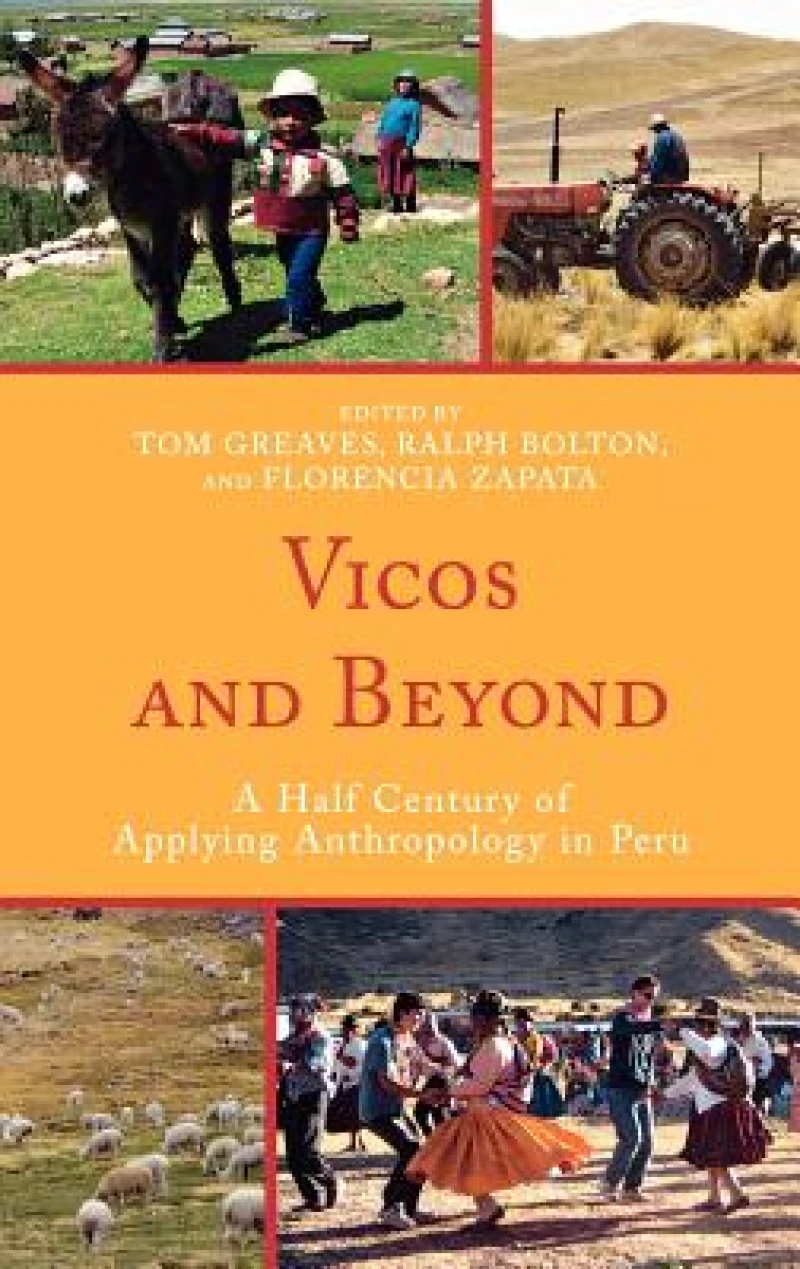
Vicos and Beyond : A Half Century of Applying Anthropology in Peru
Book Details
Format
Hardback or Cased Book
ISBN-10
0759119740
ISBN-13
9780759119741
Publisher
AltaMira Press
Imprint
AltaMira Press
Country of Manufacture
GB
Country of Publication
GB
Publication Date
Nov 16th, 2010
Print length
358 Pages
Weight
723 grams
Dimensions
23.90 x 16.20 x 2.70 cms
Product Classification:
Anthropology
Ksh 19,700.00
Manufactured on Demand
Delivery in 29 days
Delivery Location
Delivery fee: Select location
Delivery in 29 days
Secure
Quality
Fast
From 1952 to 1962, anthropologists funded by Cornell University sought to apply anthropological knowledge to improving life in Vicos, a village of about 1,800 people in the Peruvian Andes. This collection evaluates the methods and results of the famous, and even infamous, Vicos Project.
In 1952, Professor Allan Holmberg arranged for Cornell University to lease the Hacienda Vicos, an agricultural estate in the central Peruvian highlands on which some 1800 Quechua-speaking highland peasants resided. Between 1952 and 1957 Holmberg, with colleagues and students, initiated a set of social, economic, and agrarian changes, and nurtured mechanisms for community-based management of the estate by the resident peasants. By the end of a second lease in 1962, sufficient political pressure had been brought to bear on a reluctant national government to force the sale of Vicos to its people. Holmberg''s twin goals for the Vicos Project were to bring about community possession of their land base and to study the process as it unfolded, advancing anthropological understanding of cultural change. To describe the process of doing both, he invented the term "participant intervention." Despite the large corpus of existing Vicos publications, this book contains much information that here reaches print for the first time. The chapter authors do not entirely agree on various key points regarding the nature of the Vicos Project, the intentions of project personnel and community actors, and what interpretive framework is most valid; in part, these disagreements reflect the relevance and importance of the Vicos Project to contemporary applied anthropologists and the contrasting ways in which any historical event can be explained. Some chapters contrast Vicos with other projects in the southern Andean highlands; others examine new developments at Vicos itself. The conclusion suggests how those changes should be understood, within Andean anthropology and within anthropology more generally.
Get Vicos and Beyond by at the best price and quality guaranteed only at Werezi Africa's largest book ecommerce store. The book was published by AltaMira Press and it has pages.

