
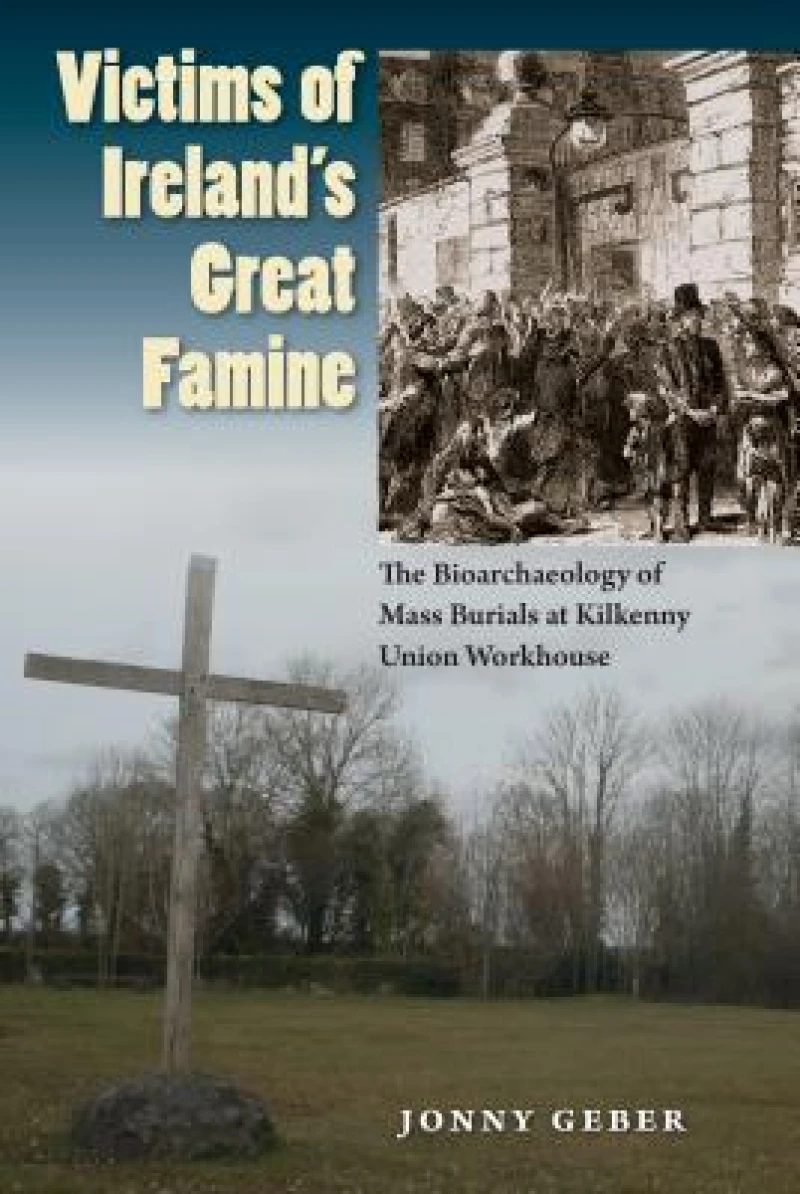
Victims of Ireland''s Great Famine : The Bioarchaeology of Mass Burials at Kilkenny Union Workhouse
by
Jonny Geber
Book Details
Format
Paperback / Softback
Book Series
Bioarchaeological Interpretations of the Human Past: Local, Regional, and Global Perspectives
ISBN-10
0813064678
ISBN-13
9780813064673
Publisher
University Press of Florida
Imprint
University Press of Florida
Country of Manufacture
US
Country of Publication
GB
Publication Date
Mar 27th, 2018
Print length
312 Pages
Weight
472 grams
Dimensions
15.50 x 22.80 x 1.80 cms
Ksh 3,850.00
Temporarily out of stock, due soon
0 in stock
Delivery Location
Delivery fee: Select location
Secure
Quality
Fast
By examining the physical conditions of inmates that might have contributed to their institutionalization, as well as to the resulting health consequences, Jonny Geber sheds new and unprecedented light on Ireland’s Great Hunger.
With one million dead, and just as many forced to emigrate, the Irish Famine (1845-52) is among the worst health calamities in history. Because historical records of the Victorian period in Ireland were generally written by the middle and upper classes, relatively little has been known about those who suffered the most, the poor and destitute. But in 2006, archaeologists excavated an until then completely unknown intramural mass burial containing the remains of nearly 1,000 Kilkenny Union Workhouse inmates. In the first bioarchaeological study of Great Famine victims, Jonny Geber uses skeletal analysis to tell the story of how and why the Famine decimated the lowest levels of nineteenth century Irish society.Seeking help at the workhouse was an act of desperation by people who were severely malnourished and physically exhausted. Overcrowded, it turned into a hotspot of infectious disease--as did many other union workhouses in Ireland during the Famine. Geber reveals how medical officers struggled to keep people alive, as evidenced by cases of amputations but also craniotomies. Still, mortality rates increased and the city cemeteries filled up, until there was eventually no choice but to resort to intramural burials. Deceased inmates were buried in shrouds and coffins--an attempt by the Board of Guardians of the workhouse to maintain a degree of dignity towards these victims. By examining the physical conditions of the inmates that might have contributed to their institutionalization, as well as to the resulting health consequences, Geber sheds new and unprecedented light on Ireland’s Great Hunger.
Get Victims of Ireland''s Great Famine by at the best price and quality guaranteed only at Werezi Africa's largest book ecommerce store. The book was published by University Press of Florida and it has pages.

