
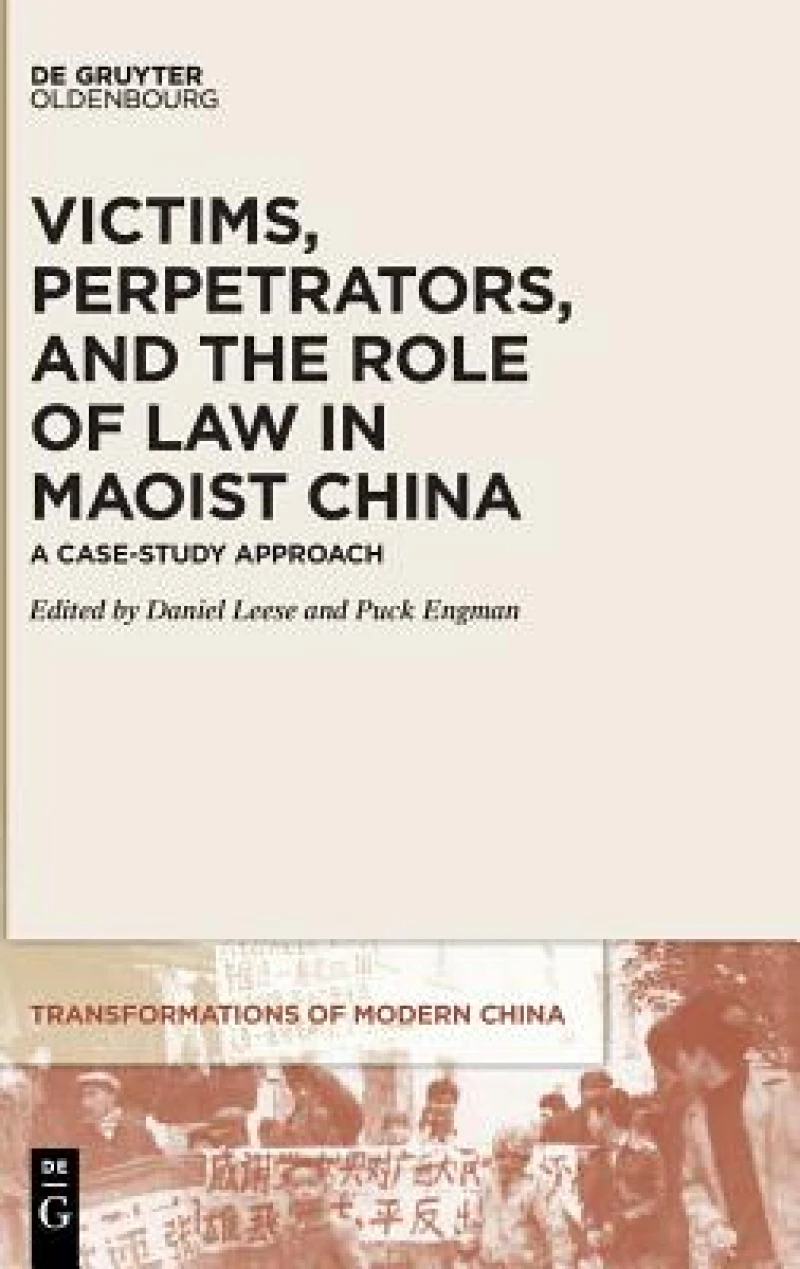
Victims, Perpetrators, and the Role of Law in Maoist China : A Case-Study Approach
Book Details
Format
Hardback or Cased Book
Book Series
Transformations of Modern China
ISBN-10
3110531046
ISBN-13
9783110531046
Publisher
De Gruyter
Imprint
De Gruyter Oldenbourg
Country of Manufacture
GB
Country of Publication
GB
Publication Date
Jul 23rd, 2018
Print length
213 Pages
Weight
494 grams
Dimensions
26.20 x 24.20 x 2.10 cms
Ksh 11,800.00
Werezi Extended Catalogue
Delivery in 14 days
1 copies in stock
Delivery Location
Delivery fee: Select location
Delivery in 14 days
Secure
Quality
Fast
The relationship between politics and law in the early People’sRepublic of China was highly contentious. Periods of intentionallyexcessive campaign justice intersected with attempts to carve outprofessional standards of adjudication and to offer retroactive justicefor those deemed to have been unjustly persecuted. How were victims andperpetrators defined and dealt with during different stages of theMaoist era and beyond? How was law practiced, understood, and contestedin local contexts? This volume adopts a case study approach to shedlight on these complex questions. By way of a close reading of originalcase files from the grassroots level, the contributors detailprocedures and question long-held assumptions, not least about theCultural Revolution as a period of “lawlessness.”
The relationship between politics and law in the early Peoples
Republic of China was highly contentious. Periods of intentionally
excessive campaign justice intersected with attempts to carve out
professional standards of adjudication and to offer retroactive justice
for those deemed to have been unjustly persecuted. How were victims and
perpetrators defined and dealt with during different stages of the
Maoist era and beyond? How was law practiced, understood, and contested
in local contexts? This volume adopts a case study approach to shed
light on these complex questions. By way of a close reading of original
case files from the grassroots level, the contributors detail
procedures and question long-held assumptions, not least about the
Cultural Revolution as a period of lawlessness.
Republic of China was highly contentious. Periods of intentionally
excessive campaign justice intersected with attempts to carve out
professional standards of adjudication and to offer retroactive justice
for those deemed to have been unjustly persecuted. How were victims and
perpetrators defined and dealt with during different stages of the
Maoist era and beyond? How was law practiced, understood, and contested
in local contexts? This volume adopts a case study approach to shed
light on these complex questions. By way of a close reading of original
case files from the grassroots level, the contributors detail
procedures and question long-held assumptions, not least about the
Cultural Revolution as a period of lawlessness.
Get Victims, Perpetrators, and the Role of Law in Maoist China by at the best price and quality guaranteed only at Werezi Africa's largest book ecommerce store. The book was published by De Gruyter and it has pages.

