
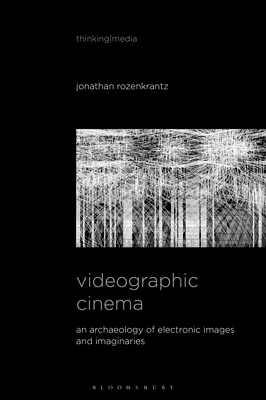
Videographic Cinema : An Archaeology of Electronic Images and Imaginaries
Book Details
Format
Paperback / softback
Book Series
Thinking Media
ISBN-10
1501369318
ISBN-13
9781501369315
Publisher
Bloomsbury Publishing Plc
Imprint
Bloomsbury Academic
Country of Manufacture
GB
Country of Publication
GB
Publication Date
Apr 21st, 2022
Print length
228 Pages
Weight
294 grams
Dimensions
21.50 x 13.90 x 1.50 cms
KSh 6,400.00
Currently unavailable
0 in stock
Delivery Location
Delivery fee: Select location
Secure
Quality
Fast
In 1957, A Face in the Crowdincorporated live video images to warn about the future of broadcast TV. In 2015, Kung Fury was infused with analogue noise to evoke the nostalgic feeling of watching an old VHS tape. Between the two films, numerous ones would incorporate video images to imagine the implications of video practices. Drawing on media archaeology, Videographic Cinema shows how such images and imaginaries have emerged, changed and remained over time according to their shifting technical, historical and institutional conditions.
Rediscovering forgotten films like Anti-Clock (1979) and reassessing ones like Lost Highway(1997), Jonathan Rozenkrantz charts neglected chapters of video history, including self-confrontation techniques in psychiatry, their complex relation with surveillance, and the invention/discovery of the "videographic psyche" by artists, therapists and filmmakers. Spanning six decades, Videographic Cinemadiscovers an epistemic shift from prospective imaginaries of surveillance and control conditioned on video as a medium for live transmission, to retrospective ones concerned with videotape as a recording memory. It ends by considering videographic filmmaking itself as a form of archaeology in the age of analogue obsolescence.
Rediscovering forgotten films like Anti-Clock (1979) and reassessing ones like Lost Highway(1997), Jonathan Rozenkrantz charts neglected chapters of video history, including self-confrontation techniques in psychiatry, their complex relation with surveillance, and the invention/discovery of the "videographic psyche" by artists, therapists and filmmakers. Spanning six decades, Videographic Cinemadiscovers an epistemic shift from prospective imaginaries of surveillance and control conditioned on video as a medium for live transmission, to retrospective ones concerned with videotape as a recording memory. It ends by considering videographic filmmaking itself as a form of archaeology in the age of analogue obsolescence.
Get Videographic Cinema by Jonathan Rozenkrantz at the best price and quality guaranteed only at Werezi Africa's largest book ecommerce store. The book was published by Bloomsbury Publishing Plc and it has 228 pages.
Customers Who Bought This Also Bought
Film Theory Goes to the Movies
KSh 8,350.00

Fassbinder Thousands of Mirrors
KSh 2,350.00

Mark Kermode''s Surround Sound
KSh 3,400.00
Strangers Within
KSh 2,700.00

Marvel Studios'' The Infinity Saga - Black Panther: The Art of the Movie
KSh 6,650.00
History of Film
KSh 2,550.00

Greta Gerwig’s Barbie
KSh 4,700.00

The Fatal Alliance
KSh 4,500.00
Seventh Seal
KSh 2,350.00
Disaster Mon Amour
KSh 3,400.00

Spider-Man
KSh 9,550.00

Revolutionary Melodrama
KSh 9,250.00
