
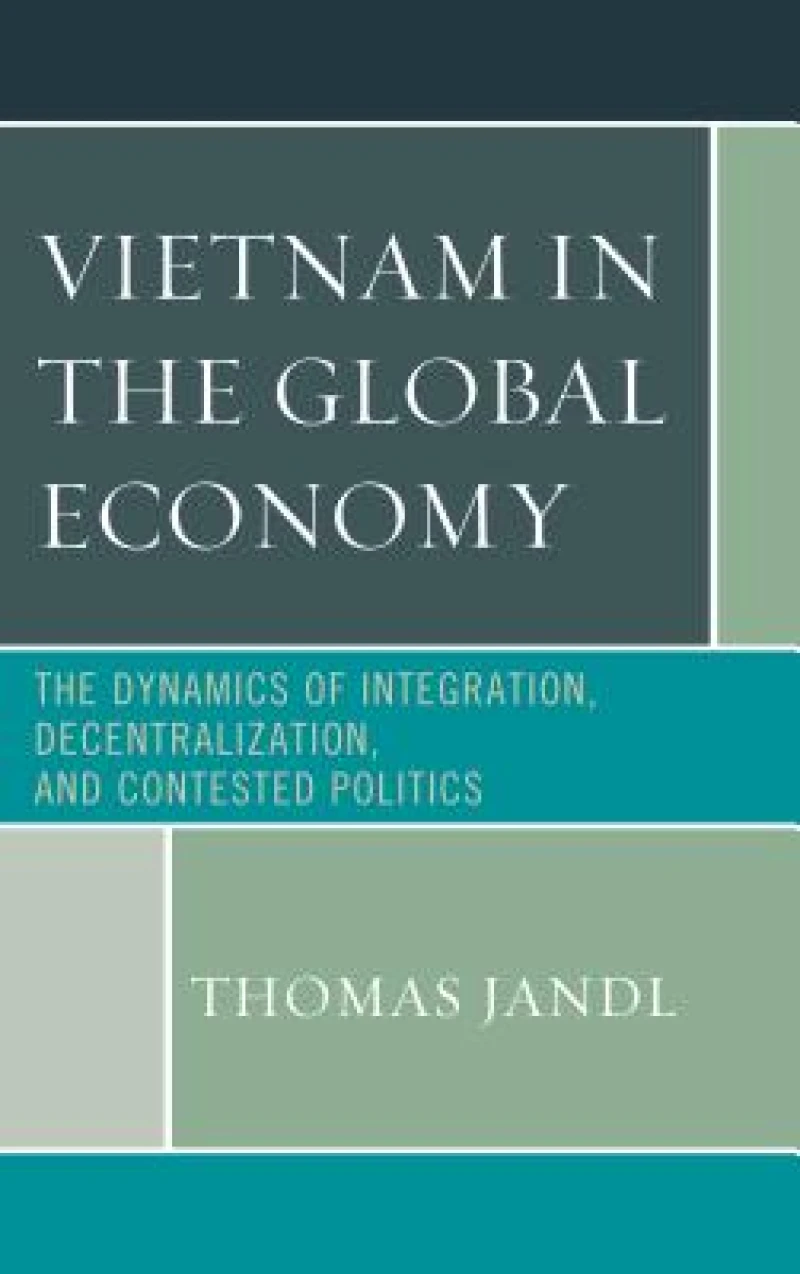
Vietnam in the Global Economy : The Dynamics of Integration, Decentralization, and Contested Politics
by
Thomas Jandl
Book Details
Format
Paperback / Softback
ISBN-10
1498525377
ISBN-13
9781498525374
Publisher
Bloomsbury Publishing Plc
Imprint
Lexington Books
Country of Manufacture
GB
Country of Publication
GB
Publication Date
Oct 15th, 2015
Print length
312 Pages
Weight
460 grams
Dimensions
22.80 x 15.10 x 2.60 cms
Product Classification:
Regional studiesInternational economicsPolitical economy
Ksh 10,000.00
Manufactured on Demand
0 in stock
Delivery Location
Delivery fee: Select location
Secure
Quality
Fast
This book is, in essence, about incentives: the incentives for competing societal interest groups to cooperate with each other to benefit from a growing economic pie, rather than fighting over a bigger share of a smaller one. This is the conundrum of economic development. If elite interest groups have both incentive and ability to allocate resources toward themselves, and if such rent seeking causes a decline in economic inefficiency, how can economies ever grow? The book illuminates the mechanisms by which in one of the world’s recent economic success stories— Vietnam’s rapid industrialization and passage into the middle-income category—the interest in cooperating to grow the economy overrode the elites’ instinct to allocate resources through the use of political power. The book shows how the need to provide positive conditions for international investment altered pay-off structures and pushed the all-powerful Communist Party of Vietnam to engage in bargaining with provincial officials; provincial officials with international investors; and finally all coercive elites even with the working classes. It describes the emergence of a harmony of interest among societal groups in which each group benefits from a growing economy, and no one group can monopolize the benefits of growth without hurting itself. The Vietnam case validates Nobel-Prize winning economist Mancur Olson’s proposition that elite predation can only be kept in check when the elite itself suffers from the economic decline it causes at least as much as it gains from the rents it collects.
This book is, in essence, about incentives: the incentives for competing societal interest groups to cooperate with each other to benefit from a growing economic pie, rather than fighting over a bigger share of a smaller one. This is the conundrum of economic development. If elite interest groups have both incentive and ability to allocate resources toward themselves, and if such rent seeking causes a decline in economic inefficiency, how can economies ever grow? The book illuminates the mechanisms by which in one of the world’s recent economic success stories— Vietnam’s rapid industrialization and passage into the middle-income category—the interest in cooperating to grow the economy overrode the elites’ instinct to allocate resources through the use of political power. The book shows how the need to provide positive conditions for international investment altered pay-off structures and pushed the all-powerful Communist Party of Vietnam to engage in bargaining with provincial officials; provincial officials with international investors; and finally all coercive elites even with the working classes. It describes the emergence of a harmony of interest among societal groups in which each group benefits from a growing economy, and no one group can monopolize the benefits of growth without hurting itself. The Vietnam case validates Nobel-Prize winning economist Mancur Olson’s proposition that elite predation can only be kept in check when the elite itself suffers from the economic decline it causes at least as much as it gains from the rents it collects.
Get Vietnam in the Global Economy by at the best price and quality guaranteed only at Werezi Africa's largest book ecommerce store. The book was published by Bloomsbury Publishing Plc and it has pages.

