
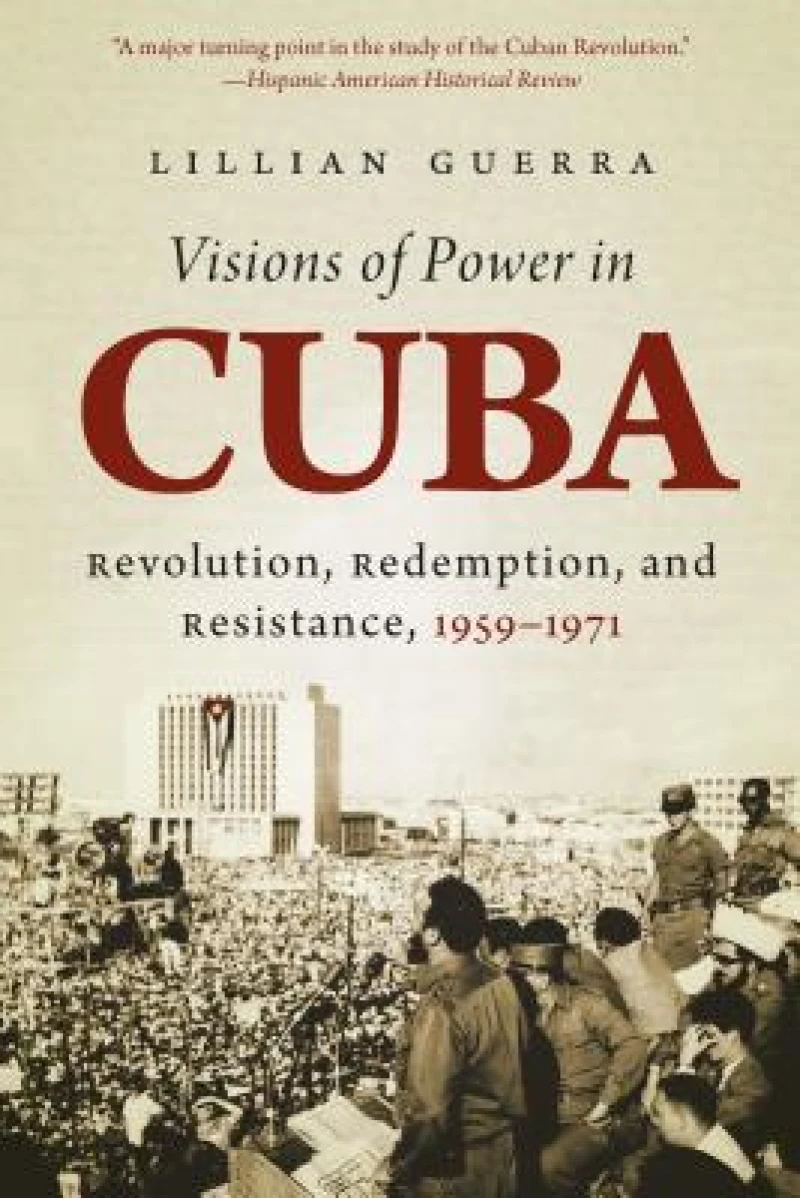
Visions of Power in Cuba : Revolution, Redemption, and Resistance, 1959-1971
Book Details
Format
Paperback / Softback
Book Series
Envisioning Cuba
ISBN-10
1469618869
ISBN-13
9781469618869
Publisher
The University of North Carolina Press
Imprint
The University of North Carolina Press
Country of Manufacture
US
Country of Publication
GB
Publication Date
Aug 1st, 2014
Print length
488 Pages
Weight
714 grams
Dimensions
15.70 x 23.20 x 2.90 cms
Ksh 6,300.00
Werezi Extended Catalogue
0 in stock
Delivery Location
Delivery fee: Select location
Secure
Quality
Fast
In the tumultuous first decade of the Cuban Revolution, Fidel Castro and other leaders saturated the media with altruistic images of themselves in a campaign to win the hearts of Cuba's six million citizens. In Visions of Power in Cuba, Lillian Guerra argues that these visual representations explained rapidly occurring events and encouraged radical change and mutual self-sacrifice.
Mass rallies and labor mobilizations of unprecedented scale produced tangible evidence of what Fidel Castro called "unanimous support" for a revolution whose "moral power" defied U.S. control. Yet participation in state-orchestrated spectacles quickly became a requirement for political inclusion in a new Cuba that policed most forms of dissent. Devoted revolutionaries who resisted disastrous economic policies, exposed post-1959 racism, and challenged gender norms set by Cuba's one-party state increasingly found themselves marginalized, silenced, or jailed. Using previously unexplored sources, Guerra focuses on the lived experiences of citizens, including peasants, intellectuals, former prostitutes, black activists, and filmmakers, as they struggled to author their own scripts of revolution by resisting repression, defying state-imposed boundaries, and working for anti-imperial redemption in a truly free Cuba.
Mass rallies and labor mobilizations of unprecedented scale produced tangible evidence of what Fidel Castro called "unanimous support" for a revolution whose "moral power" defied U.S. control. Yet participation in state-orchestrated spectacles quickly became a requirement for political inclusion in a new Cuba that policed most forms of dissent. Devoted revolutionaries who resisted disastrous economic policies, exposed post-1959 racism, and challenged gender norms set by Cuba's one-party state increasingly found themselves marginalized, silenced, or jailed. Using previously unexplored sources, Guerra focuses on the lived experiences of citizens, including peasants, intellectuals, former prostitutes, black activists, and filmmakers, as they struggled to author their own scripts of revolution by resisting repression, defying state-imposed boundaries, and working for anti-imperial redemption in a truly free Cuba.
Get Visions of Power in Cuba by at the best price and quality guaranteed only at Werezi Africa's largest book ecommerce store. The book was published by The University of North Carolina Press and it has pages.

