
Book Details
Format
Hardback
ISBN-10
3030471977
ISBN-13
9783030471972
Edition
2020 ed.
Publisher
Springer Nature Switzerland AG
Imprint
Springer Nature Switzerland AG
Country of Manufacture
CH
Country of Publication
GB
Publication Date
May 29th, 2020
Print length
260 Pages
Weight
456 grams
Dimensions
22.00 x 15.70 x 2.10 cms
KSh 16,200.00
Currently unavailable
0 in stock
Delivery Location
Delivery fee: Select location
Secure
Quality
Fast
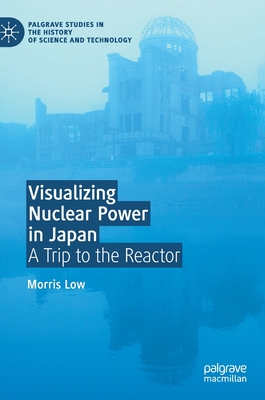
This book explores how Japanese views of nuclear power were influenced not only by Hiroshima and Nagasaki but by government, business and media efforts to actively promote how it was a safe and integral part of Japan’s future.
This book explores how Japanese views of nuclear power were influenced not only by Hiroshima and Nagasaki but by government, business and media efforts to actively promote how it was a safe and integral part of Japan’s future. The idea of “atoms for peace” and the importance of US-Japan relations were emphasized in exhibitions and in films. Despite the emergence of an anti-nuclear movement, the dream of civilian nuclear power and the “good atom” nevertheless prevailed and became more accepted. By the late 1950s, a school trip to see a reactor was becoming a reality for young Japanese, and major events such as the 1964 Tokyo Olympics and 1970 Osaka Expo seemed to reinforce the narrative that the Japanese people were destined for a future led by science and technology that was powered by the atom, a dream that was left in disarray after the Fukushima nuclear disaster in 2011.
Get Visualizing Nuclear Power in Japan by Morris Low at the best price and quality guaranteed only at Werezi Africa's largest book ecommerce store. The book was published by Springer Nature Switzerland AG and it has 260 pages.
Customers Who Bought This Also Bought

From Third World to First
KSh 3,200.00

Breakneck
KSh 4,500.00

India After Gandhi
KSh 4,850.00

Anarchy
KSh 2,700.00

On China
KSh 3,400.00
Apostles of Development
KSh 5,600.00

Shattered Lands
KSh 2,000.00
Indira Gandhi and the Years that Transformed India
KSh 5,050.00
India: A Wounded Civilization
KSh 2,000.00
Shattered Lands
KSh 3,200.00

Games without Rules
KSh 2,900.00

Ghost Nation
KSh 3,950.00
More by Morris Low
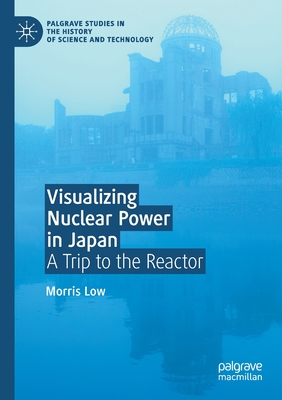
Visualizing Nuclear Power in Japan
KSh 16,200.00

Japan on Display
KSh 11,150.00

Science, Technology and Society in Contemporary Japan
KSh 5,000.00

East Asia Beyond the History Wars
KSh 11,150.00

East Asia Beyond the History Wars
KSh 33,850.00

Science, Technology and Society in Contemporary Japan
KSh 15,650.00

Japan On Display
KSh 33,850.00