
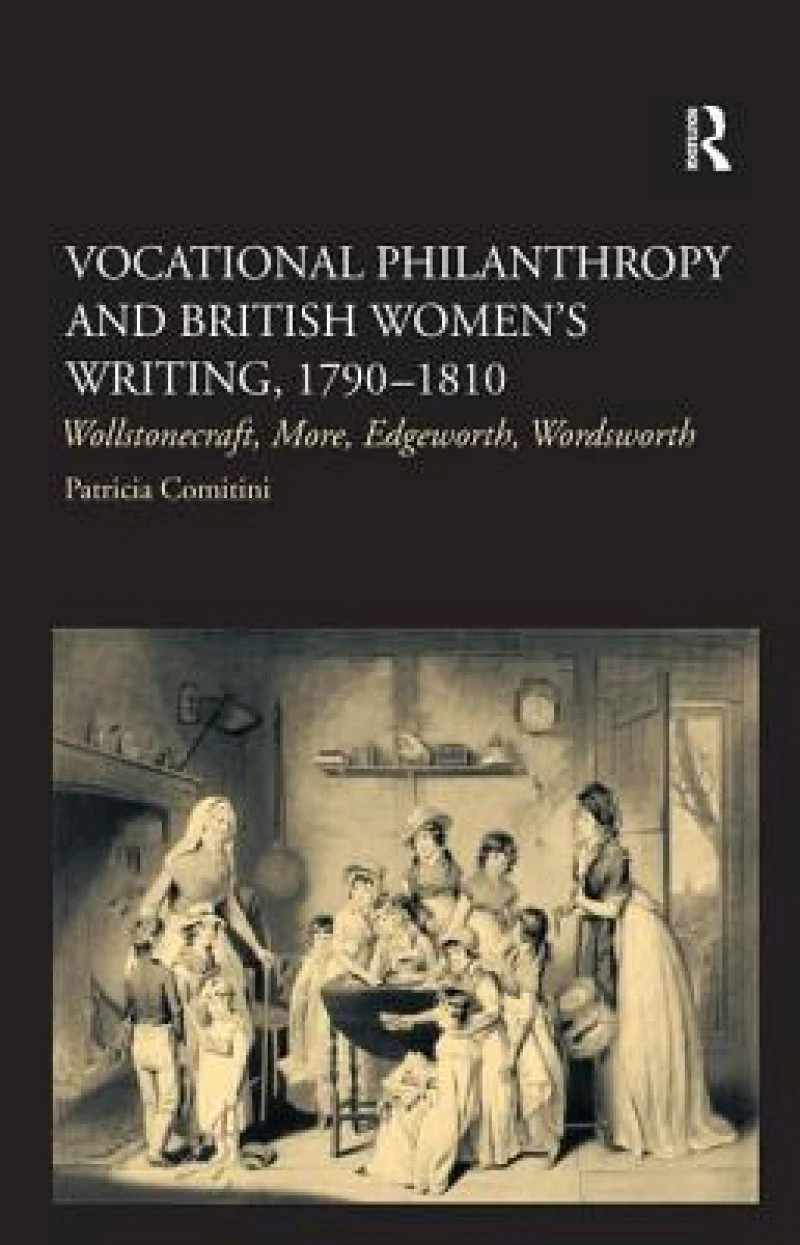
Vocational Philanthropy and British Women's Writing, 1790?1810 : Wollstonecraft, More, Edgeworth, Wordsworth
Book Details
Format
Hardback or Cased Book
ISBN-10
0754650421
ISBN-13
9780754650423
Publisher
Taylor & Francis Ltd
Imprint
Routledge
Country of Manufacture
GB
Country of Publication
GB
Publication Date
Feb 15th, 2005
Print length
176 Pages
Weight
402 grams
Dimensions
23.50 x 16.30 x 1.90 cms
Product Classification:
Literary studies: c 1500 to c 1800
Ksh 30,950.00
Re-Printing
0 in stock
Delivery Location
Delivery fee: Select location
Secure
Quality
Fast
Patricia Comitini''s study compels serious rethinking of how literature by women in the late-eighteenth and early-nineteenth centuries should be read. Beginning with a description of how evolving conceptions of philanthropy were foundational to constructions of class and gender roles, Comitini argues that these changes enabled a particular kind of feminine benevolence that was linked to women''s work as writers. The term ''vocational philanthropy'' is suggestive of the ways that women used their status as professional writers to instruct men and women in changing gender relations, and to educate the middling and laboring classes in their new roles during a socially and economically turbulent era. Hannah More, Mary Wollstonecraft, Maria Edgeworth and Dorothy Wordsworth, shared an interest in philanthropy ” fostering the love of mankind ” and an interest in the social nature of literacy. Their writing enabled people to read in a way that imagines societal improvement; that is, merging the private notions of morality, family, and love to the public needs for good citizens, industrious laborers, and class consolidation.
Patricia Comitini''s study compels serious rethinking of how literature by women in the late-eighteenth and early-nineteenth centuries should be read. Beginning with a description of the ways in which evolving conceptions of philanthropy were foundational to constructions of class and gender roles, Comitini argues that these changes enabled a particular kind of feminine benevolence that was linked to women''s work as writers. The term ''vocational philanthropy'' is suggestive of the ways that women used their status as professional writers to instruct men and women in changing gender relations, and to educate the middling and laboring classes in their new roles during a socially and economically turbulent era. Examining works by Hannah More, Mary Wollstonecraft, Maria Edgeworth, and Dorothy Wordsworth, whose writing crosses generic, political, and social boundaries, Comitini shows how women from diverse backgrounds shared a commitment to philanthropy - fostering the love of mankind - and an interest in the social nature of literacy. Their writing fosters sentiments that they hoped would be shared between the sexes and among the classes in English society, forging new reading audiences among women and the lower classes. These writers and their writing exemplify the paradigm of vocational philanthropy, which gives people not money, but texts to read, in order to imagine societal improvement. The effect was to permit the emergence of middle-class values linking private notions of morality, family, and love to the public needs for good citizens, industrious laborers, and class consolidation.
Get Vocational Philanthropy and British Women's Writing, 1790?1810 by at the best price and quality guaranteed only at Werezi Africa's largest book ecommerce store. The book was published by Taylor & Francis Ltd and it has pages.

