
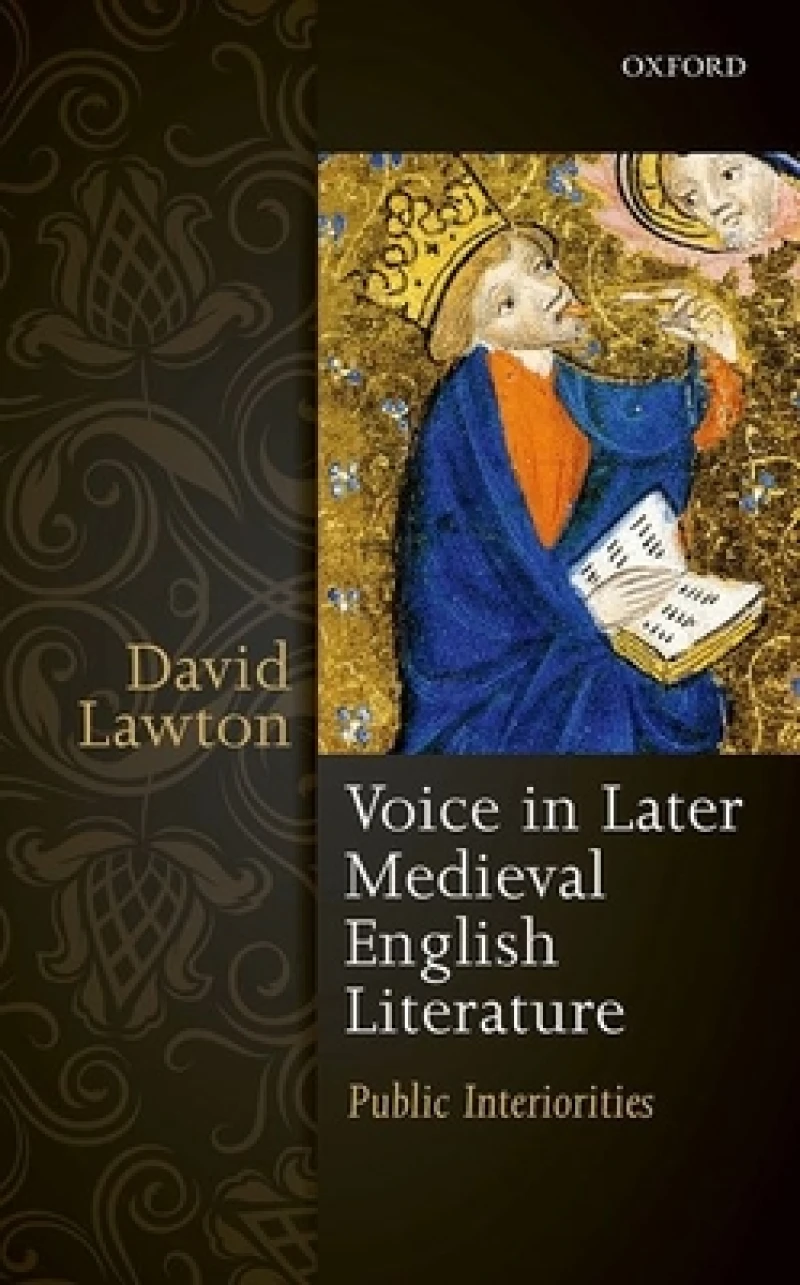
Voice in Later Medieval English Literature : Public Interiorities
by
David Lawton
Book Details
Format
Hardback or Cased Book
ISBN-10
0198792409
ISBN-13
9780198792406
Publisher
Oxford University Press
Imprint
Oxford University Press
Country of Manufacture
GB
Country of Publication
GB
Publication Date
Jan 12th, 2017
Print length
256 Pages
Weight
438 grams
Dimensions
14.50 x 22.30 x 2.30 cms
Product Classification:
Literary studies: classical, early & medievalLiterary studies: poetry & poets
Ksh 15,400.00
Manufactured on Demand
0 in stock
Delivery Location
Delivery fee: Select location
Secure
Quality
Fast
David Lawton approaches later medieval English vernacular culture in terms of voice, and shows how medieval texts constitute the foundation of a literary history of voice that extends to modernity. As texts and discourses shift in translation and use, antecedent texts are revoiced in ways that recreate them without effacing their history or future.
David Lawton approaches later medieval English vernacular culture in terms of voice. As texts and discourses shift in translation and in use from one language to another, antecedent texts are revoiced in ways that recreate them (as ''public interiorities'') without effacing their history or future. The approach yields important insights into the voice work of late medieval poets, especially Langland and Chaucer, and also their fifteenth-century successors, who treat their work as they have treated their precursors. It also helps illuminate vernacular religious writing and its aspirations, and it addresses literary and cultural change, such as the effect of censorship and increasing political instability in and beyond the fifteenth century. Lawton also proposes his emphasis on voice as a literary tool of broad application, and his book has a bold and comparative sweep that encompasses the Pauline letters, Augustine''s Confessions, the classical precedents of Virgil and Ovid, medieval contemporaries like Machaut and Petrarch, extra-literary artists like Monteverdi, later poets such as Wordsworth, Heaney and Paul Valéry, and moderns such as Jarry and Proust. What justifies such parallels, the author claims, is that late medieval texts constitute the foundation of a literary history of voice that extends to modernity. The book''s energy is therefore devoted to the transformative reading of later medieval texts, in order to show their original and ongoing importance as voice work.
Get Voice in Later Medieval English Literature by at the best price and quality guaranteed only at Werezi Africa's largest book ecommerce store. The book was published by Oxford University Press and it has pages.

