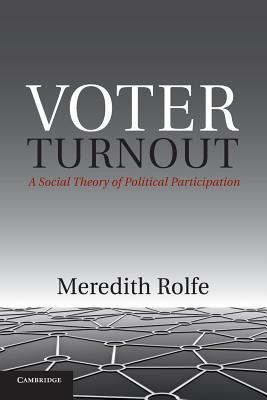
Voter Turnout : A Social Theory of Political Participation
Book Details
Format
Hardback
Book Series
Political Economy of Institutions and Decisions
ISBN-10
1107015413
ISBN-13
9781107015418
Publisher
Cambridge University Press
Imprint
Cambridge University Press
Country of Manufacture
GB
Country of Publication
GB
Publication Date
Feb 13th, 2012
Print length
248 Pages
Weight
482 grams
Dimensions
23.80 x 15.70 x 1.90 cms
KSh 17,800.00
Currently unavailable
0 in stock
Delivery Location
Delivery fee: Select location
Secure
Quality
Fast
A combination of positive political theory, social network research and computational modeling, explaining why some people are more likely to vote than others. Most do not weigh the costs and benefits of participation, but instead rely on largely automatic decision rules that are conditional on the decisions of their friends and family.
This book develops and empirically tests a social theory of political participation. It overturns prior understandings of why some people (such as college-degree holders, churchgoers and citizens in national rather than local elections) vote more often than others. The book shows that the standard demographic variables are not proxies for variation in the individual costs and benefits of participation, but for systematic variation in the patterns of social ties between potential voters. Potential voters who move in larger social circles, particularly those including politicians and other mobilizing actors, have more access to the flurry of electoral activity prodding citizens to vote and increasing political discussion. Treating voting as a socially defined practice instead of as an individual choice over personal payoffs, a social theory of participation is derived from a mathematical model with behavioral foundations that is empirically calibrated and tested using multiple methods and data sources.
Get Voter Turnout by Meredith Rolfe at the best price and quality guaranteed only at Werezi Africa's largest book ecommerce store. The book was published by Cambridge University Press and it has 248 pages.
Customers Who Bought This Also Bought

End of History and the Last Man
KSh 2,700.00

12 Rules for Life
KSh 2,350.00
The 48 Laws of Power
KSh 4,700.00

Second Treatise of Government – Norton Library
KSh 1,600.00
Discipline and Punish
KSh 2,350.00

The Prince The Original Classic
KSh 2,150.00

How to Be a Leader – An Ancient Guide to Wise Leadership
KSh 2,800.00

The Origin of Others
KSh 3,600.00
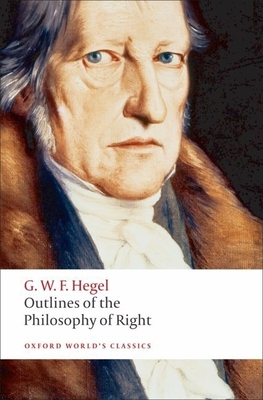
Outlines of the Philosophy of Right
KSh 2,500.00

How Fascism Works
KSh 2,900.00

The Prince
KSh 1,800.00

Who''s Afraid of Gender?
KSh 2,350.00